Almost everyone asks this question the same way: they describe what they are moving and ask which trailer it goes on. That is the right instinct, because trailer sizing is not really about dimensions. It is about four things at once, and getting any of them wrong wastes a trip.
Those four are length and width, weight, how the load gets on and whether it has to stay dry. This guide works through each, then gives direct answers for the loads people actually ask about.
The four questions, in order
1. How big is it, really?
Measure rather than estimate, and measure the widest and tallest points rather than the body. On a mower that is the deck, not the chassis. On a vehicle it is the mirrors. On furniture it is the diagonal, because a sofa that will not fit upright often goes in on its side.
2. How heavy is it?
Weight decides more than size does, because it determines both whether the trailer can carry it and whether your vehicle can tow it. If you do not know, look for a plate on the machine or search the model number. Guessing low here is the error that causes real problems.
3. How does it get on?
This is the question people forget entirely. A load that rolls needs ramps and enough approach angle not to scrape. A load that does not roll needs a winch, a forklift or a tilt deck. Low-clearance equipment cannot climb standard ramps at all, which is the entire reason the Air Tow utility trailer exists.
4. Does it need to stay dry?
Open trailers are cheaper and easier to load from any side. Enclosed trailers protect from weather and from view, which matters for a multi-day move or anything left overnight. The full comparison is in enclosed versus open trailers.
The fleet, by deck size
| Trailer | Deck | Type | From |
|---|---|---|---|
| 6' x 12' utility trailer | 6' x 12' | Open | $40 |
| 6' x 12' enclosed trailer | 6' x 12' | Enclosed | $55 |
| 18ft utility trailer | 18' long | Open | $75 |
| car hauler | 20' long | Open, vehicle | $80 |
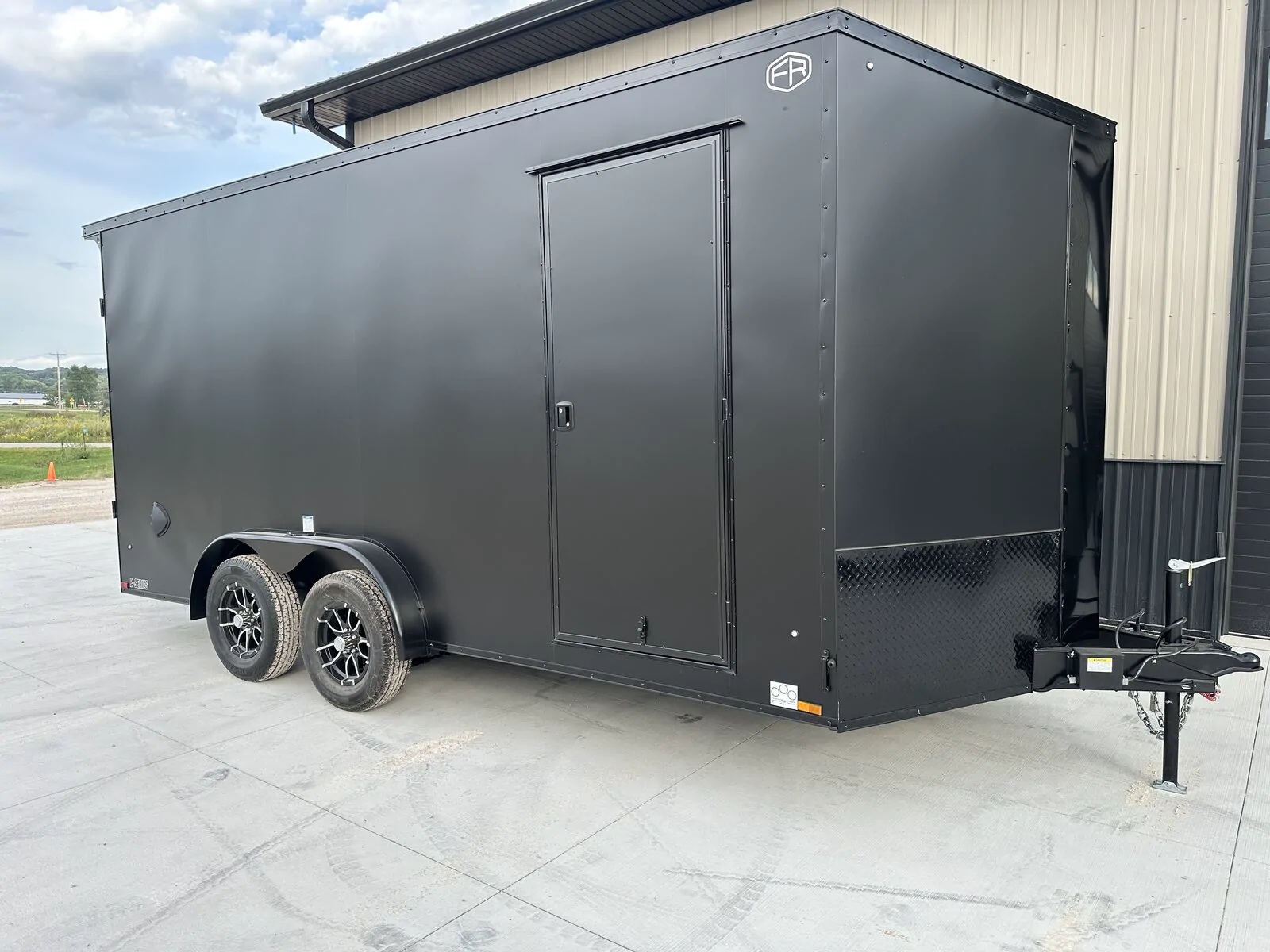
| 7.5' x 16' enclosed trailer | 7.5' x 16' | Enclosed | $95 |
| dump trailer | 6' x 10' | Open, tipping | $100 |
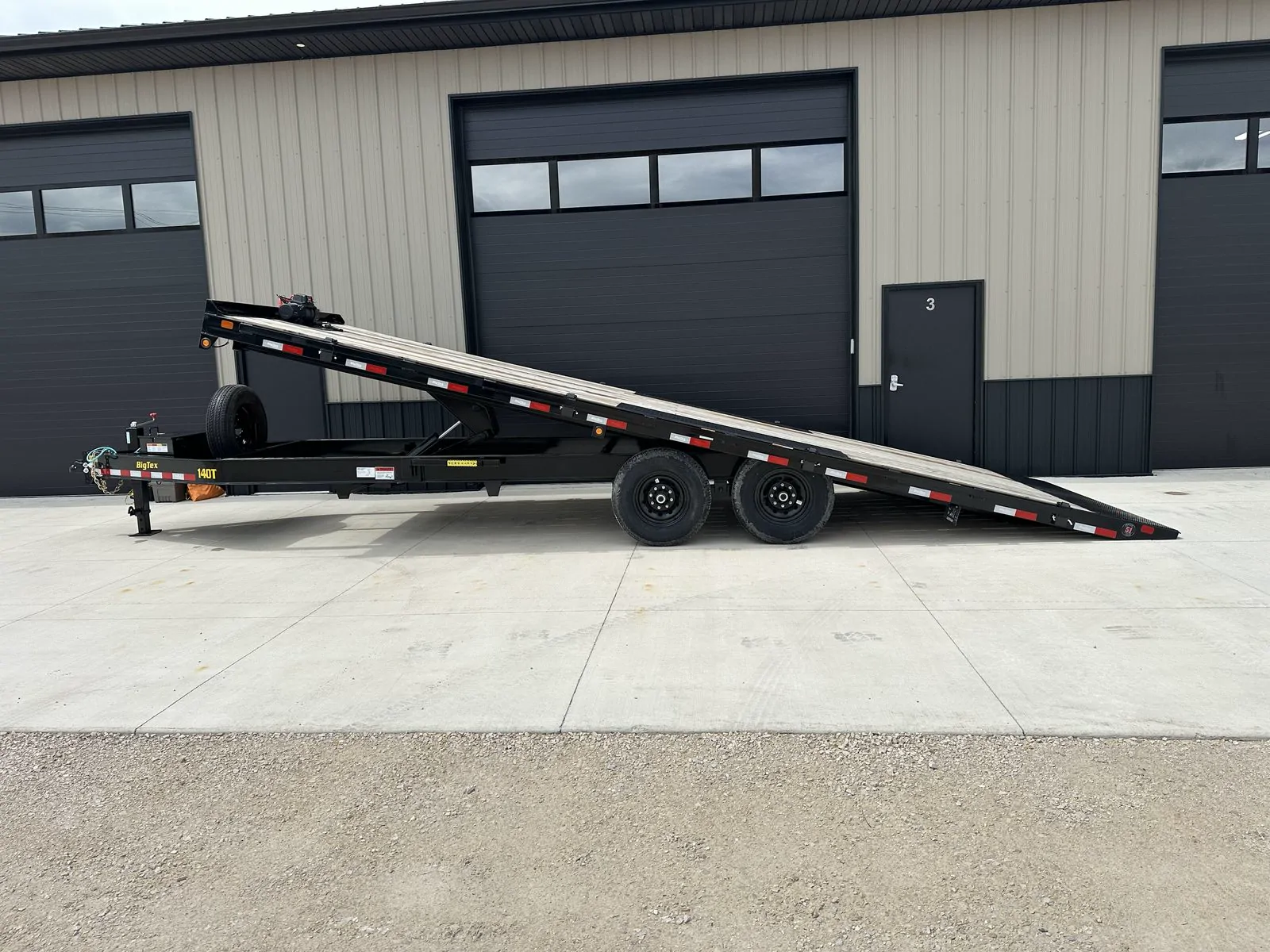
| tilt deckover | 8.5' x 24' | Open, tilt deck | $120 |
| 8.5' x 24' enclosed car hauler | 8.5' x 24' | Enclosed, vehicle | $120 |
| gooseneck deckover | 30' + 5' | Open deckover | $140 |
| Air Tow utility trailer | 6' x 12' | Ground-load | $250 |
Direct answers for common loads
A golf cart
A 6' x 12' utility trailer handles a standard two-seater comfortably. A six-seater or a lifted cart needs the 18ft utility trailer. The loading angle matters more than the length, and lowered carts scrape on standard ramps. Full detail in loading a golf cart and golf cart trailer rental.
A zero-turn mower
Most residential zero-turns fit a 6' x 12' utility trailer. Commercial machines with 60-inch decks and wider need the 18ft utility trailer. Measure the deck at its widest, not the frame. See zero-turn mower trailer rental.
A side-by-side or UTV
A full-size UTV is wider than people expect, often 64 inches or more, and a 6-foot-wide deck leaves very little margin. The 18ft utility trailer is the safer choice, and for two machines you want the 7.5' x 16' enclosed trailer or the 8.5' x 24' enclosed car hauler. See hauling an ATV or UTV.
A car
The car hauler for a running vehicle in reasonable weather. The 8.5' x 24' enclosed car hauler when the car is valuable, non-running, or crossing the state in winter. The enclosed version also lets you load household goods around it, covered in moving a car and household in one trip.
A one-bedroom apartment
The 6' x 12' enclosed trailer in one trip, usually with room left. What fits in a 6x12 lists real contents.
A three-bedroom house
The 7.5' x 16' enclosed trailer, and realistically two trips unless you are ruthless. The 8.5' x 24' enclosed car hauler in one trip if you have a vehicle that can pull it. What fits in a 7.5x16 has the detail.
A skid steer or compact tractor
The tilt deckover. The tilt deck is the point: a skid steer cannot safely climb steep ramps, and the deck lowering to a shallow angle is what makes loading routine instead of alarming. See skid steer trailer rental.
A scissor lift or low-clearance equipment
The Air Tow utility trailer, which lowers its deck to the ground on air suspension so machines with almost no ground clearance roll straight on. Nothing else in the fleet does this. See the low-clearance equipment guide.
The sizing mistake that costs the most
Choosing the smaller trailer to save forty dollars, then making two trips. Two trips costs an extra hour of driving, an hour of loading and the fuel for both, and it happens because the deck length looked adequate on paper.
Deck length is a poor guide on its own because loads are rarely rectangular. Furniture has legs and arms. Equipment has attachments that overhang. A mower has a deck wider than its wheelbase. If a load is within a foot of the deck length, treat that as not fitting.
Width is the limit people forget
A 6-foot-wide deck has usable width of roughly 68 to 70 inches between the fenders on many trailers, not 72. Anything approaching 64 inches wide leaves only a couple of inches each side, which is not enough to drive up a ramp accurately.
This catches people with UTVs, wide mower decks and anything with mirrors or handlebars. Measure the widest point and compare it to the usable width, not the nominal width.
Weight, and where it has to sit
Two separate limits apply: what the trailer can carry, and what your vehicle can tow. The second is usually the binding one, and it is covered fully in what can my truck tow.
Where the weight sits on the deck matters as much as how much there is. Aim for roughly 60 percent ahead of the trailer’s axle. A machine parked too far back makes the trailer sway at speed regardless of how far under the weight limit you are.
Still not sure?
Text a photo of what you are moving, with a rough length and weight if you have it, to (920) 381-9770. Matching a load to a trailer takes a minute and is free, and it is considerably better than arriving to find the machine is two inches too wide.
Height, the dimension nobody measures
Deck length and width get checked. Height almost never does, and it causes two distinct problems.
Inside an enclosed trailer, interior height limits what stands upright. A tall fridge, a wardrobe or a stacked load may need laying down, which changes how much floor area you need and can mean the trailer that was adequate is suddenly not.
Outside, the loaded height determines what you can drive under. A machine with a cab or a ROPS bar on an open deckover can exceed thirteen feet loaded, which puts bridges, drive-through canopies and some garage doors in play. Measure from the ground to the highest point once loaded, not from the deck.
One big trip or two small ones?
The instinct is always one trip, and usually that is right. There are two situations where two trips genuinely wins.
The first is when the larger trailer exceeds what your vehicle can tow. Two comfortable trips beat one overloaded one, and no saving justifies towing beyond your rating. The second is when the larger trailer will not physically reach the site. A 24-foot deckover needs room to turn and back, and a narrow driveway or a tight farm yard can make a smaller trailer the only workable answer.
Outside those cases, take the bigger trailer. The time cost of a second trip almost always exceeds the rate difference, and that is before fuel.
Renting two trailers at once
Occasionally the right answer is not one bigger trailer but two. A household move where a car also needs to go is the common case: the 8.5' x 24' enclosed car hauler can take both, but if two drivers are available, the 7.5' x 16' enclosed trailer for the contents and the car hauler for the vehicle is often faster and sometimes cheaper.
It also solves the towing capacity problem neatly, because two moderate loads behind two vehicles need far less capability than one large load behind one. If you have a second driver, it is worth asking about.
What we check when you ask
When someone texts a photo and a description, the sequence is always the same: widest point against usable deck width, loaded weight against both the trailer rating and the tow vehicle, how the load gets on, and whether weather or security means it should be enclosed.
That takes about a minute and settles it properly. It is considerably better than arriving with a machine that is two inches too wide, which happens often enough that it is worth the text.
The short version
Measure the widest and tallest point rather than estimating. Find the real weight. Work out how it gets on before you work out whether it fits. And when you are within a foot of the deck length, take the next size up, because the forty dollars is cheaper than the second trip.
Keep Reading
- First Time Towing a Trailer — towing for the first time