Wisconsin has some of the best ATV and UTV riding in the Midwest — from the Nicolet National Forest to the Chequamegon, from Vilas County's vast trail networks to the DNR trails in the Kettle Moraine. Getting your machine to any of those destinations from Fond du Lac requires a trailer, and making the right choice between enclosed and open — and loading it correctly — determines whether you arrive with your machine scratched up and loose or clean and ready to ride.
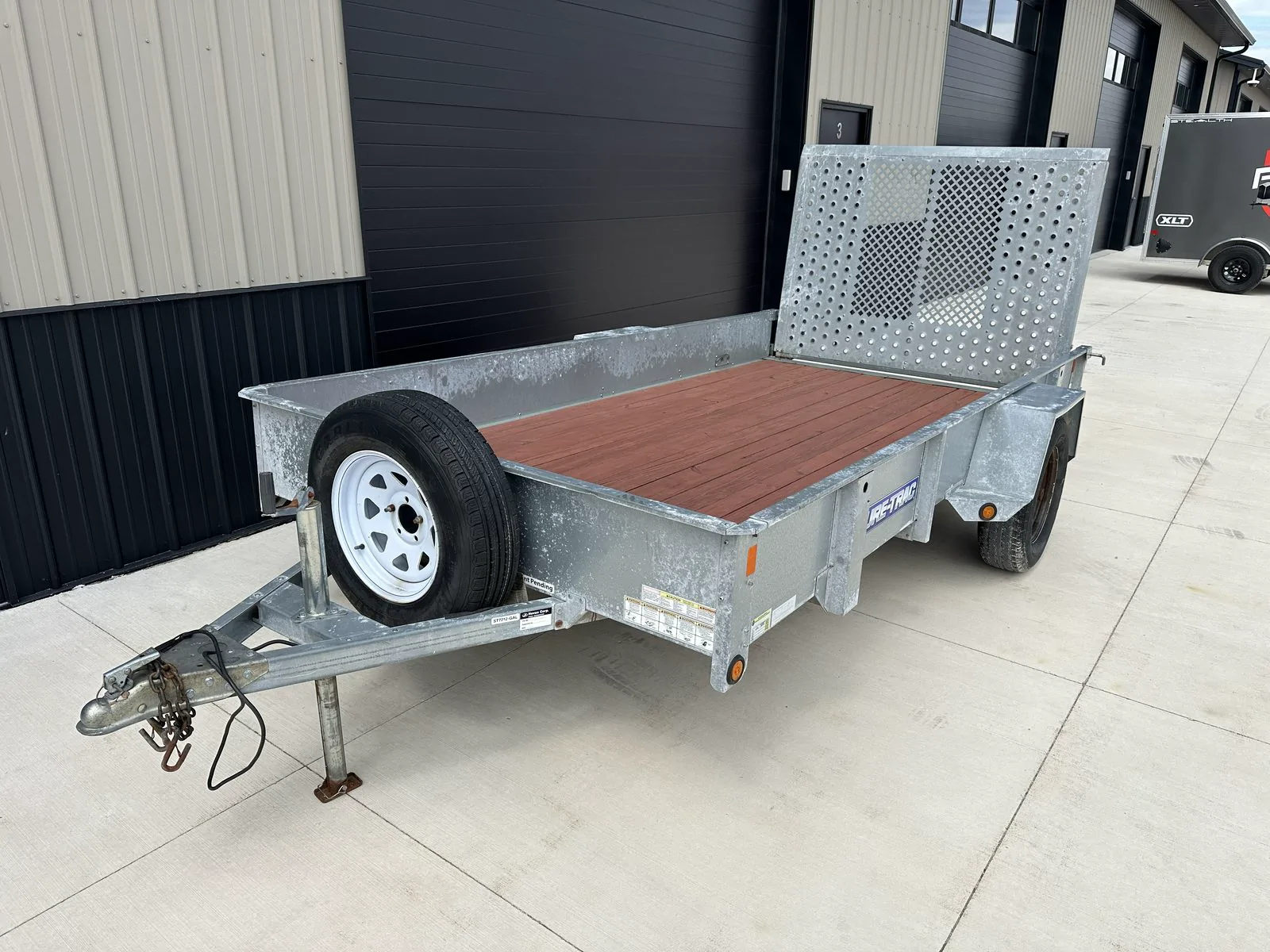
The trailer for this job: Utility Trailer — 6' x 12' · open deck. Text Nick at (920) 381-9770 to check a date.
Enclosed vs. Open Trailer for ATVs and UTVs
The Case for an Open / Utility Trailer
Open trailers are the traditional ATV hauling platform, and they work well in favorable conditions. Loading is straightforward with ramps, tie-down points are readily accessible from all sides, and the open design makes loading multiple machines easier. If you're riding locally, hauling in dry weather, and keeping the trip short, an open utility trailer is fine for most ATVs.
The Case for the Enclosed Trailer
For most Wisconsin riders making longer trips, the enclosed trailer wins on several fronts:
- Weather protection — Wisconsin highway driving at 65 mph in rain flings road grime and water onto any open trailer load. Your ATV's finish, electrical components, and seat material take the hit. An enclosed trailer keeps the machine clean and dry regardless of conditions.
- Security at the destination — Parking your trailer overnight at a trailhead cabin or campground? Enclosed trailer with a locked rear door is significantly more secure than an open flatbed with a bike tied down visibly.
- Multi-day trips — If you're heading north for a weekend, the enclosed trailer protects against morning dew, rain overnight, and highway grit on the return trip.
- Gear storage — The enclosed trailer's interior doubles as secure gear storage while you're on the trails. Helmets, tools, spare parts, coolers, and camping gear stay locked and dry.
For a 2-3 hour haul to northern Wisconsin trails, the enclosed trailer is worth the modest extra cost over the utility trailer.
ATV and UTV Sizing — Will It Fit?
Our 6'×12' enclosed trailer has roughly 12 feet of interior length and just under 6 feet of usable interior width, with 6'6" of interior height. That's the right size for a single ATV with gear, or a single small-to-mid-size UTV — but not two machines side by side, and not the largest full-size sport UTVs.
Standard ATVs (Sport and Utility)
Most ATVs are 46-54 inches wide and 6-7 feet long. One standard ATV fits easily in the 6'×12' enclosed with plenty of room for helmets, gear, and a small cooler. Two ATVs do not fit nose-to-tail in this trailer — the combined length exceeds the trailer's 12-foot interior. If you need to haul two ATVs, the 18-foot open utility trailer is the right call.
Side-by-Side UTVs
Smaller and mid-size UTVs (think Polaris Ranger 500, smaller Kubota and John Deere utility models, narrower trail-spec machines) at 50-58 inches wide usually fit fine. Full-size sport UTVs and 4-seat models like the Polaris RZR XP 4, Can-Am Maverick X3 Max, or wide Honda Pioneer 1000-5 can run 64+ inches wide and won't fit in the 6'×12' enclosed. Text Nick with your machine's make and model before booking — he can confirm fitment or recommend the 18-foot utility or tilt deckover instead.
Height Check for UTVs with Roll Cages
The 6'×12' enclosed has 6'6" of interior height. Some sport UTVs with tall cages or roof racks exceed 6 feet, but most are well within clearance. Confirm your machine's height with Nick before booking if you're running a sport UTV with an extended cage.
Hauling Multiple Machines Enclosed — 8.5'×24' Enclosed Car Hauler
Riding as a group and want everything protected from weather? Our 8.5'×24' enclosed car hauler is 8.5 feet wide inside and 24 feet long — room for two ATVs nose-to-tail plus gear, or one full-size sport UTV with room to walk around it. It has 20 E-track tie-down points, a drive-up ramp, interior lighting, and comes with 8 ratchet straps, moving blankets, and a tie-down kit. If you're heading north for a weekend with two or more machines and want them clean, dry, and locked up overnight, this is the right trailer.
Know your machine's width, length, and height before you book. Standard ATVs and mid-size UTVs fit easily. Wide sport UTVs and 4-seat models need a quick confirmation — and may be better suited to our 18-foot utility or tilt deckover trailer. Text Nick at (920) 381-9770 with your machine's make and model.
Loading Procedure — ATVs and UTVs
- Position the trailer level. A level trailer makes for a safer ramp angle. Avoid loading on steep slopes.
- Deploy the ramp fully. The ramp should be flat on the ground or as close as possible. Check that both ramp sides are seated and that there's no lateral lean.
- Check the ATV's ground clearance vs. the ramp break angle. Sport UTVs with low clearance can bottom out at the transition from ramp to trailer floor. If clearance is tight, add a ramp extension board or adjust approach angle.
- Drive up slowly and straight. Throttle control matters on ramps — a sudden throttle burst on a steep ramp can launch the machine. Steady, controlled speed up the ramp, then ease off at the top.
- Place the machine in park and turn it off immediately. Set the parking brake if equipped. Don't leave the engine running inside the enclosed trailer.
- Apply tie-downs before raising the ramp. Strap the machine down before you lift and store the loading ramp to prevent accidental rollback while you're working.
Tie-Down Procedures
This is where most people make mistakes. Improper tie-downs are the leading cause of ATVs shifting or tipping during transport.
Ratchet Straps — Four-Point Minimum
Use four ratchet straps at minimum — two on the front and two on the rear. Attach straps to the ATV's frame or designated tie-down points (loops or D-rings built into the frame), not to plastic body panels, handlebars, or accessories that can break or flex under load.
Angle and Direction
Front straps should angle forward and outward from the ATV, anchoring to D-rings on the trailer walls. Rear straps angle backward and outward. This cross-strap arrangement prevents the machine from moving in any direction — forward, backward, or sideways.
Compression vs. Tension
Ratchet straps should compress the ATV's suspension slightly when properly tensioned. If the suspension bottoms out when you tighten the straps, you're over-tensioning — this can damage forks and shocks. A slight compression (1-2 inches) is correct. The ATV should not rock when you push on it.
Popular Wisconsin ATV/UTV Destinations from FDL
With no mileage limits on our trailer rentals, the whole state is accessible. Some popular destinations for Fond du Lac area riders:
- Kettle Moraine State Forest (30-45 min) — Southern and Northern units both have ATV trails. Closest quality riding to FDL.
- Northern Wisconsin CATA Trails (2-3 hrs) — The Chequamegon Area Trail Association maintains hundreds of miles of connected trails in Price, Taylor, and Rusk counties. Prime destination for a weekend trip.
- Nicolet National Forest (3 hrs) — Over 900 miles of ATV trails in Oconto, Forest, Florence, and Langlade counties. Multi-day trip territory.
- Vilas County Trail System (3.5-4 hrs) — Known as one of the most extensive county trail networks in Wisconsin. Worth the drive for serious riders.
Wisconsin ATV/UTV Trail Permits
Wisconsin requires an ATV or UTV registration for any machine ridden on public trails. Out-of-state machines must comply with their home state's registration and may need a Wisconsin non-resident trail pass. Check current DNR requirements at dnr.wi.gov before your trip — permit requirements and fees change periodically.
Frequently Asked Questions
What is the best trailer for hauling an ATV or UTV?
A 6' x 12' utility trailer handles a single ATV comfortably. For a side-by-side, two machines, or anything you want out of the weather, the 7.5' x 16' enclosed trailer is the better pick.
Do I need to bring my own straps?
Every trailer goes out stocked: ratchet straps, D-rings, ramps, a spare tire, bottle jack, lug wrench and work gloves. You do not need to bring hauling gear.
Can I fit two ATVs on one trailer?
Two ATVs fit in the 7.5' x 16' enclosed trailer. Width is the limiting factor, so measure your machines at the handlebars and tell Nick the numbers.
Is there a mileage limit if I am driving north to ride?
No. There are no mileage limits on any rental. You pay for the time, not the distance, and the only restriction is that the trailer stays inside the United States.