The dump trailer is the most satisfying tool in our fleet, and not just because it looks impressive. It's satisfying because it eliminates the worst part of hauling debris, dirt, and bulk materials — unloading. Load it up, drive to the drop site, flip the hydraulic switch, and the trailer does the rest. No rakes, no shovels, no sore back. Here's everything you need to know before you rent one.
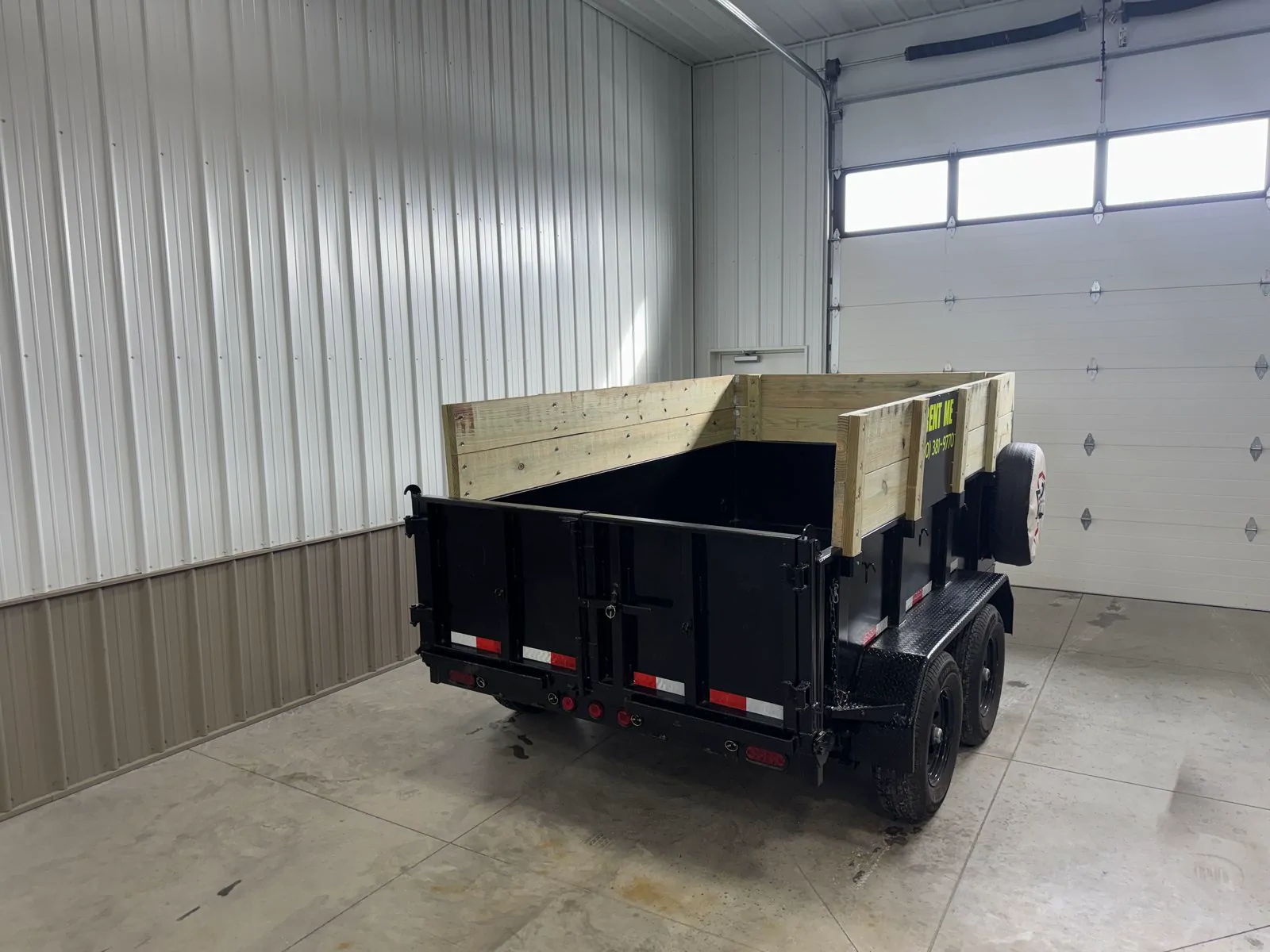
The trailer for this job: Dump Trailer — 6' x 10' · remote dump. Text Nick at (920) 381-9770 to check a date.
What Is a Dump Trailer?
A dump trailer is a trailer with a hydraulically operated bed that tilts upward from the rear, allowing bulk loads to slide out on their own. Our dump trailer has high steel sides to contain loose materials, a reinforced floor for heavy loads, and a rear gate that swings open when the bed tilts. The hydraulic system is powered by your tow vehicle's 12V electrical system — no separate power source needed.
Capacity matters: our dump trailer is rated for a substantial payload. The key limits are the legal road weight (don't exceed Wisconsin's per-axle limits) and your tow vehicle's towing capacity. When in doubt, err conservative — an overloaded trailer is dangerous and illegal.
What You Can Haul in a Dump Trailer
Yard Waste and Brush
Spring and fall cleanup in Wisconsin generates enormous amounts of brush, leaves, dead branches, and garden waste. Dump trailers make this manageable. Load branches, rake leaves into the bed, toss in garden trimmings and old sod, and when you're done, the whole load dumps in seconds at your county drop-off site. No raking it out of the truck bed, no hauling bags — one clean dump.
Fond du Lac County yard waste: The county operates yard waste drop-off sites during the spring and fall seasons. Acceptable materials typically include grass clippings, leaves, brush, and branches under a certain diameter. Check with Fond du Lac County Solid Waste for current site locations and accepted materials — rules change seasonally.
Gravel, Sand, and Crushed Stone
This is where the dump trailer earns its keep over any other option. A ton of gravel in a standard utility trailer means raking it out by hand. In a dump trailer, you drive to the spread location, tilt the bed, and the load slides out in a controlled pile. For driveway gravel, drainage stone, base material for a patio, or play sand, this is the only sane approach.
Important weight note: a cubic yard of wet gravel weighs approximately 3,200 lbs. Know your trailer's payload rating and your tow vehicle's GVWR before you load aggregate materials. Overloading is easy with dense materials.
Mulch and Topsoil
Landscape mulch runs about 800 lbs per cubic yard for hardwood mulch, up to 1,000+ lbs for wet material. A dump trailer typically handles 3-5 cubic yards comfortably depending on payload rating. For a full landscaping project — front beds, back beds, tree rings — you might need two loads. Plan accordingly and measure your beds before you rent.
Demolition and Construction Debris
Tearing out a deck, removing old drywall, clearing a concrete sidewalk — all of this generates heavy, awkward debris that's miserable to manually unload from a standard trailer. Dump trailers change the math completely. Even heavy concrete chunks and broken brick can go in when you keep each load within the weight limits. At the landfill or transfer station, the whole load tilts out.
Old Sod and Soil
Removing an old lawn or garden bed is back-breaking work. A dump trailer handles old sod, topsoil, clay subsoil, and any other excavated material. The hydraulic dump eliminates the most painful part of the job.
What NOT to Haul in a Dump Trailer
Some loads are not appropriate for a dump trailer:
- Hazardous materials — Chemicals, paint, oil, asbestos-containing materials. These require special disposal and cannot go in a rental dump trailer.
- Electronics and appliances for general disposal — Many electronics require special recycling. Check Wisconsin's e-waste rules before hauling these.
- Loads that exceed the rated payload — The trailer has a weight limit. Dense materials like concrete, stone, and wet soil reach that limit faster than you expect.
- Live vegetation with soil attached (invasive species rules) — Moving soil from sites with known invasive plants (garlic mustard, buckthorn, etc.) can spread them. Be aware of where your debris is going.
Wisconsin Yard Waste Rules
Wisconsin prohibits yard waste (grass, leaves, brush) in municipal solid waste landfills. This is actually good — it means your local municipality almost certainly has a yard waste drop-off or composting site. In Fond du Lac County, brush and yard waste drop-off locations operate seasonally. Key rules:
- Brush is generally accepted year-round at county recycling centers
- Leaves and grass clippings have seasonal acceptance windows
- Most sites require that you unload material yourself — the dump trailer makes this trivial
- Some sites charge by the load; others are free for county residents
- Call your local solid waste authority to confirm current rules before you go
How to Operate the Hydraulic Dump
Operating a dump trailer is simpler than it looks, but there are right and wrong ways to do it:
- Position your trailer correctly first. Pull forward so the rear of the trailer is over or near the dump zone. Never dump on a slope sideways — the tilted load can shift the trailer laterally. Dump on level ground whenever possible, or with the downhill side at the rear.
- Open the rear gate before activating the hydraulic system. The gate swings open; on some trailers it unlocks automatically as the bed rises. Ask Nick to demonstrate the gate mechanism before you leave.
- Engage the hydraulic pump from inside the tow vehicle. The remote or switch activates the 12V pump that raises the bed. On our trailer, this is a simple up/down switch connected to your tow vehicle's power.
- Let the load slide. Dense loads (gravel, stone) slide quickly. Brush and yard waste may need a shake or a push when the bed is fully elevated.
- Lower the bed fully before driving. Never drive with the bed raised. The trailer's center of gravity is dangerously high with the bed up, and clearance on underpasses and overhead obstacles becomes a serious hazard.
Critical: Always lower the dump bed completely before moving the vehicle. A raised dump trailer bed is unstable and can strike overhead obstructions at the dump site. Do not drive even 10 feet with the bed up.
Weight Limits and Legal Compliance in Wisconsin
Wisconsin enforces axle weight limits for all vehicles on public roads, including rental trailers. The standard single-axle limit is 20,000 lbs, but spring weight restrictions (typically March 1 through May 31 on many county roads) reduce this significantly. On posted roads during spring thaw, exceeding weight restrictions results in fines that scale steeply with the amount of overweight.
Practical guidance: don't fill the trailer to the absolute brim with dense material. Leave a safety margin. If you're running on county roads during spring, check the Fond du Lac County Highway Department for current weight restriction postings before you load up.
Tow Vehicle Requirements
The dump trailer is one of the heavier units in our fleet, especially when loaded. You need:
- A full-size pickup truck (F-150, Ram 1500, or heavier) rated for the loaded trailer weight
- A proper 2-inch ball receiver hitch (or 2-5/16" for higher-rated setups)
- A brake controller — a loaded dump trailer will exceed 3,000 lbs, triggering Wisconsin's mandatory trailer brake requirement
- Adequate tongue weight capacity — the dump trailer's tongue weight when loaded is significant; make sure your hitch and tow vehicle can handle it
Pricing and Booking
Dump trailer rental pricing reflects the equipment's hydraulic system and higher payload capacity. Text Nick at (920) 381-9770 for current rates on the specific dates you need. The dump trailer is one of our most-requested units in spring and fall — book at least a week ahead if your project is time-sensitive.
For large cleanup projects spanning multiple days, ask Nick about multi-day and weekly rates. A weekend rate is often significantly better than two separate day rates.
Frequently Asked Questions
What does a dump trailer rental cost?
The dump trailer starts at $100 for 4 hours, with 24-hour, 3-day and weekly rates available.
What can I haul in the dump trailer?
Yard waste, gravel, dirt, brush, demolition debris and general cleanup material. It is the trailer people book when unloading by hand would take longer than the job itself.
Do I need a brake controller for the dump trailer?
The car hauler, utility trailer, dump trailer and gooseneck all require a brake controller. If your vehicle does not have one, we rent a Bluetooth controller.
Is there a mileage charge on a dump trailer?
No. There are no mileage limits on any rental. You pay for the time, not the distance, and the only restriction is that the trailer stays inside the United States.