Towing a trailer for the first time feels like a bigger step than it is. The physical skills are modest and most people have them within twenty minutes. What catches first-timers out is not the driving, it is the handful of setup details that are invisible from the driver’s seat and only announce themselves at 55 mph.
The short answer: get the load balanced with weight forward, check the lights with a second person, and give yourself double the following distance. Drive it like the trailer is a thing you are responsible for rather than a thing attached to you, and the rest follows.
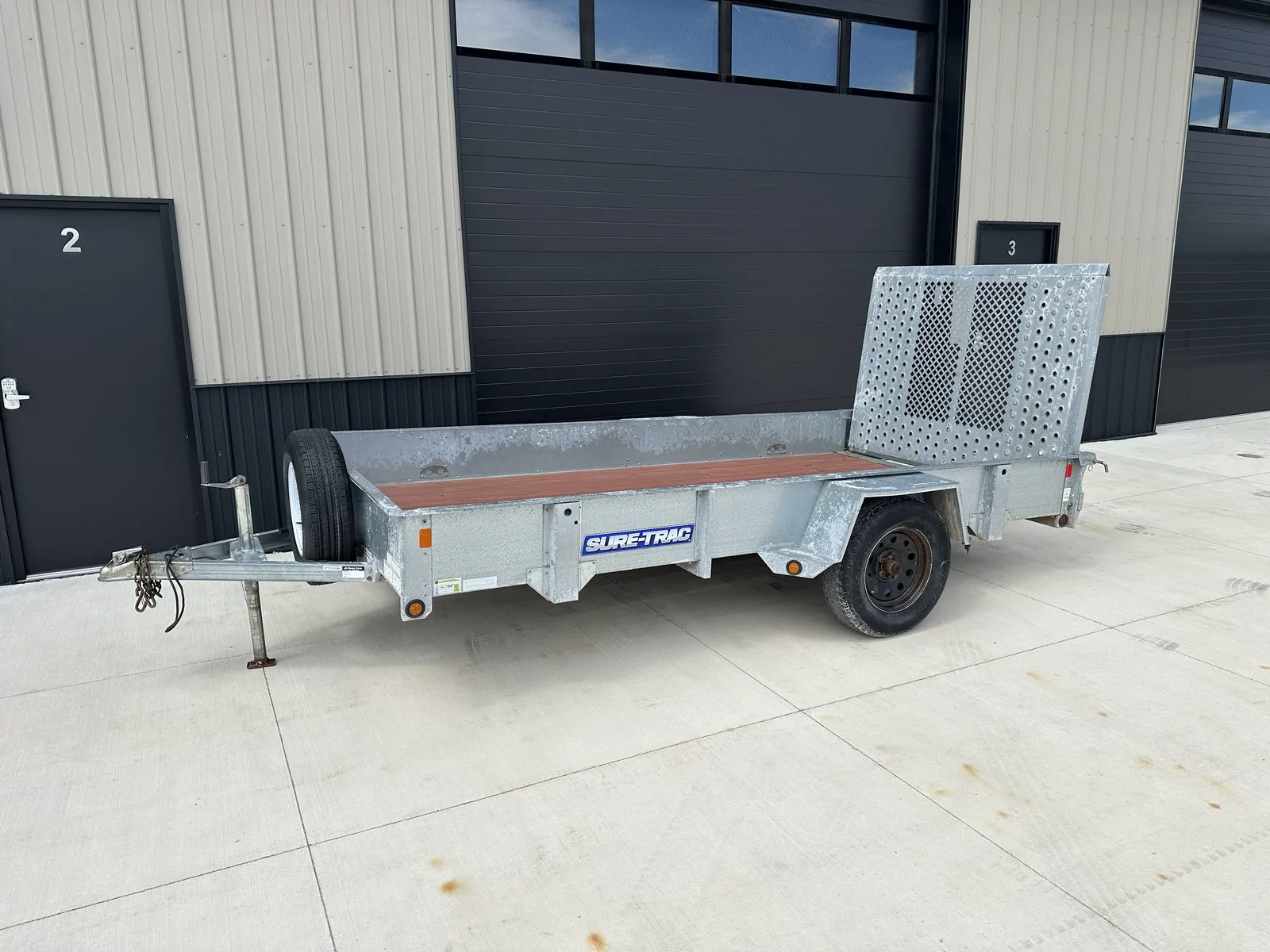
Before you leave the yard
Almost every first-time problem traces to something that could have been settled standing still.
- Coupler fully seated and latched, with the pin or lock through it. Lift the tongue with the jack to confirm it does not come off the ball
- Safety chains crossed under the tongue, with slack to turn but not to drag
- Lights checked by a second person, both sides: tail, brake, left, right
- Jack fully raised and the handle stowed
- Tyre pressures cold, trailer and tow vehicle
- Load strapped and weight forward of the axle
The lights check is the one people skip because it needs a second person. It is also the single most common reason a trailer gets pulled over. Ask whoever is at the yard with you to stand behind the trailer for thirty seconds.
Hitching up without a spotter
Backing a vehicle to a coupler alone is the first thing that feels impossible and the first thing that stops mattering. Two shortcuts make it easy.
Put something tall and visible on the coupler and a matching marker in the receiver, then line those up in the mirror rather than trying to see the hardware. Or get the vehicle roughly in line, then move the trailer the last few inches by hand. A trailer jack with a wheel rolls a modest trailer sideways with very little effort, and positioning by hand is far more precise than positioning by mirror.
The first-timer's most expensive mistake
Driving off with the coupler sitting on the ball but not latched. It looks identical from the driver's seat. Always lift the tongue with the jack after latching: if the trailer rises with it, you are connected. If the coupler lifts off the ball, you are not.
How the vehicle drives now
Four things change, and all of them are manageable once expected.
| What changes | What to do |
|---|---|
| Stopping distance roughly doubles | Double the following distance, then add more |
| Acceleration is much slower | Pull out into bigger gaps than feel necessary |
| Turns need a wider line | Go past the corner before turning in, watch the trailer wheels |
| Crosswind and passing trucks push you | Hold the wheel steady, do not correct sharply |
The turning point is the one that catches people on the first day. The trailer wheels cut inside the path of the tow vehicle, so a turn taken at your normal line puts the trailer wheels over the kerb. Swing wider than feels right and watch the trailer in the mirror through the turn.
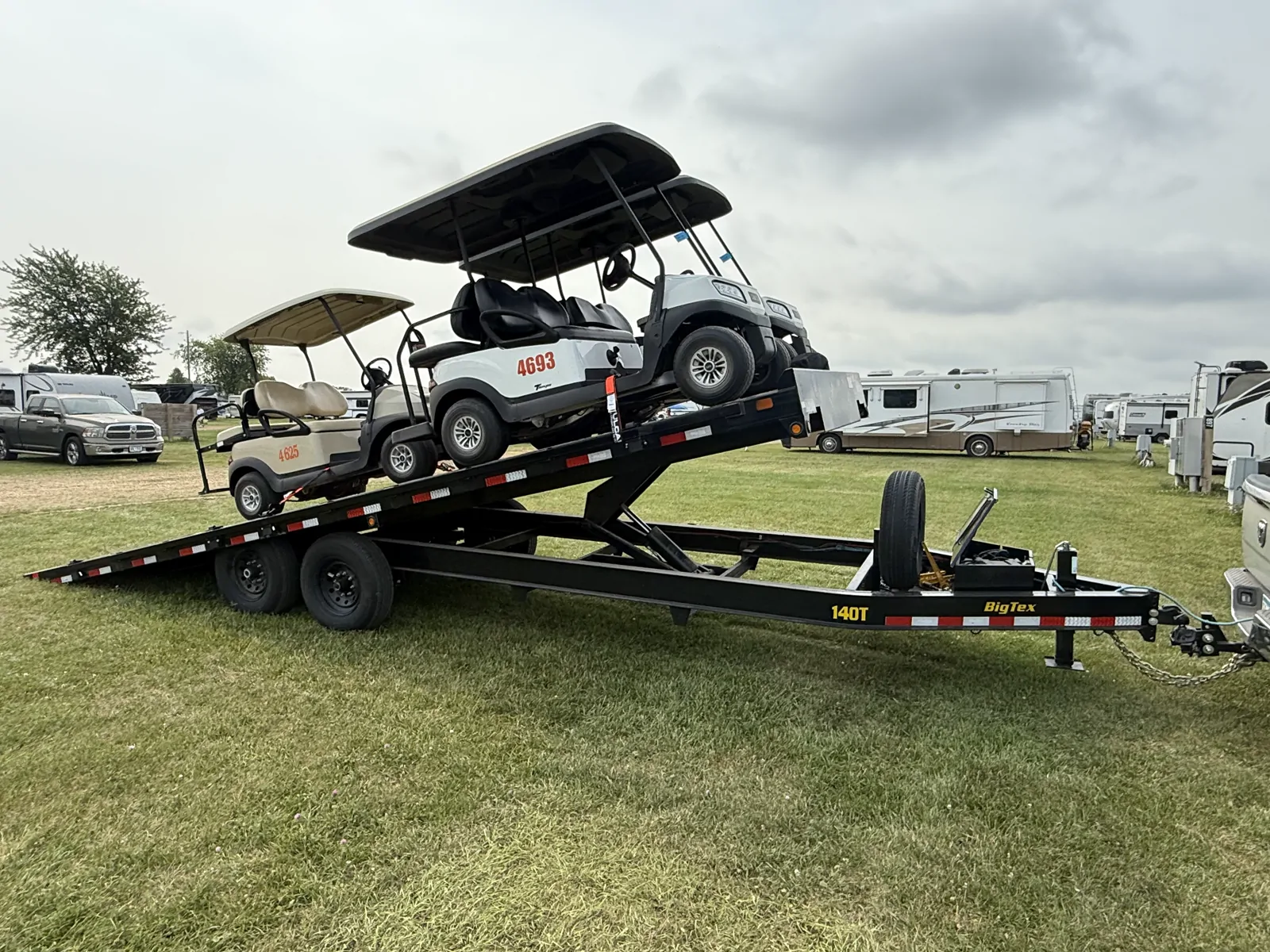
Reversing, which is genuinely a skill
Backing a trailer works backwards from normal steering and no amount of reading replaces ten minutes of practice. The two rules worth knowing before that practice:
- Hand at the bottom of the wheel. Move your hand the way you want the trailer to go
- Small inputs, then straighten. Trailers respond slowly and then all at once
- Pull forward to reset whenever it starts to jackknife, rather than fighting it
- Get out and look as often as you need to. Nobody is grading you
Spend ten minutes in an empty car park before the day you actually need it. There is a full walkthrough in how to back up a trailer.
Speed, lanes and the motorway
Keep to 55 to 60 mph. That is below the posted limit on most Wisconsin interstates and it is the right number for three independent reasons: many trailer tyres are speed rated around 65 mph, stability margins narrow sharply above 60, and fuel consumption climbs steeply.
Stay out of the far left lane. Being overtaken by a semi pushes the trailer sideways and then pulls it back, and it is much easier to ride out with space on one side. Hold the wheel steady and let it happen rather than correcting.
The first stop
Pull over after the first five miles, every time, without exception. Loads settle, straps that were tight are now slack, and a coupler that was not quite right announces itself early rather than late.
- Re-tension every strap, which will have loosened
- Check the coupler is still latched and the pin in place
- Feel the hubs. Warm is normal, too hot to touch is a bearing or a dragging brake
- Walk around the trailer and look at the tyres
Choosing the right trailer the first time
First-timers tend to make one of two opposite errors: renting the biggest trailer available because it feels safer, or renting the smallest because it feels less intimidating. Both make the day harder.
A trailer that is too large is heavier, harder to reverse, harder to park and more affected by crosswind, and a part-full trailer lets the load move around. A trailer that is too small means two trips, or worse, a load stacked above the sides and badly balanced. Describe the actual load and let someone who rents these out every week pick the size; that advice costs nothing and is the single most useful thing available to a beginner.
There is a full sizing walkthrough in what size trailer do I need, and the rates for each are in trailer rental costs.
Parking and fuel, which nobody mentions
Two practical things change the moment a trailer is attached, and neither appears in towing guides.
- You cannot park normally. Plan where you will stop before you need to, because a combination needs a pull-through space or a long kerb
- Fuel stations need thought, since many forecourts cannot be navigated with a trailer. Fill up before you hook up
- Drive-throughs are out, which sounds trivial until lunchtime
- Reversing out of a space is the hardest manoeuvre there is, so never nose into anywhere you cannot drive out of
That last rule is worth taking literally on the first day. Always leave yourself a forward exit. Experienced tow drivers do this automatically and beginners discover it the hard way in a supermarket car park.
Fuel consumption and planning the day
Expect fuel consumption to fall by 20 to 40 percent with a loaded trailer behind, more with a tall enclosed trailer at highway speed. For a local move this is negligible; for a longer haul it is worth building into the plan.
It is also worth building time in. Everything takes longer: loading, the drive, parking, unloading. A move that would be two hours in a van is three and a half with a trailer, and the most common first-time stress comes from a four-hour rental on a job that needed the day rate.
Returning the trailer
The end of the day is when tired people make the mistakes they avoided all morning.
- Sweep it out, which takes two minutes and is expected
- Check for anything left behind, particularly straps that are part of the rental
- Unhitch on level ground, with the trailer chocked before the coupler comes off the ball
- Lower the jack fully before releasing the latch, not after
- Say what happened if anything went wrong, because a light that stopped working matters to the next renter
Unhitching on a slope with nothing chocked is the classic end-of-day error, and a trailer that starts rolling with the coupler already released is very difficult to stop.
What usually goes wrong, and it is a short list
| Mistake | What happens | Fix |
|---|---|---|
| Heavy item loaded at the back | Sway at speed | Weight forward of the axle |
| Coupler not latched | Trailer separates | Lift test with the jack |
| Lights not checked | Pulled over, or invisible at night | Second person, thirty seconds |
| Straps not re-checked | Load shifts in transit | Stop at five miles |
| Turning too early | Trailer wheels over the kerb | Swing wide, watch the mirror |
That is nearly the whole list. None of them require skill to avoid, only the knowledge that they exist, which is why a walk-through at pickup is worth more than any amount of reading.
If this is your first time, say so when you book. Text Nick at (920) 381-9770 and you will get the trailer matched to your vehicle and a proper walk-through rather than a set of keys. Worth reading next: what your vehicle can actually tow and the pre-tow safety checklist.