Hitch terminology is a mess because four different parts are all casually called “the hitch”. The receiver bolted to the vehicle, the ball mount that slides into it, the ball on top of that, and the coupler on the trailer that drops over the ball are four separate components, each with its own rating, and the weakest one governs the entire setup.
That last point is the one that matters. A truck rated to tow 10,000 lbs, with a Class V receiver, fitted with a ball rated to 3,500 lbs, is a 3,500 lb towing setup. The ball is the cheapest part and the one nobody examines.
The four parts, in order
| Part | What it is | Where the rating is |
|---|---|---|
| Receiver | The square tube bolted to the vehicle frame | Stamped on a label or the tube itself |
| Ball mount | The removable bar that slides into the receiver | Stamped on the shank |
| Ball | The sphere the trailer sits on | Stamped on the top of the ball |
| Coupler | The socket on the trailer tongue | Stamped on the coupler body |
Receiver classes
Receivers are classed by capacity and opening size. The opening matters because a ball mount for a 2-inch receiver will not fit a 1.25-inch one.
| Class | Opening | Typical capacity | Typical use |
|---|---|---|---|
| I | 1.25" | Up to 2,000 lbs | Cars, bike racks |
| II | 1.25" | Up to 3,500 lbs | Small SUVs, light utility trailers |
| III | 2" | Up to 8,000 lbs | The common truck and SUV fitment |
| IV | 2" | Up to 10,000 lbs | Heavier trucks |
| V | 2.5" or 3" | 10,000 lbs and above | Heavy equipment towing |
Class III is what most half-ton trucks and full-size SUVs carry, and it covers the majority of this fleet. Anything heavier, particularly the gooseneck deckover, does not use a receiver at all.
Ball sizes, and why this catches people
There are three common ball diameters and they are not interchangeable. A coupler stamped 2-5/16 will appear to sit on a 2-inch ball and will come off over the first bump, which is exactly how trailers are lost.
| Ball size | Typical capacity | Used on |
|---|---|---|
| 1-7/8" | 2,000–3,500 lbs | Small utility trailers, boat trailers |
| 2" | 3,500–8,000 lbs | Most utility and enclosed trailers |
| 2-5/16" | 6,000–30,000 lbs | Heavy trailers, equipment, dump |
Check the coupler, not the ball
The trailer tells you what it needs. Every coupler has its required ball size stamped on it, usually on the top or the side. Read that, then match the ball. Guessing from how it looks is unreliable because 2 inch and 2-5/16 inch are visually similar.
Our hitch ball size guide goes through this in more detail, including which of our trailers takes which ball.
Shank diameter, the second ball dimension
Below the ball is a threaded shank, and it has its own diameter, commonly 3/4 inch or 1 inch. The ball mount has a matching hole. A 1-inch shank will not pass through a 3/4-inch hole, and a 3/4-inch ball fitted to a 1-inch hole with a washer is a failure waiting to happen.
Higher-rated balls use the larger shank, which is why upgrading from a 2-inch to a 2-5/16-inch ball sometimes means a new ball mount as well.
Drop and rise: getting the trailer level
A ball mount is not just a bar. It has a drop or a rise, measured in inches, which sets the ball height. The aim is a trailer that sits level when coupled.
- Trailer nose-high puts weight on the rear axle, lightens the tongue and invites sway
- Trailer nose-low overloads the tongue and the front of the trailer, and scrapes on driveways
- Level distributes weight as the trailer was designed for
Measure the coupler height with the trailer level and unhitched, then measure your receiver height, and the difference is the drop or rise you need. Ball mounts are inexpensive and come in several drops, and getting this right does more for towing stability than almost anything else.
Couplers and how they lock
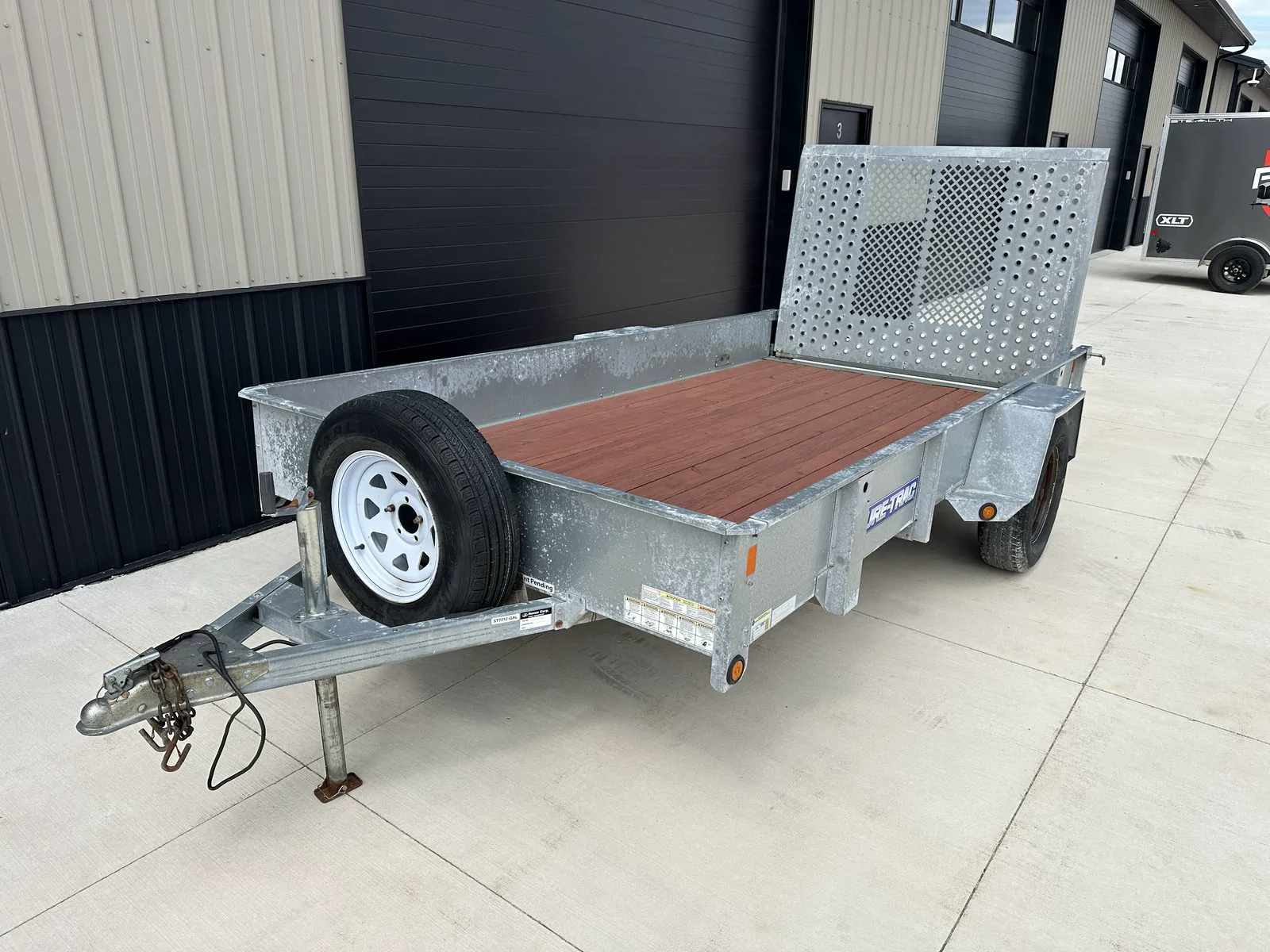
The coupler is the socket on the trailer tongue, and it latches over the ball in one of a few ways.
- Lever latch: a handle that flips up and down. Simple and common on utility trailers
- Screw or collar: a threaded collar tightened by hand, common on older or heavier trailers
- Gooseneck ball coupler: couples to a ball in the truck bed rather than at the bumper
Whatever the type, the check is the same: after latching, try to lift the coupler off the ball. If it lifts at all, it is not latched. A coupler sitting on top of the ball rather than around it looks almost identical from the driver’s seat and is the single most dangerous hitching error.
Safety chains, correctly
Chains are not decoration and they have a correct configuration.
- Cross them under the tongue in an X. If the coupler releases, the crossed chains cradle the tongue instead of letting it hit the road
- Enough slack to turn, not enough to drag. A dragging chain wears through and fails
- Attach to the frame or designated loops, never to the ball mount pin or the bumper
Gooseneck, which is a different system
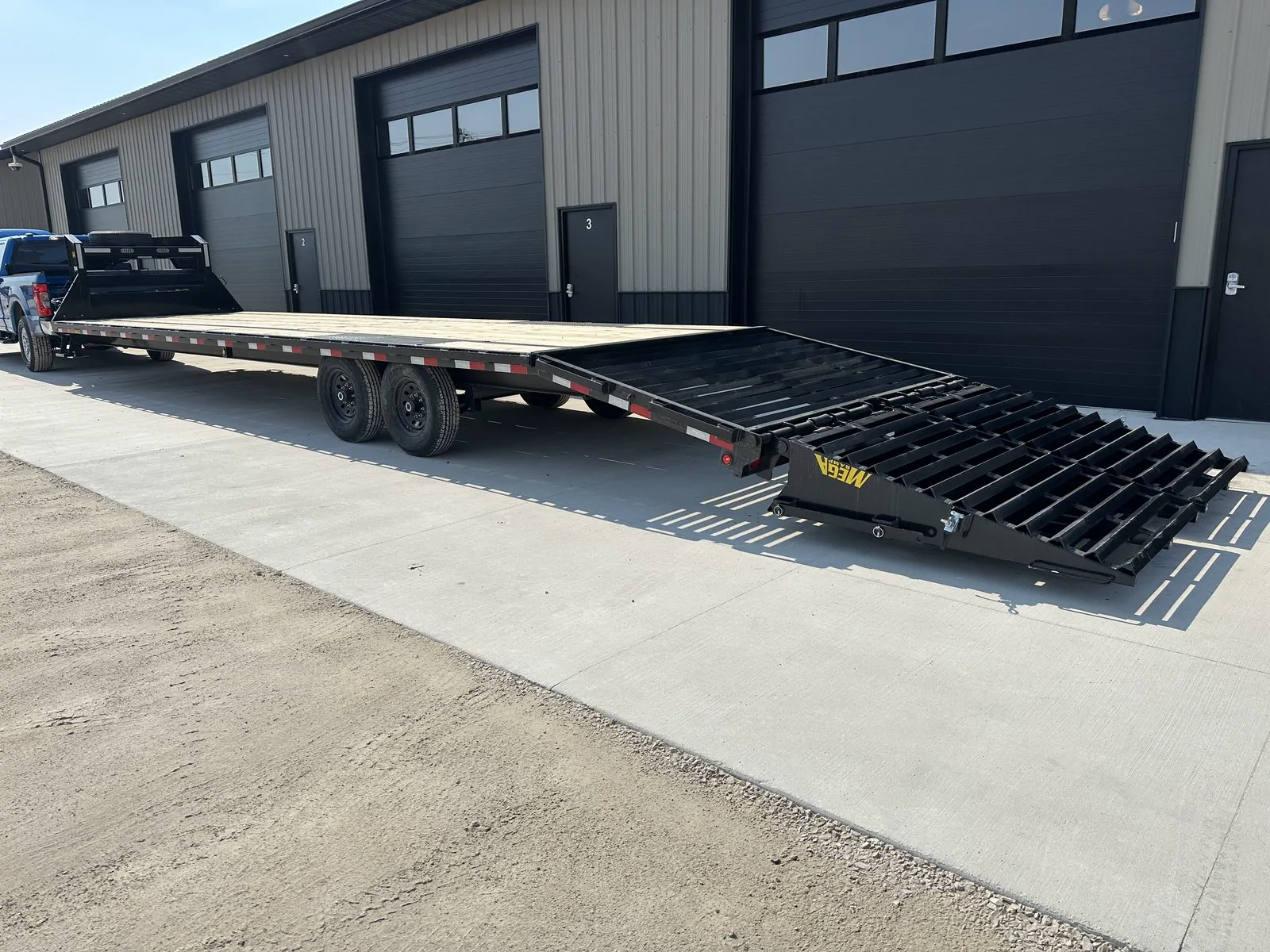
The gooseneck deckover does not use a receiver. It couples to a ball mounted in the bed of a pickup, directly over or just ahead of the rear axle.
The advantage is that the weight sits over the axle rather than behind it, which dramatically improves stability and allows much heavier loads. The requirement is that your truck must already have a gooseneck ball installed in the bed, which is an installed accessory rather than something that can be added in the yard.
If your truck does not have one, the gooseneck is not an option for that trip regardless of its towing capacity. It is worth confirming before booking.
Weight distribution hitches
For heavy tongue weights, a weight distribution hitch uses spring bars to transfer some of the tongue load forward to the tow vehicle’s front axle. It restores steering feel and headlight aim on a vehicle that is squatting at the rear.
None of this fleet requires one, but if you tow regularly and your vehicle visibly sags when hitched, it is worth investigating.
A pre-hitch check that takes thirty seconds
- Coupler size stamped on the trailer matches the ball
- Coupler fully seated and latched, and will not lift off
- Safety pin or clip through the latch
- Chains crossed, attached to frame, correct slack
- Breakaway cable attached to the vehicle, not the ball mount, on trailers that have one
- Electrical plug seated, and lights tested
- Jack fully raised and secured
The full pre-departure routine is in the trailer safety checklist.
What our trailers need
Most of the fleet uses a 2-inch ball on a Class III receiver. The heavier trailers, including the dump trailer, step up to 2-5/16 inch, and the gooseneck deckover needs an in-bed gooseneck ball. The heavier trailers also require a brake controller, covered in the brake controller guide.
If you are unsure what your vehicle has, send a photo of your hitch to (920) 381-9770 and we will tell you what you need before you drive over.
Pintle, lunette and the heavier systems
Two systems appear on agricultural and commercial equipment that most renters will never need but will occasionally see.
A pintle hook is a hinged jaw on the tow vehicle that closes around a lunette ring on the trailer. It is noisier and sloppier than a ball coupler by design, with deliberate play that lets the combination articulate over rough ground without binding. That is why it is used on farm and construction equipment and why it is unpleasant on pavement.
A fifth wheel is the plate-and-kingpin arrangement on semi trailers, and a scaled-down version appears on large RVs. Like a gooseneck it puts the load over the rear axle, but it couples through a plate rather than a ball and is not interchangeable with one.
Neither is used on this fleet. The gooseneck deckover is the heaviest coupling here and it uses a ball in the truck bed.
Locks, and what they actually prevent
Two different locks solve two different problems and people often buy the wrong one.
- A coupler lock fits over the coupler when the trailer is unhitched, stopping someone dropping it onto their own ball and driving off. This is the theft deterrent
- A hitch pin lock replaces the pin holding the ball mount in the receiver, stopping someone removing the ball mount. This protects the hardware, not the trailer
If a trailer is left unattended anywhere, the coupler lock is the one that matters. A wheel clamp is better still for anything left overnight, because a determined thief can defeat a coupler lock with a jack and a strap more easily than a clamp.
Rust, wear and when to replace
Hitch components are steel living under a vehicle in a salted state, and they do not last forever.
- A worn ball develops flat spots and a reduced diameter. If the coupler rattles noticeably on a correctly sized ball, the ball is worn
- A stretched coupler no longer grips. Latch it on a good ball and try to lift it; movement means replacement
- Receiver rust matters when it is flaking at the welds or the mounting points, not when it is surface colour on the tube
- Chain links wear thin where they rub. Check the links nearest the hooks, which do the most work
All of these are inexpensive parts. A new ball costs very little and a coupler is not much more. Replacing either is far cheaper than the alternative.
Hitching alone
Backing a vehicle to a coupler without a spotter is a skill, and there are two shortcuts that make it straightforward.
The first is a length of plastic pipe or a tall marker in the receiver and a matching one on the coupler, so both are visible over the tailgate and you line up the markers rather than the hardware. The second is to get the vehicle roughly in line, then move the trailer rather than the vehicle for the last few inches: a trailer jack with a wheel will roll a modest trailer sideways easily, and precise positioning is far simpler by hand than by mirror.
Reversing practice generally is covered in how to back up a trailer, which is worth ten minutes in an empty car park before it matters.
The short version
Four components, four ratings, and the lowest one wins. Read the coupler stamp and match the ball to it rather than guessing. Match the shank to the ball mount. Get the drop right so the trailer sits level. Cross the chains. And always try to lift the coupler off the ball before you drive away.
Keep Reading
- How to Stop Trailer Sway — getting tongue weight right
- First Time Towing a Trailer — towing for the first time