Hitch ball sizes trip people up more than almost any other aspect of trailer rental. The ball looks fine. The coupler drops over it. Everything appears connected — and then on the highway at 60 mph, the coupler bounces off the wrong-sized ball and the trailer goes somewhere you don't want it to go. This guide explains exactly how ball sizes work, how to confirm you have the right one, and the safety consequences of a mismatch.
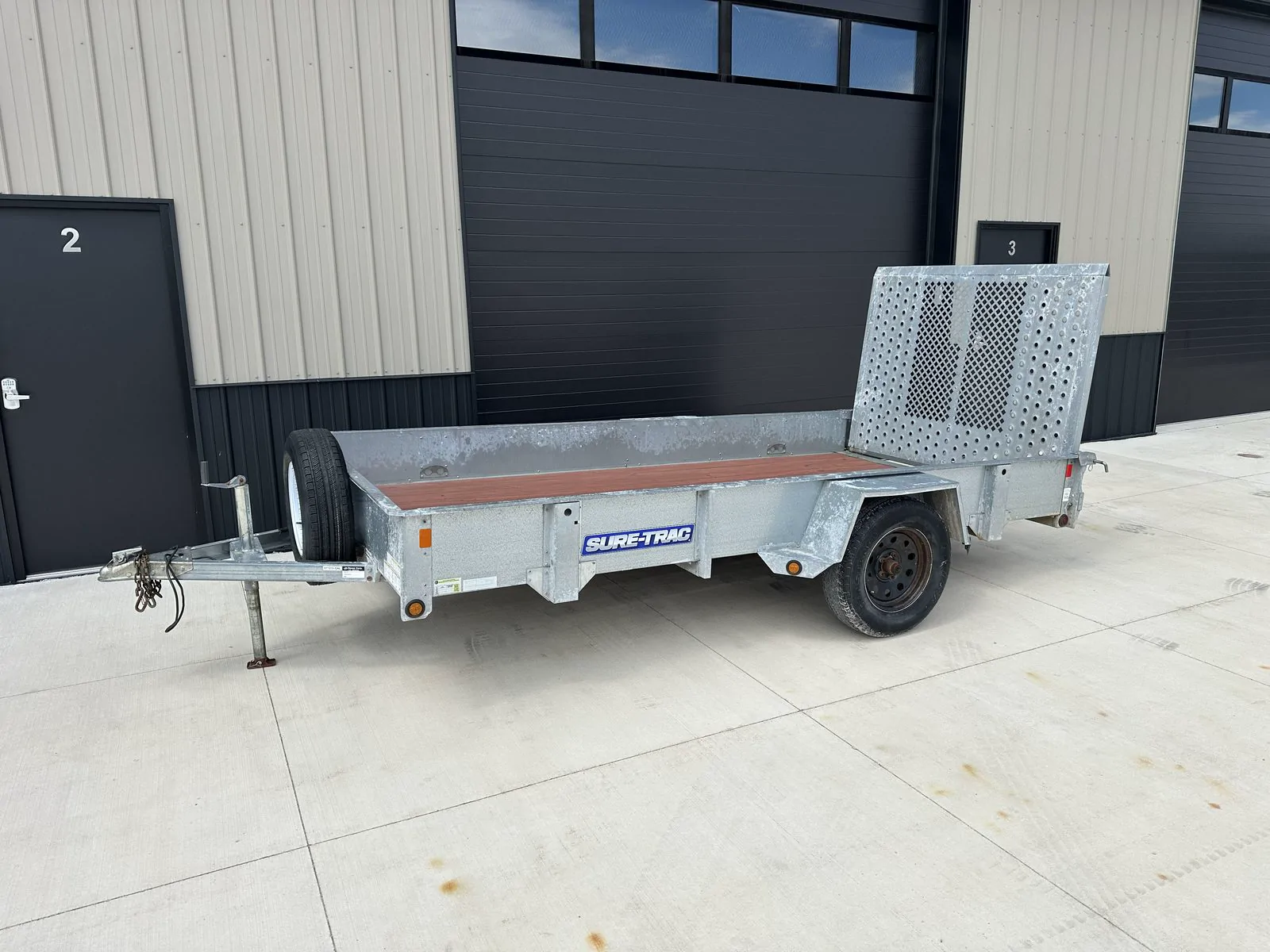
The trailer for this job: Utility Trailer — 6' x 12' · open deck. Text Nick at (920) 381-9770 to check a date.
The Three Standard Ball Sizes
| Ball size | Typically used on | In the Fondy fleet |
|---|---|---|
| 1-7/8 inch | Very light trailers: small utility, boat trailers under 2,000 lb | Rarely |
| 2 inch | Most utility, enclosed cargo, car hauler and dump trailers in the light-to-medium range | Most of the fleet |
| 2-5/16 inch | Heavy-duty: large gooseneck, fifth-wheel, large boat and commercial equipment trailers | The gooseneck |
There are three hitch ball sizes in common use in the United States:
- 1-7/8 inch — Used on very light trailers: small utility trailers, boat trailers under 2,000 lbs, lightweight cargo trailers. Rarely seen on the trailers in our fleet.
- 2 inch — The most common size. Used on the majority of utility trailers, enclosed cargo trailers, car haulers, and dump trailers in the light-to-medium duty range. This is the ball size you need for most of our fleet.
- 2-5/16 inch — Used on heavy-duty trailers: large gooseneck trailers, 5th-wheel trailers, large boat trailers, and commercial equipment trailers. Our gooseneck trailer uses this size.
Quick reference for our fleet: Enclosed cargo, utility, car hauler, and dump trailer = 2-inch ball. Gooseneck trailer = gooseneck coupler (in-bed ball, specific to gooseneck setup). Text Nick if you're unsure — he'll confirm before you drive over.
How Ball Sizes Are Stamped and Identified
The ball size is stamped directly on the top or side of the ball. Look for a number like "2" or "2-5/16" on the ball itself. If the ball is corroded and unreadable, measure the diameter with a caliper or a tape measure. The measurement is the ball's widest diameter at its equator — not the shank or the nut.
The coupler (the part on the trailer tongue that connects to the ball) also has its size stamped on it, typically on the coupler body near the latch. If you can't read the trailer's coupler stamp, check the trailer's documentation or ask Nick when you book.
What Happens With the Wrong Ball Size
Ball Too Small (e.g., 2-inch ball in a 2-5/16-inch coupler)
This is the dangerous scenario. A small ball will drop into a large coupler and the latch will appear to close. The coupler seats partway on the ball and the latching mechanism may even lock — but the connection has excessive play. What happens:
- The trailer bounces on the ball with each road imperfection, wearing both the ball and coupler rapidly
- The coupler can work itself off the ball during cornering, braking, or rough road conditions
- In a hard braking event or sharp maneuver, the connection can fail completely — the trailer separates
- A separated trailer at highway speed is a catastrophic and potentially fatal road event
Ball Too Large (e.g., 2-5/16-inch ball in a 2-inch coupler)
The coupler simply won't seat — the ball won't fit into the coupler socket. This is immediately obvious and prevents the connection from happening. You'll find out at the pickup location, not on the highway. This scenario is annoying but safe because it's unmistakable.
How to Check Your Current Hitch Ball
If you're not sure what ball is on your hitch right now, here's how to confirm:
- Read the stamp on the ball. Clean off any dirt or rust with a wire brush. The size is almost always stamped directly on the ball top or side.
- Measure it. Use a tape measure or caliper across the widest point of the ball sphere. A 2-inch ball measures 2 inches; a 2-5/16-inch ball measures 2-5/16 inches (about 2.31 inches).
- Look at the ball mount/shank. The ball mount (the plate the ball threads into) is often stamped with both the ball size and the maximum gross trailer weight for that ball/mount combination.
- Check the hitch receiver class. Hitch receiver class (Class I through Class V) doesn't directly indicate ball size, but Class III and above are typically paired with 2-inch balls; Class IV and V may be paired with 2-5/16-inch balls.
Gross Trailer Weight Ratings by Ball Size
Ball size correlates with weight capacity. Using a ball and mount combination that's undersized for your trailer's weight is a safety violation even if the ball size is technically correct:
- 1-7/8-inch ball: Maximum gross trailer weight typically 2,000 lbs or less
- 2-inch ball: Available in multiple weight ratings — 3,500 lb, 6,000 lb, 10,000 lb, and higher depending on the ball/shank grade. The ball must be rated for at least the loaded trailer weight.
- 2-5/16-inch ball: Typically rated 10,000 lb and above; heavy-duty versions rated to 14,000-20,000 lbs
Check the gross weight rating stamped on your ball mount, not just the ball. A 2-inch ball on a 3,500-lb-rated mount cannot legally or safely tow a 6,000-lb trailer, even though the ball size is technically compatible.
The Gooseneck — A Different Setup Entirely
Our gooseneck trailer doesn't use a conventional bumper hitch at all. It uses a gooseneck coupler that connects to a ball mounted in the bed of a pickup truck. The gooseneck ball is typically 2-5/16 inches and mounts through the floor of the truck bed on a purpose-built hitch plate. This is not the same as a bumper-mounted 2-5/16-inch ball — the gooseneck is a physically different mounting system and requires a gooseneck hitch kit installed in the truck bed.
If you're booking the gooseneck, confirm with Nick that your truck has a gooseneck hitch kit installed. A standard bumper hitch, even rated to 10,000+ lbs, is not compatible with our gooseneck trailer.
What to Do Before You Pick Up
- Identify which trailer you're renting and confirm the required ball size with Nick when you book
- Check your current ball's stamp or measure it
- If your ball is the wrong size, buy the correct ball at AutoZone, O'Reilly, or a farm supply store before your rental day — a 2-inch ball and mount typically costs $15-30
- Confirm the replacement ball's gross weight rating is appropriate for your planned load
- If your hitch mount requires removing the existing ball, you'll need a 1-1/4" or 1-1/2" wrench and the correct socket to swap it out
When you arrive to pick up, Nick will walk through the hitch connection with you and confirm everything is properly matched before you drive off. Getting the ball size right is one of the most important steps in a safe rental — it takes 30 seconds to verify and potentially prevents a catastrophic failure.
Frequently Asked Questions
What size hitch ball do I need?
It has to match the number stamped on your trailer coupler exactly. Most of our trailers use a 2-inch ball; the heavier ones use 2-5/16 inch. A ball that is too small can let the coupler come off under load.
Can I rent a hitch ball?
Yes. We rent 2-inch and 2-5/16-inch balls for $10 a day, so a mismatch does not stop you renting.
How do I check which one my trailer takes?
Look at the top of the coupler. The size is stamped into the metal. If you cannot read it, send Nick a photo before you drive over.
What else do I need besides the ball?
A tow vehicle rated for the load, working lights, and for the car hauler, utility, dump or gooseneck, a brake controller.