The two biggest causes of trailer trouble on Wisconsin roads are the same every year: unhooked couplers and blown tires. Both are prevented with a five-minute walkaround before you pull out of the lot. This is the checklist we use with every renter picking up a trailer from Fond du Lac. Print it, screenshot it, or memorize the order — it works for everything from the 6x12 utility to the 30+5 gooseneck deckover.
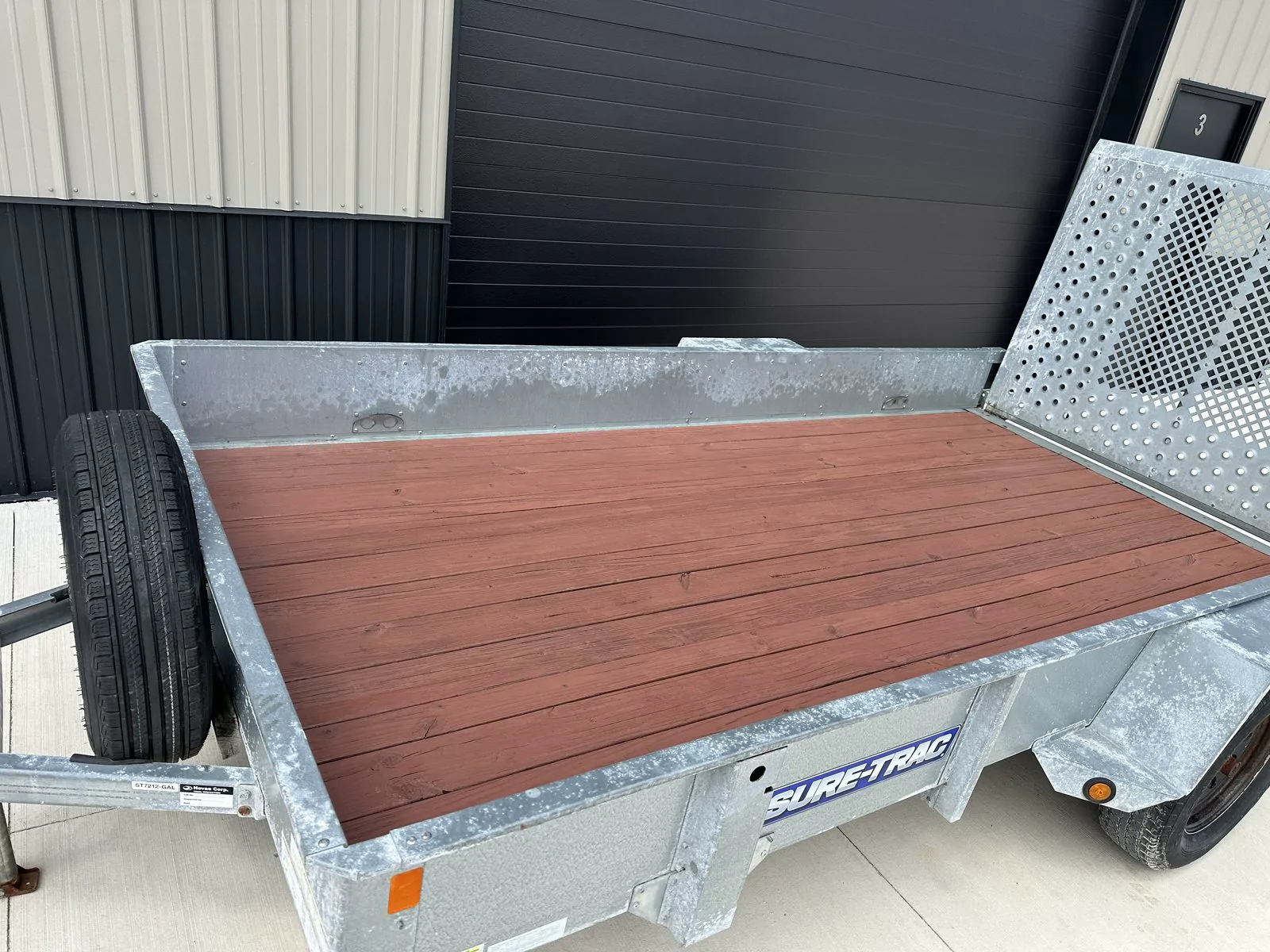
The trailer for this job: Utility Trailer — 6' x 12' · open deck. Text Nick at (920) 381-9770 to check a date.
Do the full walkaround twice. Once at pickup with Nick, and again at your first fuel or coffee stop after the trailer has actually been on the road for 30-45 minutes. That second check catches the loose straps, warm bearings, and settled loads the first check couldn't have seen.
Hitch and Coupler
- Correct ball size. Every trailer in our fleet is labeled. 2" ball for most utility and small enclosed, 2-5/16" for car haulers and deckovers. Wrong size = failed coupling that looks connected.
- Coupler fully seated. The latch should drop cleanly over the ball. If it sits high, the ball is not seated.
- Latch locked and pinned. Pin or padlock through the latch hole so it cannot bounce open.
- Lift test. Retract the tongue jack, then try to lift the tongue with the jack. If the whole truck lifts, you are connected. If the trailer pops off the ball, you were about to lose it on the highway.
Safety Chains
- Both chains crossed under the coupler in an X pattern. If the trailer separates, the coupler drops into the cradle instead of onto the road.
- Enough slack to make full turns without binding, but not so much they drag pavement.
- Hook clips facing up so they cannot shake off.
Breakaway Cable
Every trailer with electric brakes (enclosed, dump, car haulers, and deckovers) has a breakaway cable that triggers the trailer brakes if it comes off the truck.
- Cable attached to a solid part of the tow vehicle — not to the safety chains, not to the ball mount.
- Enough slack for tight turns, not enough to drag or catch on the drawbar.
- Pin fully seated in the trailer end. If it is pulled, the trailer thinks it is disconnected and applies brakes.
Electrical Plug and Lights
Do the lights check every single time. It takes 60 seconds with a helper (or your phone camera propped on the ground behind the trailer).
- Left turn signal — both truck and trailer flashing left
- Right turn signal — both flashing right
- Brake pedal — both brake lights lit
- Running lights on — all clearance and marker lamps lit
- License plate light lit (that one gets Wisconsin drivers pulled over more than they realize)
If any light is out, tell Nick before you leave — he will swap the bulb or fix the ground on the spot.
Brake Controller Setup
If you are renting the dump, an enclosed trailer, a car hauler, or a deckover, your truck needs a functioning brake controller.
- Set the gain so a firm pedal at 20 mph on flat pavement gives noticeable trailer braking without locking the wheels.
- Test the manual override slider. It should apply the trailer brakes without touching the truck pedal.
- Adjust gain up when heavy, down when empty. A loaded gooseneck deckover needs way more gain than an empty utility.
Tires
- Pressure cold, at the sidewall spec. Trailer tires are usually 65-80 psi. Underinflated trailer tires blow apart at highway speed — this is the #1 tire failure mode.
- Check for cracking and dry rot. Even trailer tires with plenty of tread can be age-failed. All Fondy trailers get inspected between rentals.
- Look at every wheel. Loose lug nut, missing valve cap, and rock stuck in a dual are all easy catches on a walk.
Suspension, Bearings, and Under the Trailer
- Bearing temperature check. After the first 30 minutes on the road, put the back of your hand on each hub. Warm is normal. Untouchable is not — pull off and call Nick.
- Springs and shackles. Quick visual under the trailer for anything hanging, cracked, or bent.
- Ramps stowed. On the 20-foot car hauler and the tilt deckover, verify ramps are up, latched, and pinned.
Load Check
- 60% of the load weight forward of the axle, 10-15% tongue weight (bumper pull) or 20-25% (gooseneck)
- Every strap ratcheted, all cam buckles seated
- Nothing loose in an enclosed trailer — anything that can slide will slide toward the door on a hard stop
- Rear door / ramp closed, pinned, and latched
Wisconsin-Specific Stuff
- Trailer plate visible. WI plate on the rear, unobstructed, lit.
- Registration paperwork in the truck. Nick provides it at pickup; keep it with you, not in the trailer.
- Speed limit awareness. Wisconsin lets you tow at posted highway speeds, but 65 with a loaded trailer is not the same as 65 in a car. Bump down 5-10 mph when heavy.
- Winter add-ons. Salt-slick ramps, frozen wheel chocks, and ice on the coupler are all normal in November through March. Keep gloves and a small torch in the truck.
Departure Checklist (60 Seconds)
- Coupler locked and pinned
- Chains crossed and hooked
- Breakaway cable connected with slack
- 7-pin plugged in, lights confirmed
- Tongue jack fully retracted
- Wheel chocks removed and stowed
- Straps checked one more time
- Doors and ramps latched
Book with Confidence
Text Nick at (920) 381-9770 to reserve. Every Fondy trailer gets a full inspection between renters and Nick walks the whole checklist with you at pickup. Fond du Lac pickup, no mileage limits, and real answers if anything on the trailer looks off before you leave the lot.
Frequently Asked Questions
What should I check before towing?
Coupler latched and pinned, safety chains crossed under the tongue, lights working on both sides, tyre pressure on trailer and tow vehicle, load strapped and balanced, and the jack fully up.
Why cross the safety chains?
Crossed chains make a cradle under the tongue. If the coupler ever lets go, the tongue drops into the chains instead of into the road.
What do I check once I am moving?
Pull over after the first few miles and re-check the straps and the coupler. Loads settle and straps loosen, and that first stop catches most problems.
Is anything already in the trailer?
Every trailer goes out stocked: ratchet straps, D-rings, ramps, a spare tire, bottle jack, lug wrench and work gloves. You do not need to bring hauling gear.