A pickup bed is six and a half feet long. A standard stud is eight feet, a sheet of plywood is eight by four, and a length of trim can be sixteen. The mismatch is why so many people drive home from the lumber yard with a red rag tied to something, a tailgate down and a nagging sense that this is not quite legal.
It frequently is not. This guide covers what the overhang rules actually are, how to strap long material so it stays put, and which trailer makes the job straightforward instead of improvised.
The overhang rules
Wisconsin requires a red flag on any load extending more than four feet beyond the rear of the vehicle during daylight, and a red light rather than a flag after dark. The flag must be at least twelve inches square.
More importantly, overhang is not unlimited just because you have flagged it. A long overhang behind a short wheelbase is unstable: the load acts as a lever and the further it extends, the more it amplifies every bump into movement at the tail. A sixteen-foot board overhanging eight feet from a pickup bed will flex, work against its straps and eventually walk.
- Under four feet: no flag required, but secure it properly regardless
- Over four feet: red flag by day, red light by night
- Over about six feet: legal with flagging, but genuinely worth a trailer instead
What fits where
| Material | Pickup bed | 6x12 utility | 18ft utility |
|---|---|---|---|
| 8' studs | Overhanging, tailgate down | Flat, no overhang | Flat, easily |
| 4x8 sheet goods | Flat if bed is wide enough | Flat, four or five sheets | Flat, stacked |
| 12' boards | Significant overhang | Minor overhang | Flat |
| 16' boards | Not sensible | Four feet over, flag it | Minor overhang |
| Pallet of pavers | Weight limited | Fits, watch weight | Comfortable |
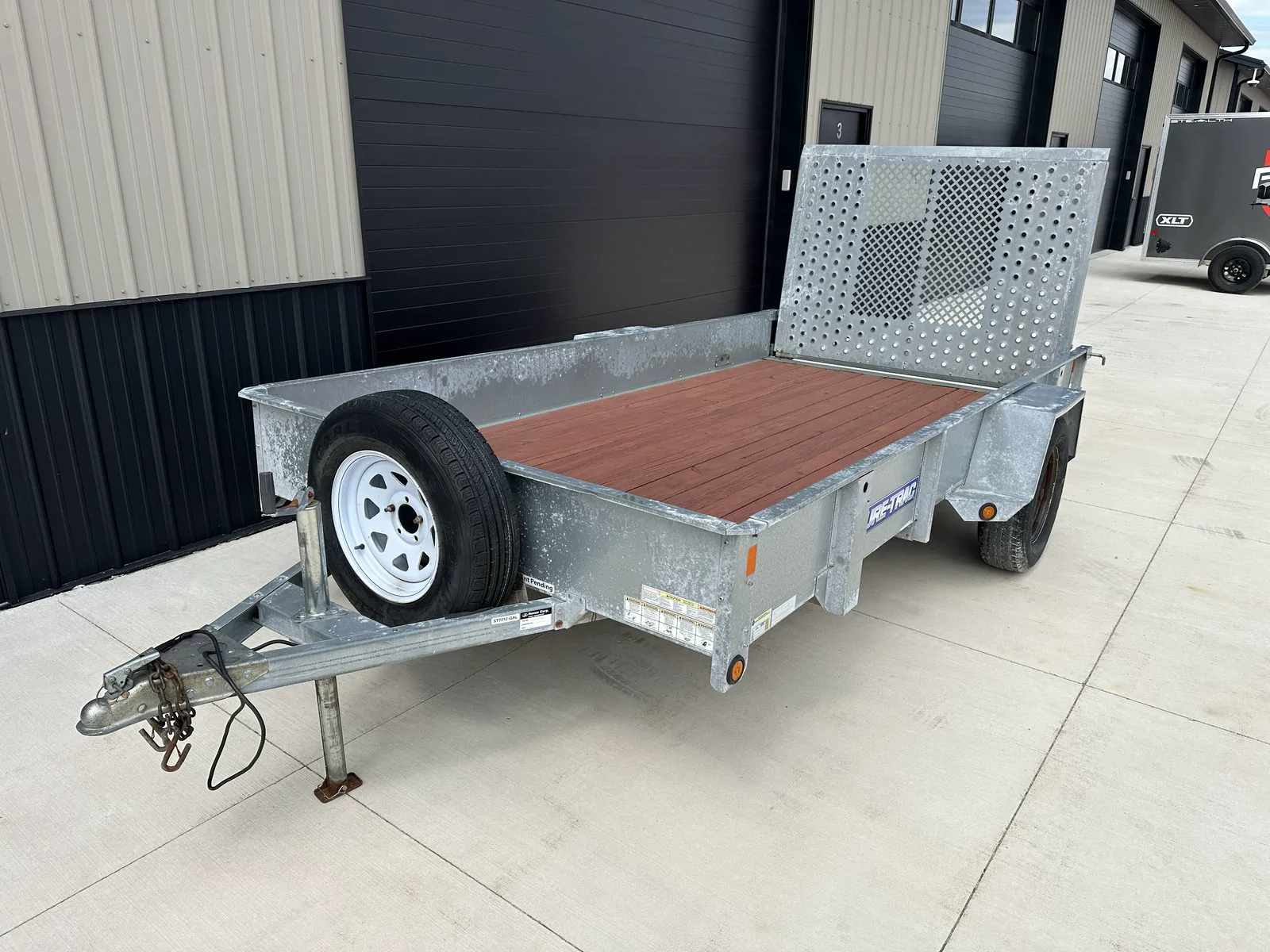
The 6' x 12' utility trailer at $40 for four hours is the trailer most of this goes on. The 18ft utility trailer at $75 handles full-length material without overhang at all, which for sixteen-foot trim or steel is worth the difference.
Weight is the limit, not space
Building materials are dense, and the deck fills up long after the weight limit does. Running figures worth knowing:
| Material | Approximate weight |
|---|---|
| Sheet of 1/2" drywall, 4x8 | 50–55 lbs |
| Sheet of 3/4" plywood, 4x8 | 60–70 lbs |
| 8' pressure-treated 2x4 | 15–20 lbs |
| Bag of concrete mix, 80 lb | 80 lbs |
| Pallet of concrete block | 2,500–3,000 lbs |
| Cube of brick | 3,000–4,000 lbs |
| Bundle of shingles | 60–80 lbs |
The drywall trap
Thirty sheets of half-inch drywall occupies very little deck space and weighs around 1,600 lbs. People load it because it fits and discover the trailer is at its limit. Count sheets and multiply before loading, not after.
Roofing is the same problem concentrated further. A square of shingles is three bundles and roughly 200 to 240 lbs, and a modest roof is thirty squares. That is well beyond any single trailer load and needs splitting.
Strapping long material
Long boards fail in a specific way: they flex in the middle, the flex works the straps loose, and the bundle starts to move as a unit. Three things prevent it.
- Strap in at least three places on anything over twelve feet, including one near the tail
- Bundle it first. Several boards strapped together behave as one stiff member; individually they flex independently and chafe
- Nose the load forward against the front rail so it cannot slide ahead under braking
- Re-check after the first mile. Lumber settles, and a strap tight in the yard is loose on the highway
The general principles are in the loading and strapping guide, and all of them apply with the addition that long material needs more tie-down points than its weight suggests.
Sheet goods and the wind
A sheet of plywood lying flat on an open trailer is a wing. At highway speed, air gets under the leading edge and lifts it, and if the strap is across the middle rather than near the front edge, the sheet flexes upward and can leave the trailer entirely.
- Strap near the leading edge, not just the middle
- Weight the top sheet if you have something suitable to lay across it
- Stack heaviest on top, which is counter-intuitive but holds the lighter sheets down
- Consider an enclosed trailer for a long haul with sheet goods. The 6' x 12' enclosed trailer removes the problem entirely
Keeping materials dry
Drywall is destroyed by a single soaking and will not recover. Untreated lumber cups and twists. OSB swells at the edges and never quite flattens again. In Wisconsin, where a clear morning turns into rain by noon for much of the year, this is a real risk on anything but a short trip.
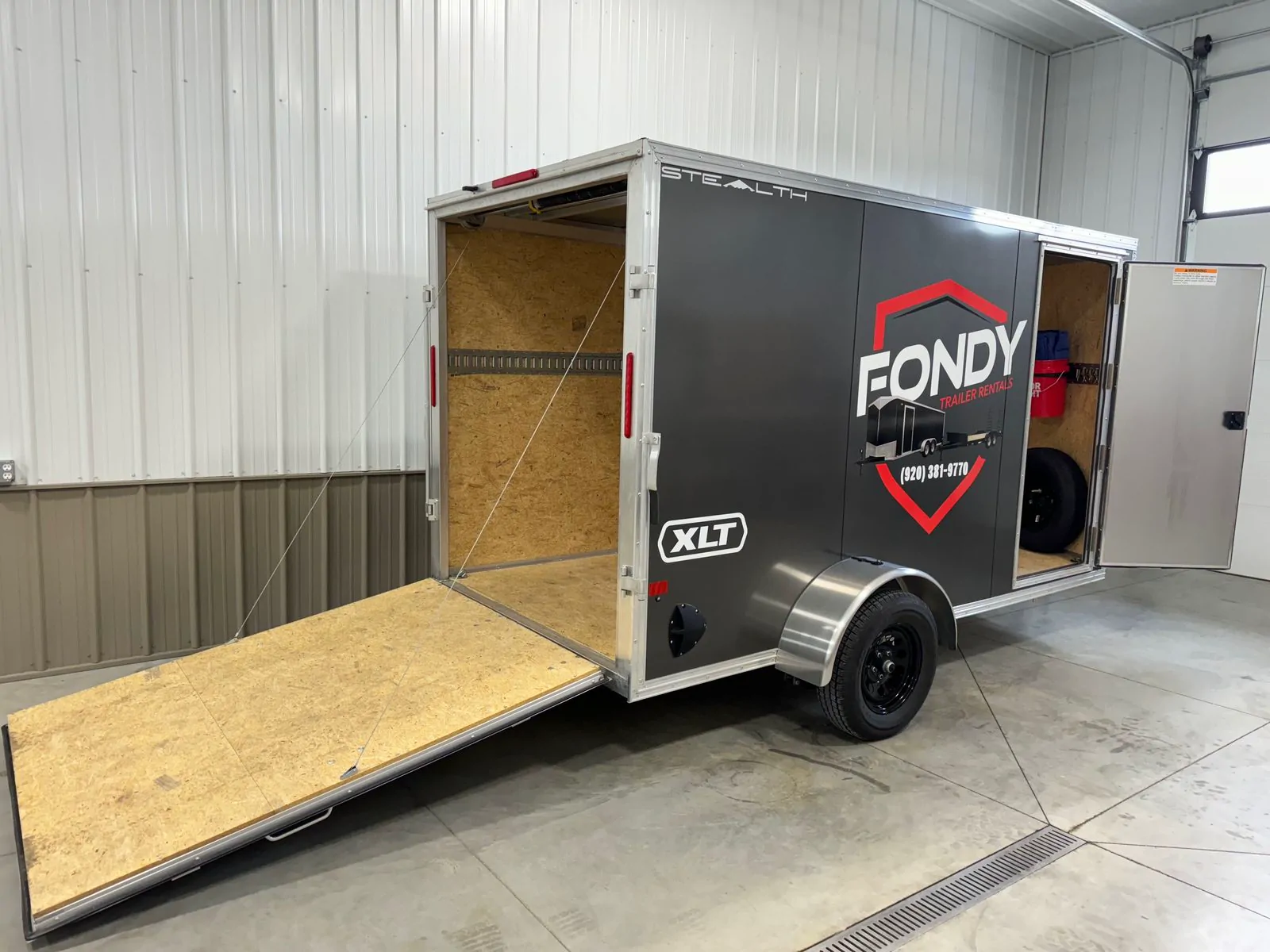
A tarp works if it is strapped properly, and does not if it is not: a loose tarp flogs itself apart at 55 mph and takes the load with it. For drywall, trim or anything finished, the 6' x 12' enclosed trailer at $55 is cheap insurance against a load that arrives worthless.
Loading order
Heavy, dense material goes down first and forward of the axle. Sheet goods lie flat on top. Long material runs the length of the deck, nosed to the front rail. Light, bulky items go last where they can be strapped over the top of everything else.
The target is still roughly 60 percent of the weight ahead of the axle. A pallet of block dropped at the rear of a trailer by a forklift will make the trailer sway badly even though the total weight is well within limits, and it is a common mistake when someone else loads it for you. Tell the forklift operator where you want it.
Yard pickup, practically
Most lumber yards around Fond du Lac will load a trailer with a forklift, which is faster and safer than doing it by hand. A few things make it go smoothly:
- Arrive with the trailer empty and swept. Loose debris under a pallet makes it unstable
- Know where you want the weight and say so before the forks move
- Bring your own straps. Ours come with the trailer; yards rarely lend them
- Strap in the yard, not at the roadside after you have pulled out
Which trailer, in short
| Job | Trailer | From |
|---|---|---|
| A few sheets and some studs | 6' x 12' utility trailer | $40 |
| Drywall, trim or anything that must stay dry | 6' x 12' enclosed trailer | $55 |
| Full 16' material, steel, long trim | 18ft utility trailer | $75 |
| A pallet of block, pavers or bagged concrete | dump trailer for easy unloading | $100 |
The dump trailer is worth considering for bulk aggregate and block even though it is not obvious. Tipping a load of sand or gravel takes seconds; shovelling it off a flat deck takes an hour.
Tarping properly, or not at all
A badly tarped load is worse than an untarped one. A tarp that lifts at one corner becomes a parachute, and at highway speed it will either tear itself apart or take material with it. Both happen regularly.
- Strap over the tarp with ratchet straps, not just bungees at the corners
- Tuck the leading edge under the load so air cannot get beneath it
- No loose flapping anywhere. If a corner can move in your hand in the yard, it will be destroyed at 55 mph
- Check it at the first stop. Tarps loosen as loads settle
For anything genuinely weather-sensitive over any distance, the enclosed trailer removes the problem rather than managing it, and the fifteen-dollar difference is less than one sheet of ruined drywall.
Concrete, aggregate and the weight ceiling
Bulk material is where trailer weight limits get exceeded fastest, because it is sold by volume and bought by the scoop.
| Material | Weight per cubic yard |
|---|---|
| Dry sand | 2,400–2,700 lbs |
| Pea gravel | 2,700–2,900 lbs |
| Crushed limestone | 2,600–2,800 lbs |
| Topsoil, dry | 1,800–2,200 lbs |
| Topsoil, wet | 2,700–3,000 lbs |
| Mulch | 400–800 lbs |
One cubic yard of gravel weighs more than a tonne. A trailer that looks barely covered can be at its limit, and a yard loader operator filling “a couple of scoops” does not know your trailer’s rating. Tell them the maximum weight you can take, in pounds, before the bucket moves.
Note also how much wet material gains. Topsoil after rain is nearly 50 percent heavier than the same volume dry, which is why a load that was fine in August is overweight in April.
Unloading, which is half the job
People plan the collection and not the unload, and then spend an hour shovelling in the dark.
For aggregate, bagged concrete or demolition debris, the dump trailer at $100 changes the job completely. Tipping takes seconds. Shovelling two tons of gravel off a flat deck takes an hour or more and is genuinely hard work. The forty-dollar difference over a utility trailer buys back most of an afternoon.
For sheet goods and lumber, a flat deck at a workable height is better than a dump bed, because you are sliding material off rather than tipping it. Match the trailer to how the load comes off, not only to how it goes on.
The short version
Flag anything over four feet of overhang, and use a trailer instead once it is over six. Count the weight before you load, because dense material hits the limit while the deck still looks empty. Strap long boards in three places and bundle them first. Strap sheet goods near the leading edge. And if it is drywall or finished trim, pay the extra fifteen dollars for a roof.
Keep Reading
- Trailer Tires: Pressure and Blowouts — staying inside the tyre ratings
- Deck Demolition and Debris Removal — deck demolition and debris
- Hauling Firewood in Wisconsin — hauling firewood