Firewood is the load that most often exceeds a trailer’s rating without looking like it should. It is dense, it is bought by volume, and a stack that barely reaches the top of the sides can be heavier than a load of furniture filling the whole trailer. There is also a Wisconsin rule about moving it that catches people out on the way to a campsite rather than on the way home from the woodlot.
The short answer: a cord of seasoned hardwood weighs roughly 3,000 to 4,000 lbs, and green wood is substantially heavier again. And you cannot bring firewood onto Wisconsin DNR property from more than 10 miles away unless it is state-certified.
What a cord actually weighs
A full cord is a stack 4 feet high, 4 feet deep and 8 feet long, which is 128 cubic feet. A face cord or rick is the same height and length but only as deep as the logs are long, so typically one third of a full cord.
| Wood | Full cord, seasoned | Full cord, green |
|---|---|---|
| Oak | 3,700 – 4,000 lbs | 5,000 – 5,600 lbs |
| Maple, hard | 3,400 – 3,700 lbs | 4,600 – 5,000 lbs |
| Ash | 3,400 – 3,600 lbs | 4,200 – 4,800 lbs |
| Birch | 3,000 – 3,200 lbs | 4,000 – 4,400 lbs |
| Pine or spruce | 2,200 – 2,600 lbs | 3,200 – 3,600 lbs |
Two things to take from this. Green wood is 30 to 40 percent heavier than seasoned wood of the same species, because the extra weight is water. And oak, the wood most people want, is the heaviest common choice.
How much actually fits on a trailer
Work backwards from the trailer’s payload rather than forwards from how much you want.
| Trailer | Rough payload | Seasoned hardwood |
|---|---|---|
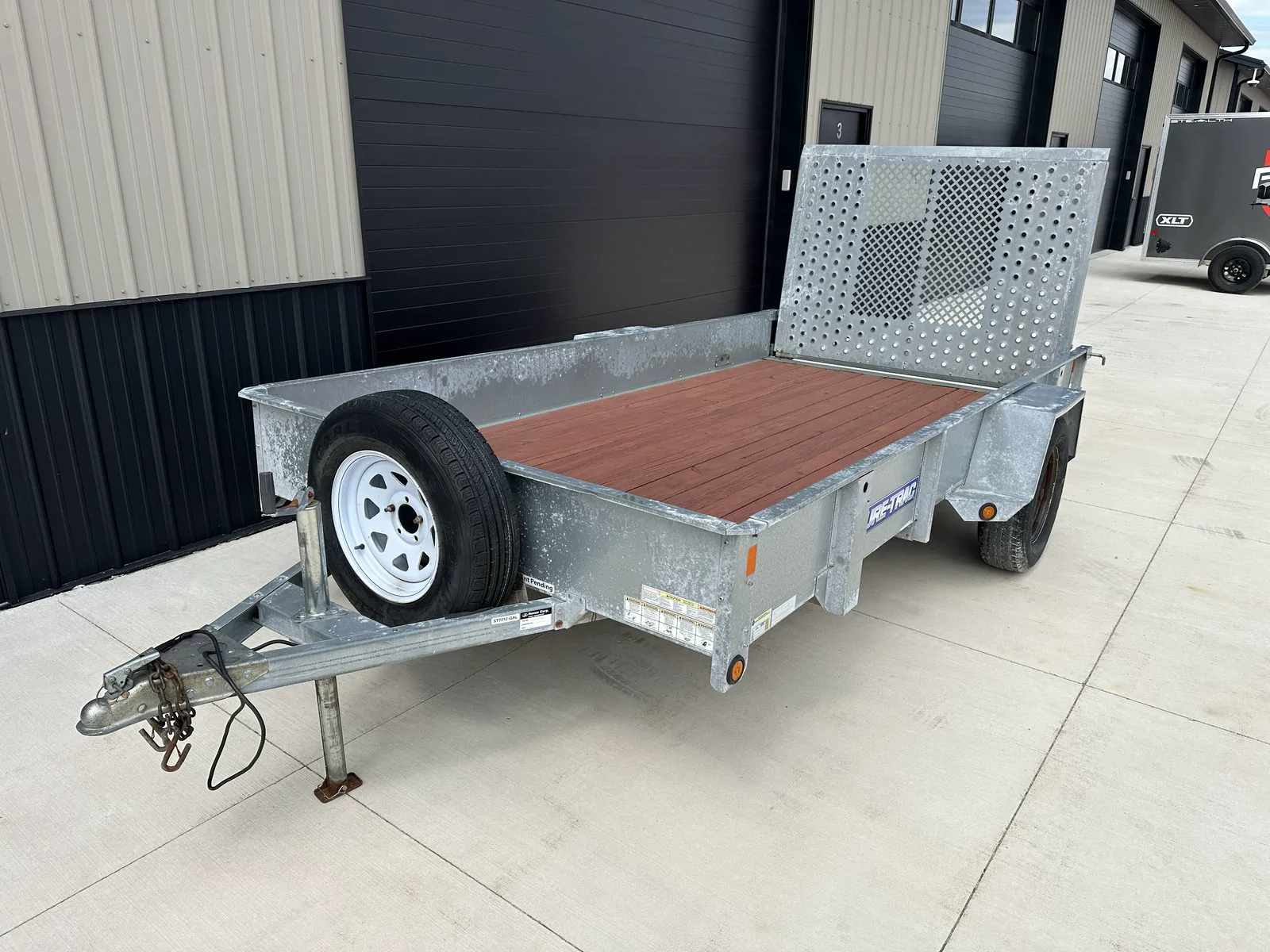
| 6' x 12' utility trailer | ~2,000 lbs | About half a cord |
| 18ft utility trailer | ~3,500 lbs | About one cord |
| dump trailer | ~5,000 lbs | One and a quarter cords |
| tilt deckover | ~9,000 lbs | Two cords, space permitting |
A seller offering “a cord on your trailer” is describing a load that is at or beyond the rating of a small utility trailer. Tell them the maximum weight you can carry, in pounds, before the loader starts moving. They will not know your trailer’s rating and they are not responsible for it.
The 10-mile rule, which is the part people miss
Wisconsin restricts moving firewood because firewood is one of the main ways tree pests travel. The rule that affects most people is the DNR one covering state parks and state-managed land.
Since 1 June 2014, the DNR prohibits bringing firewood onto Wisconsin state parks and other state-managed lands from more than 10 miles away from the property. Wood certified by the Wisconsin Department of Agriculture, Trade and Consumer Protection is exempt and may be moved anywhere in the state, because it has been treated to kill pests. Certified wood carries the official DATCP seal on its label.
Before a camping trip
Buy firewood within 10 miles of the campground, or buy DATCP-certified wood with the seal on the bag. A trailer load brought from home to a state park is the exact situation the rule exists to prevent, and it is the one people discover at the gate.
For hauling wood from a woodlot to your own house, this rule does not apply. It is about bringing wood onto DNR property. If you are moving wood across the state for any reason, certified wood removes the question entirely.
Loading firewood properly
- Weight forward of the axle, which on a dense load matters more than usual
- Stack rather than tip where you can, because a stacked load shifts less
- Below the top of the sides, since loose rounds work their way out
- Tarp it, strapped over the tarp rather than bungeed, or small pieces will leave the trailer at speed
- Nothing loose at the tailgate, which is where a log falls out onto the road
Loose firewood genuinely does come off trailers, and a log in the carriageway is both a hazard and your liability. The tarp is not about keeping the wood dry, it is about keeping it on the trailer.
Unloading, and why a dump trailer earns its money
Loading firewood by hand is tolerable because you are usually standing on the ground throwing it up. Unloading by hand means climbing in and out of a trailer and throwing it down, which is the part that takes the afternoon.
The dump trailer at $100 for four hours tips the whole load in seconds. Over a utility trailer the difference is sixty dollars, and against an hour of unloading a ton and a half of oak that is the easiest trade on this page. The exception is when you want the wood stacked neatly rather than in a pile, in which case a flat deck at a workable height is better.
Buying firewood: what the terms actually mean
Firewood is sold under a collection of informal measures, some of which are legally defined in Wisconsin and some of which are not, and the gap is where people overpay.
| Term | What it means |
|---|---|
| Full cord | 128 cubic feet, stacked 4' x 4' x 8' |
| Face cord or rick | 4' x 8' but only log-length deep, often a third of a cord |
| Truckload | Not a defined measure at all |
| Pickup load | Not defined; varies hugely by truck and stacking |
| Bundle | Small retail quantity, usually certified |
The useful habit is to convert any quoted price to dollars per full cord before comparing sellers. A face cord priced at a third of a full cord is the same deal; a face cord priced at half is not. Ask for the stacked dimensions rather than accepting an informal term.
Stacking it when you get home
Where the wood goes after the trailer determines whether it is dry and burnable next season or soft and useless.
- Off the ground, on pallets or rails, so moisture does not wick up into the bottom row
- Covered on top only, with the sides open so air moves through the stack
- Split side down on the top row so water runs off rather than soaking in
- Somewhere sunny and breezy rather than tucked against a shaded north wall
- Away from the house, which keeps insects at a distance
A tarp wrapped over the whole stack traps moisture and is worse than no cover at all. Top cover, open sides, is the rule.
Why pests are the reason for the rules
The movement restrictions exist because firewood is an effective way to transport tree-killing insects over distances they could never cover themselves.
The emerald ash borer is the clearest example. It spreads a short distance a year under its own power, and hundreds of miles in a day in the back of a pickup. Wisconsin has lost a great many ash trees to it, and a single load of infested wood taken to a campground can start a new infestation in a previously clean area. The same applies to gypsy moth egg masses and to various fungal diseases carried in bark.
None of this is an argument against hauling firewood, which people here do constantly and legitimately. It is an argument for buying local wood when you are going somewhere, and for buying certified wood when you are not.
Hauling in winter
Most firewood moves between October and March, which adds complications that are easy to forget in the enthusiasm of a cheap load.
- Frozen wood is heavier, since the moisture in it is still there as ice
- Snow in the load adds real weight, which is invisible and easily hundreds of pounds
- Icy ramps and tailgates are the main injury risk when loading
- A tarp over a frozen load will not conform, so strap carefully
That snow weight catches people on a long haul. A trailer loaded during a snowfall can be carrying several hundred pounds of snow on top of the wood, pushing an already dense load past its rating. Brush the load off before strapping it down.
Seasoning, and why green wood is a weight problem twice
Freshly cut wood is roughly half water by weight. Seasoning for six to twelve months under cover brings the moisture content down to around 20 percent, which is where wood burns cleanly.
That matters here for two reasons. Hauling green wood means paying to transport a great deal of water and getting much less burnable fuel per load. And it means the trailer is carrying 30 to 40 percent more weight for the same stack, which is how a load that should be comfortable becomes an overloaded one. If you have the choice and the storage, haul seasoned.
Text Nick at (920) 381-9770 and say roughly how much wood and whether it is green, and you will get the right trailer. Related: hauling lumber and building materials and dump trailer versus utility trailer.