Tearing out a deck is one of the most satisfying jobs in home improvement and one of the easiest to underestimate on the disposal side. The demolition itself is a day with a pry bar. The debris is several thousand pounds of awkward, nail-filled, pressure-treated lumber that the municipal site will not accept.
The short answer: a 12' x 16' deck produces roughly 2,000 to 3,000 lbs of debris, which is one full dump trailer load. Work top down: railings, decking, joists, then posts. Treated lumber must go to a landfill, not the city bulky waste site.
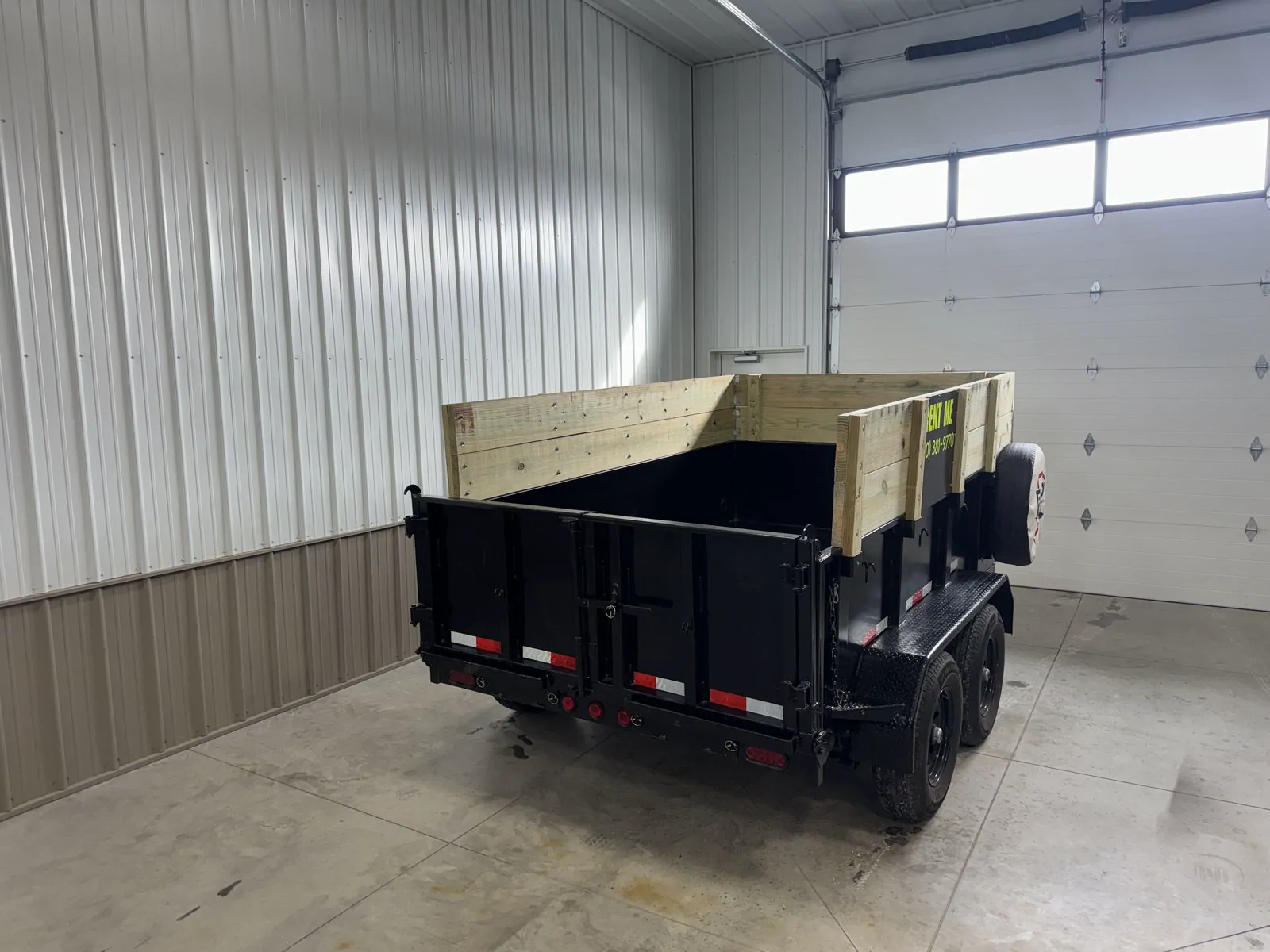
How much debris a deck produces
| Deck size | Rough debris weight | Trailer loads |
|---|---|---|
| 8' x 10' (80 sq ft) | 800 – 1,200 lbs | 1 small load |
| 12' x 16' (192 sq ft) | 2,000 – 3,000 lbs | 1 dump trailer load |
| 16' x 20' (320 sq ft) | 3,400 – 5,000 lbs | 1 – 2 loads |
| 20' x 24' with rails and stairs | 5,000 – 7,500 lbs | 2 loads |
| Multi-level with footings removed | Add 1,500 – 3,000 lbs | Extra load for concrete |
Pressure-treated lumber is heavier than it looks, particularly if the deck has been rained on recently, because treated wood holds water. A deck that has been soaking through a Wisconsin spring can be 20 percent heavier than the same deck in August.
Concrete footings deserve their own line. If you are pulling them, they are dense, they are not accepted with general debris, and they belong in a separate load. Weight per cubic yard runs around 4,000 lbs, so even a few footings add up quickly.
Demolition, in order
Top down and outside in. Taking the structural members before the surface is how people end up standing on something that is no longer supported.
- Railings and balusters first, which come off easily and immediately make the rest safer to reach
- Stairs next, detached from the deck and taken apart on the ground
- Decking boards, lifted with a pry bar or a deck wrecker, working from the outside edge toward the house
- Joists after the deck surface is gone, never before
- Ledger board carefully, since it is bolted to the house and the flashing behind it matters
- Posts and footings last, once nothing is relying on them
The ledger board is the one to slow down for. It is attached to the house structure, there is flashing behind it that keeps water out of the wall, and the holes left behind need proper attention. Rushing the ledger is how a deck demolition turns into a water damage problem two winters later.
Nails are the real hazard
Every board you pull has nails or screws in it, pointing up, in a pile, in a yard people walk through. Pull or bend nails as you stack, keep a magnet sweeper for the lawn afterwards, and wear proper boots rather than trainers. Puncture wounds are the most common injury on this job.
Where the debris can actually go
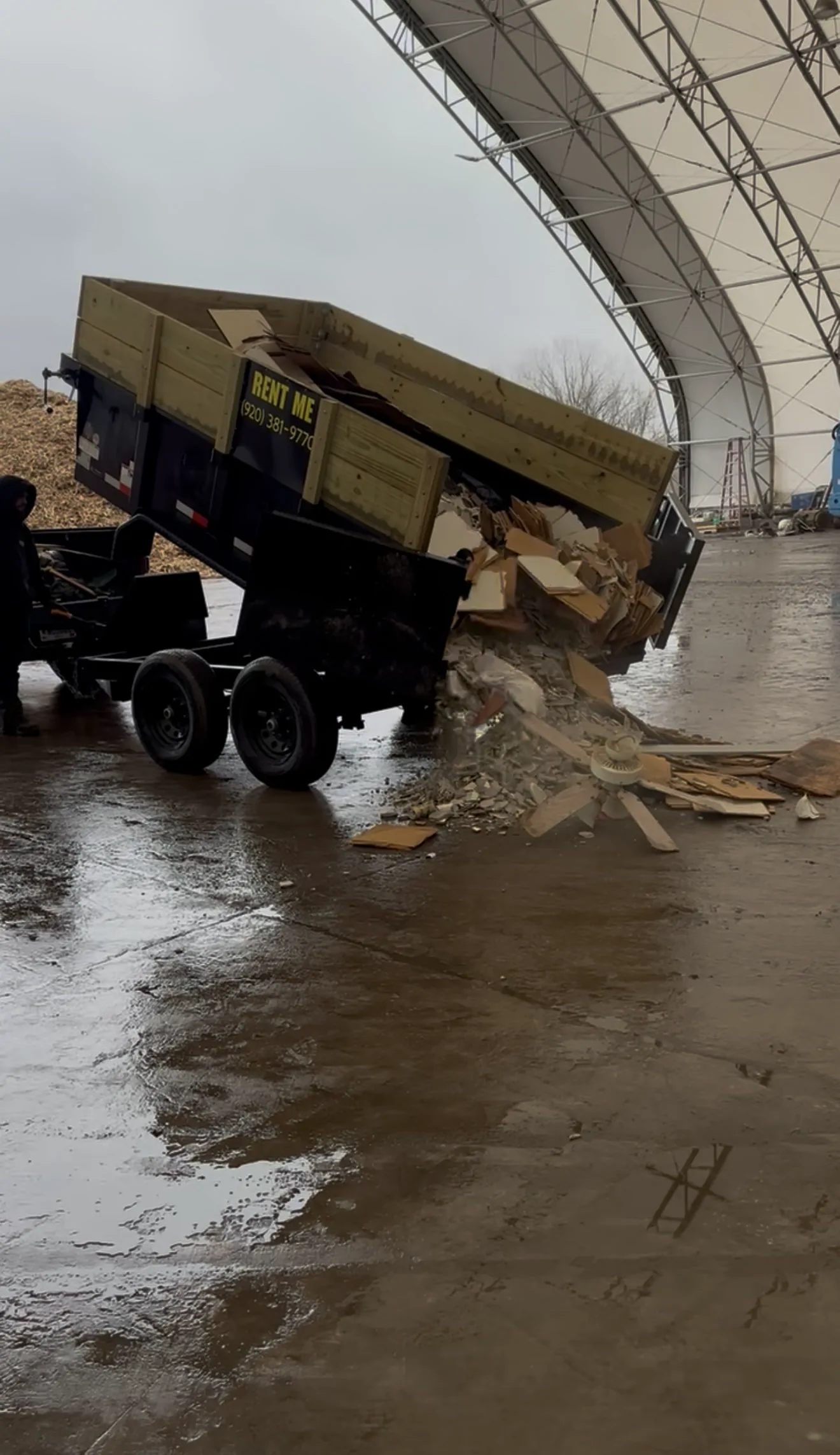
This is the part that catches people, and it is specific. The City of Fond du Lac bulky waste site does not accept scraps of construction, remodelling or demolition trash, and that explicitly includes lumber, shingles, drywall and tiles. A trailer of deck boards will be turned away.
Deck debris needs a landfill or a licensed construction and demolition facility. Those charge by weight rather than by load, so the per-pound arithmetic is different from a household disposal run, and it is worth calling ahead for the current rate and the hours.
- Treated lumber cannot be burned, which rules out the obvious alternative. The preservatives release genuinely harmful compounds
- Treated lumber should not be chipped or used as mulch for the same reason
- Metal hardware is scrap: joist hangers, brackets, railing fittings and fasteners can be pulled out and taken to a scrap yard
- Concrete footings go separately to a concrete recycler where one is available
The full picture on what the Fond du Lac sites do and do not take, including the fee tiers, is in where to dump junk and yard waste in Fond du Lac.
Which trailer
| Deck | Trailer | Why |
|---|---|---|
| Small deck, 80 sq ft | 6' x 12' utility trailer | One modest load, hand unload is tolerable |
| Typical deck, 192 sq ft | dump trailer | Tips, and takes the full weight |
| Large deck or multi-level | dump trailer, two loads | Weight rather than volume is the limit |
| Footings and concrete | dump trailer | Dense load, separate run |
The dump trailer is the obvious tool here and the reason is handling rather than capacity. Demolition debris is sharp, splintered and full of fasteners, and every board you unload by hand is a board you pick up twice. Tipping it means the load is handled once, into the trailer, and once out.
Loading demolition debris
- Break long boards down to four feet or less so the load sits flat and low
- Weight forward of the axle, which on a dense load matters a great deal
- Below the top of the sides, always, because loose boards blow out
- Tarp and strap over the tarp, since splinters and offcuts leave an open trailer at speed
- Nails down where you can, which makes the tip at the other end less hazardous
A trailer of loose timber is one of the loads most likely to shed something on the road. Tarp it properly, and re-check at the first stop like any other load.
Tools that make it a day instead of a weekend
Deck demolition is mostly leverage, and the right tools change the pace enormously.
- A deck wrecker or demolition fork, which lifts whole boards off joists in one movement
- A long wrecking bar for the structural work, not a small pry bar
- A reciprocating saw with demolition blades to cut through embedded fasteners rather than fighting them
- An impact driver, if the deck is screwed rather than nailed
- A sledgehammer for the framing once the surface is off
The reciprocating saw is the one that saves the most time. Rather than trying to withdraw rusted nails and seized screws, cut through them where the board meets the joist and deal with the fasteners later. A pack of demolition blades costs little and turns the hardest part of the job into the fastest.
Composite decking is a different material
Not every deck is treated timber. Composite and PVC decking have been common for twenty years now and they behave differently in demolition and in disposal.
Composite boards are heavier than wood for the same area, typically by a third, which matters when estimating loads. They are usually screwed or clipped with hidden fasteners rather than nailed, so removal is slower but cleaner. And they are not accepted everywhere that takes wood debris, because they are a plastic and wood-fibre mixture rather than timber. Confirm the destination will take them before loading.
Footings, which decide how big the job is
Whether the concrete footings come out changes the scale of the project more than the deck size does.
| Approach | Effort | Debris added |
|---|---|---|
| Leave footings in place | None | None |
| Cut posts at grade | Low | Minimal |
| Dig and remove footings | High | 1,500–3,000 lbs |
| Break up and remove concrete | Very high | Dense, separate load |
If the ground is being landscaped over, cutting the posts at grade and leaving the concrete is entirely normal and saves a great deal of work. Footings only genuinely need removing where the ground is being excavated, where a new structure needs the space, or where a buyer or inspector has asked for it. Concrete also needs a separate disposal route, since the municipal site specifically refuses it.
What the ground looks like afterwards
The space under an old deck has been dark and dry for years, and it will not look like the rest of the yard.
Expect bare compacted soil, gravel, weed fabric and whatever has accumulated through the boards over the deck’s life. There is usually a surprising quantity of small debris: bottle caps, toys, builder’s offcuts and a layer of silt. Rake it, pull the weed fabric, and plan on topsoil if anything is going to grow there. Magnet-sweep the whole area before anyone walks on it, because dropped nails collect under a deck for decades and all of them are now at the surface.
Permits, and the bit worth checking
Removing a deck is generally simpler than building one, but it is not always permit-free, particularly where the ledger is attached to the house or where the structure is being replaced rather than just removed. A quick call to the municipal building department before starting costs nothing.
If the deck is being replaced, the permit for the new structure usually covers the removal of the old. If it is simply going away, check whether a demolition permit applies in your municipality.
Text Nick at (920) 381-9770 with the deck size and you will get a straight answer on how many loads it is. Related: hauling lumber and building materials and dump trailer versus dumpster.