A hot tub is one of the worst things most people will ever try to move. It is heavy, it is awkward, it is fragile in exactly the places you want to grab it, and it holds water in cavities you cannot see. Done badly it cracks a shell, damages a pump, or injures someone. Done properly it is a straightforward half-day job with four people and the right trailer.
The headline answer to the question everyone asks: yes, a hot tub can usually be moved on its side, and for most moves it is the correct way to do it. The qualifications matter, and they are below.
What you are dealing with
| Typical figure | |
|---|---|
| Dry weight, 2 to 4 person tub | 500–800 lbs |
| Dry weight, 6 to 8 person tub | 800–1,100 lbs |
| Footprint | 7' x 7' up to 8' x 8' |
| Height | 33–38 inches |
| Water weight when full | 3,000–5,000 lbs, which is why it must be drained |
The footprint is the problem. A seven or eight-foot square does not fit a six-foot-wide trailer deck flat, which is precisely why moving it on its side is standard practice rather than a shortcut.
Can it go on its side?
For the great majority of tubs, yes. Acrylic shells are supported by a frame and the side panels are structural, so resting on one side is well within what the cabinet is built to take for the duration of a move.
Three conditions make it safe:
- It must be fully drained, including the lines and pump. Residual water sloshing against a shell on its side is the main cause of damage
- Support the full side, not two points. Moving blankets and a flat deck spread the load across the cabinet
- Do not leave it on its side for weeks. For a move of hours or a day it is fine. For long-term storage, set it upright
Check for a plumbing side
Some tubs have the equipment bay on one particular side, housing the pump, heater and controls. That side should be the one facing up, not the one bearing weight. Look for the access panel: that is the bay. If in doubt, the manufacturer's manual will say.
Step 1: drain it completely, the day before
This is the step people rush, and it causes most of the damage. Opening the drain valve empties the shell but leaves water in the pump, heater and the plumbing runs underneath.
- Turn off the power at the breaker before anything else
- Open the main drain and let it run out fully, which takes longer than you expect
- Open the pump unions and let the equipment bay drain
- Use a wet vacuum on the jets and the footwell to pull out standing water
- In winter, this becomes critical. Residual water freezes, expands and splits plumbing. If the move is in a Wisconsin December, blow the lines out with a shop vac on blow or a compressor at low pressure
Leave it draining overnight if you can. A tub that feels empty will still produce a surprising amount of water when tilted.
Step 2: the right trailer
Deck width decides this. A hot tub on its side is roughly 36 inches wide and seven to eight feet long, so it lies along the deck rather than across it.
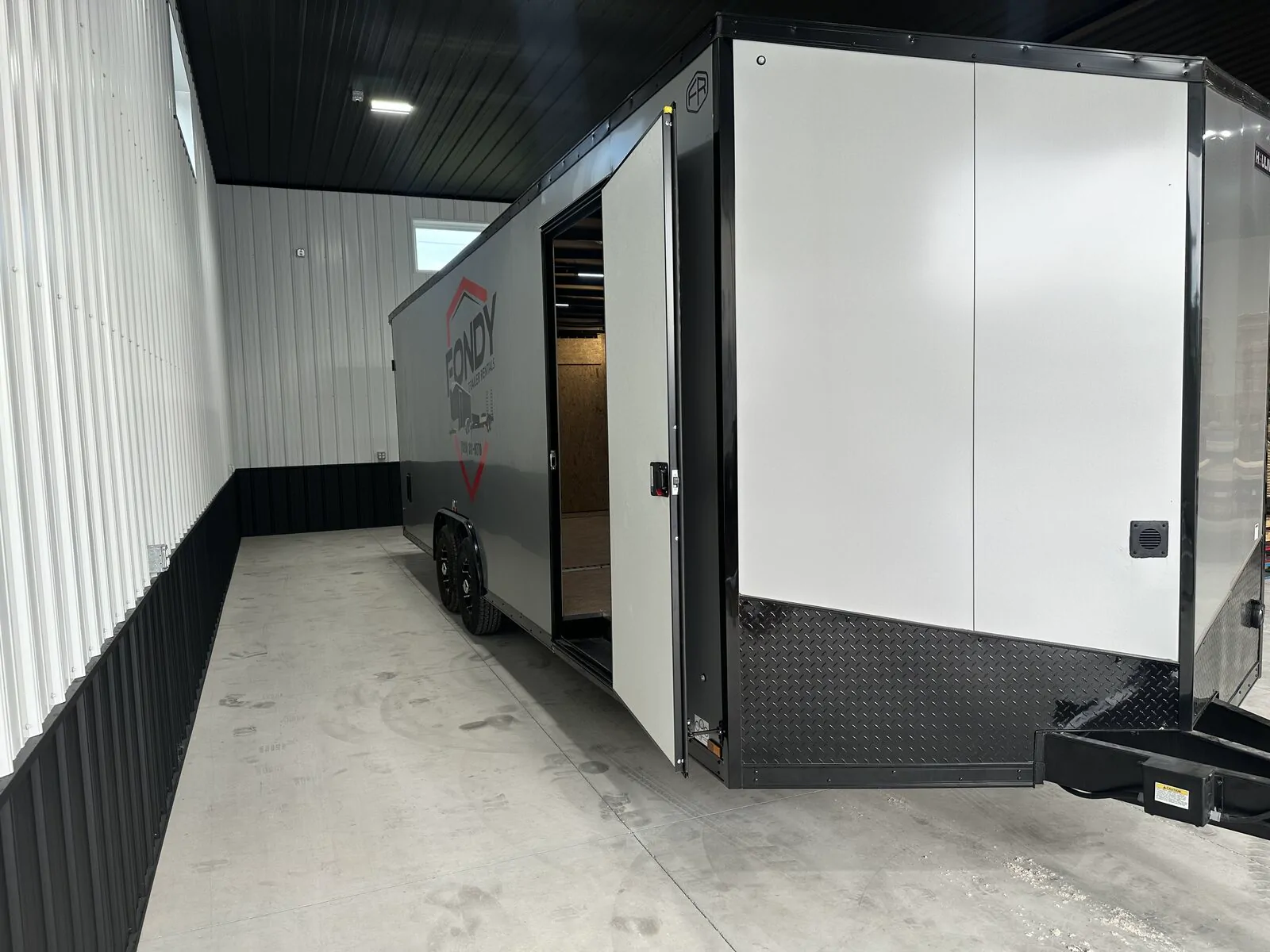
- The 8.5' x 24' enclosed car hauler is the best option. The width takes the tub comfortably, the enclosure protects the acrylic from stones and weather, and it loads flat
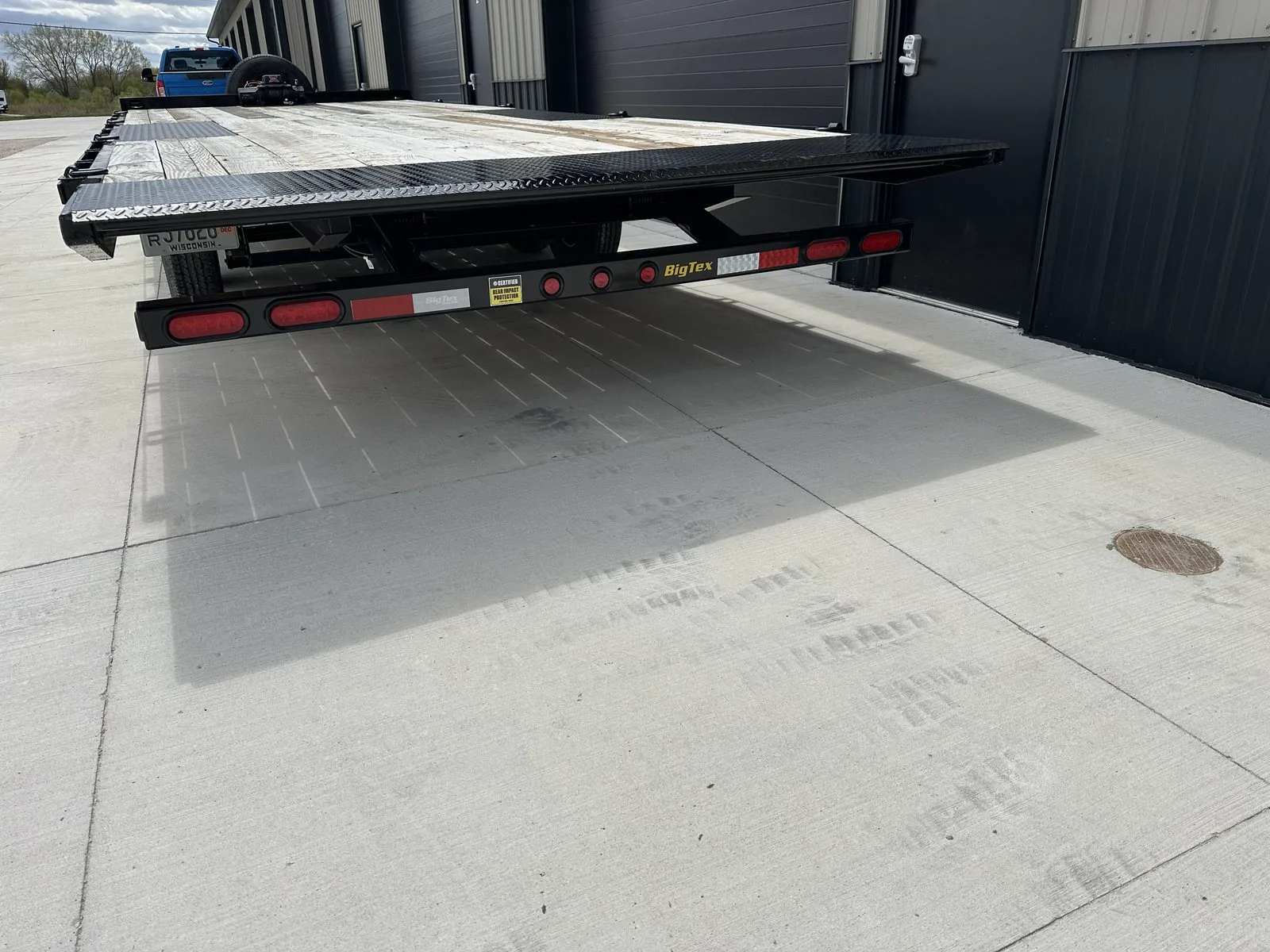
- The 8.5' x 24' tilt deckover works well and the tilting deck makes loading far easier, with the trade-off that the tub is exposed
- The 18ft utility trailer can do it for a short, local, fair-weather move
A 6-foot-wide trailer is the one to avoid. The tub overhangs, the load is unstable and you have no room to strap it properly.
Step 3: get it onto the trailer
Four people minimum. Not three. The weight is manageable between four; the awkwardness is not manageable between fewer.
- Lift one side and slide furniture dollies or 4x4 timbers underneath to get it off the ground
- Walk it onto its side slowly, with two people controlling the tip and two steadying
- Pad the bearing side generously with moving blankets before it comes to rest
- Use a tilt deck or ramps and a winch. Lifting a 900 lb tub onto a deck by hand is how people get hurt
If the tub has to come through a gate or round a corner, measure the gap before the tub moves at all. A tub on its side needs about 40 inches of clear width and a surprising amount of swing room.
Step 4: strap it down properly
Ratchet straps over the tub, not through it. The shell is not a tie-down point and neither are the jets or the cabinet trim.
- Two straps minimum, three on a larger tub, spread along its length
- Pad under every strap where it crosses an edge, because a ratchet strap will mark acrylic
- Snug, not crushing. Over-tensioning a strap across an unsupported span can flex a shell
- Re-check after the first few miles, every time
The general principles are in the loading and strapping guide, and they all apply here with the addition that acrylic marks easily.
Step 5: the drive
Slow. A tub on its side has a high centre of gravity and catches crosswind. On open stretches around the lake, or anywhere exposed, drop your speed further than feels necessary.
Avoid the temptation to take the shortest route if it involves rough road. Frost heave will work a strap loose and shift a load that was perfectly secure in the driveway.
At the other end
Reverse the process, and resist the urge to fill it immediately. Set it level on its pad first, because a tub that is not level puts uneven stress on the shell and will not drain properly afterwards. Check all the unions you opened during draining are closed and tight before water goes anywhere near it.
Electrical reconnection is an electrician’s job. A hot tub is a 240V appliance sitting in water, and it is not a reasonable place to improvise.
What this costs
Hiring a hot tub moving service in Wisconsin typically runs several hundred dollars and upwards depending on distance and access. Renting the 8.5' x 24' enclosed car hauler at $120 for four hours or $140 for the day, with four friends and a case of something afterwards, is the considerably cheaper path if you are willing to do the work.
The crossover point is access. If the tub has to come down a flight of steps, round a tight corner or over a deck, the professionals earn their fee and it is worth paying.
The short version
Measuring the route before anything moves
More hot tub moves fail on access than on weight. Before the tub is touched, walk the route from its pad to where the trailer will stand and measure every constriction.
- Gate and path width. A tub on its side needs roughly 40 inches clear, plus room to manoeuvre
- Corners. A 7-foot panel needs swing room to turn; a corridor wide enough to pass may still be too tight to turn in
- Steps and slopes. Any step is a lifting problem rather than a sliding one, and changes how many people you need
- Overhead. Low branches and gutters catch a tub carried on its side
- Where the trailer can stand. As close as possible, on firm ground, with room to open the ramp or tilt the deck
If any measurement is marginal, resolve it before the lift rather than during it. Taking a gate post out beforehand is a ten-minute job; discovering you need to with 900 lbs balanced on dollies is not.
Protecting the surfaces you are crossing
A loaded dolly concentrates a great deal of weight on a small wheel. On a lawn that means ruts, on pavers it means cracked units, and on a new driveway it means marks that do not come out.
Sheets of plywood laid along the route spread the load and are worth the trouble. Leapfrogging two or three sheets along as you go is slower than rolling straight across and considerably cheaper than replacing a section of paving afterwards.
Cold weather changes the job
Acrylic becomes noticeably more brittle in cold, and a shell that would flex in July can crack in January under the same handling. If the move can wait for a warmer day, it should.
If it cannot, two adjustments help. Move the tub in the warmest part of the day rather than first thing, and be more generous with padding than you would be in summer. And pay particular attention to the draining step, because any water left in the lines will freeze on the trailer and do damage that is invisible until the tub is filled again at the other end.
Disposing of an old tub instead
Sometimes the tub is not moving house but leaving for good. That is a different job with a different answer.
A tub being scrapped can be cut up, which makes it dramatically easier to handle. A reciprocating saw through the acrylic and frame reduces an impossible object into pieces two people can carry, and the dump trailer at $100 then takes the whole thing in one load. Pull the pump and heater out first, as the metal has scrap value and the electronics should not go to landfill.
If the tub still works and is simply unwanted, it is usually worth more as a giveaway than as scrap. People will collect a working tub for free, and that removes the entire moving problem from your side.
Drain it fully the day before, including the lines. Move it on its side with the equipment bay facing up. Use an 8.5-foot-wide trailer, not a six-footer. Four people. Pad everything. Strap over the tub, never through it. Drive slowly and re-check the straps.
To check availability on the enclosed car hauler or the tilt deckover, text (920) 381-9770.
Keep Reading
- How to Move a Piano — moving a piano
- How to Move a Pool Table — moving a pool table