The most common question about moving a pool table is whether it can be done without taking it apart. For a slate table the answer is no, and the reason is not stubbornness from the trade. A slate table is three separate slabs of stone resting on a wooden frame, held in position by gravity and screws, and the whole structure depends on being level to within a fraction of a millimetre.
The short answer: a slate table must be dismantled. Felt off, slate out in three pieces at 150 to 250 lbs each, frame and legs separately. A cheap one-piece slate or MDF table can move whole with four people. Budget a full day, and expect to pay a mechanic to relevel it.
First, find out what kind of table you have
Everything downstream depends on this, and it takes two minutes to check. Lift a corner of the felt at a pocket, or look underneath the table between the legs.
| Type | How to tell | Can it move whole? |
|---|---|---|
| Three-piece slate | Seams visible under the felt, very heavy | No, must be dismantled |
| One-piece slate | No seams, solid stone bed | With 5–6 people and a specialist |
| MDF or particleboard | Light, hollow sound when tapped | Yes, with 4 people |
| Slatron or honeycomb | Mid-weight composite bed | Yes, carefully |
Most full-size home tables in Wisconsin basements are three-piece slate, typically 7 or 8 feet, weighing 700 to 1,000 lbs assembled. The slate is the majority of that and it is the part that will break a foot.
What the pieces weigh
| Component | Typical weight |
|---|---|
| One slate section, 7ft table | 150 – 180 lbs |
| One slate section, 8ft table | 180 – 230 lbs |
| One slate section, 9ft table | 230 – 280 lbs |
| Frame and rails | 150 – 250 lbs |
| Legs, each | 20 – 50 lbs |
| Assembled table, 8ft slate | 800 – 1,000 lbs |
Two people can carry a slate section a short distance on flat ground. Up a basement staircase, plan on three or four, and plan on the staircase being the hardest ten minutes of the day.
Dismantling, in order
The order matters because the structure holds itself together. Doing this out of sequence is how rails get cracked.
- Pockets first, unscrewed or unstapled from underneath depending on the table
- Rails next, usually bolted from below through the frame. Keep the bolts with the rail they came from
- Felt third. If it is stapled, pull staples rather than tearing. If it is glued, it is almost certainly coming off as scrap
- Slate fourth, outer sections first then the centre, after removing the screws at the slate’s edge
- Frame and legs last, once the weight is off
Label everything
Photograph each stage before you undo it and bag the hardware for each component separately, labelled. Pool table hardware is not generic, and the bolts that hold rails are frequently a length you will not find in a hardware store.
A note on the felt. Budget for new cloth unless the table is recent and the felt was stapled rather than glued. Recovering is a routine part of a professional reassembly and the cost is modest compared with the table.
Handling the slate
This is where injuries and broken slate happen, and the rules are simple.
- Carry slate on edge, never flat. Flat, it flexes under its own weight and cracks
- Two people minimum per section, lifting from the ends rather than the middle
- Never set a section down on a corner. Lower it onto a padded edge, fully
- Keep the sections separated with blankets or foam. Stone against stone chips
- Gloves on. Cut slate edges are sharp enough to open a hand
Slate is strong in compression and brittle in bending, which is why edge-on is safe and flat is not. A cracked slate section is usually the end of the table, because matched replacements for an older table are difficult and expensive to source.
Which trailer
Pool table components are heavy but not bulky, so this is a weight problem rather than a space problem.
| Table | Suggested trailer |
|---|---|
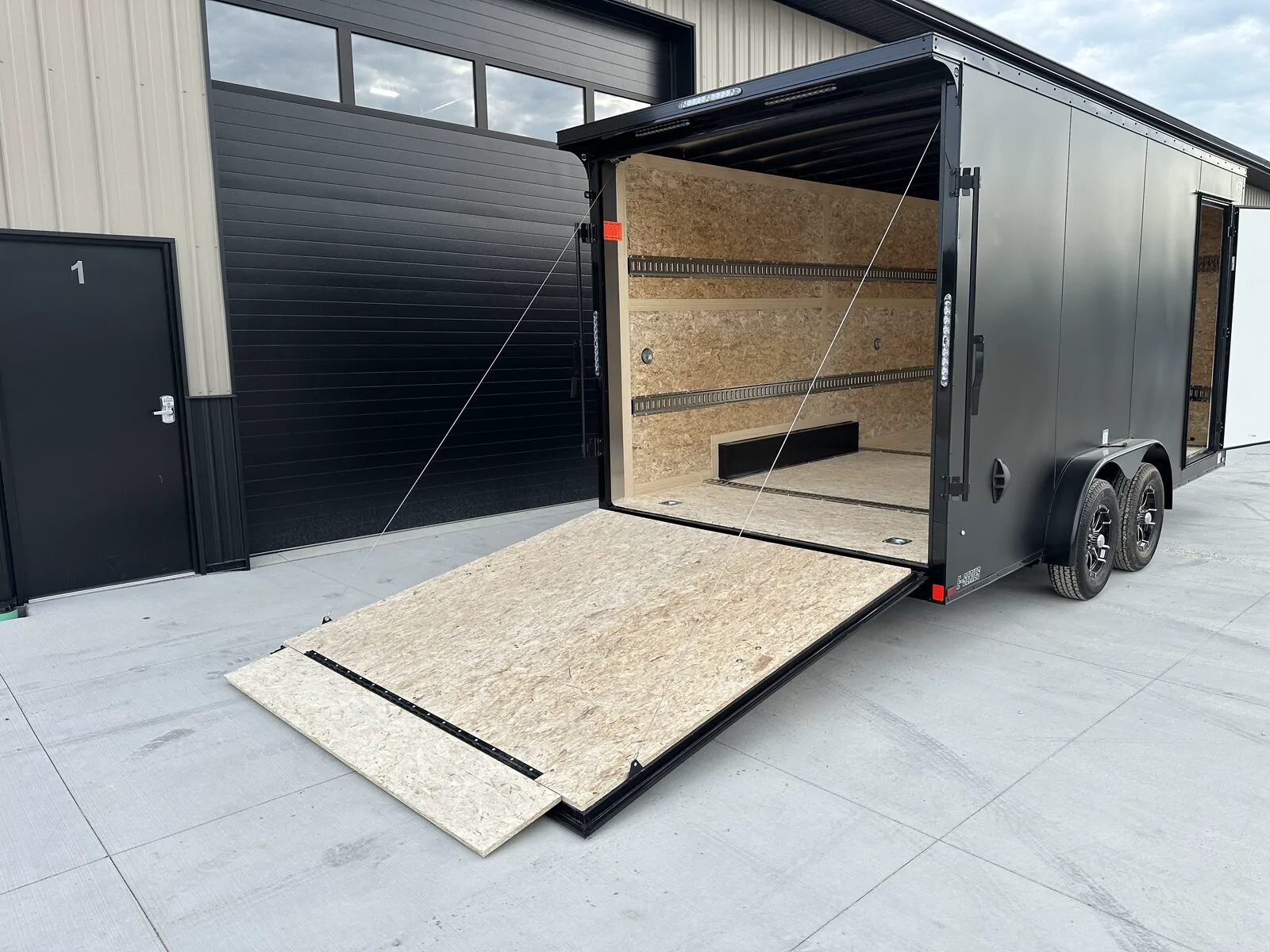
| 7ft slate, local move | 6' x 12' enclosed trailer |
| 8ft slate, or table plus furniture | 7.5' x 16' enclosed trailer |
| 9ft slate or multiple tables | 8.5' x 24' enclosed car hauler |
| Dry day, short local hop | 6' x 12' utility trailer |
Enclosed is strongly preferable. Slate is unaffected by a little weather but the frame, rails and cloth are not, and road grit blown across a packed load does real damage to finished timber. The 6' x 12' enclosed trailer handles a 7ft table comfortably.
Loading and securing
- Slate against the front wall, on edge, standing upright and strapped to the wall rails
- Blankets between every slate face and between slate and wall
- Frame and rails flat on the floor behind the slate, padded
- Legs and hardware boxed, not loose
- Nothing on top of the slate, ever
Weight forward is not optional here. Six hundred pounds of stone at the back of a trailer removes tongue weight and is a direct cause of trailer sway. Put the slate ahead of the axle and the rest follows.
Measuring the route before you start
Slate sections are rigid, heavy and completely unforgiving about corners. Unlike a sofa, there is no angle at which a 230 lb slab becomes easier to get round a turn, so the route has to be measured rather than attempted.
- Measure the largest slate section in all three dimensions, including its thickness, which is usually an inch
- Check every doorway and remove doors wherever clearance is tight
- Measure the landing depth at any staircase turn, because slate carried on edge needs room to pivot
- Check the basement stairs specifically, since that is where most home tables live and where most of them get stuck
- Look at the headroom over the stairs, which decides whether the slab can be tilted at all
Basement staircases are the deciding factor on most Wisconsin pool table moves. Many were built narrow, many turn, and a table that went in during construction may genuinely not come out the same way. Establish this on day one rather than halfway through dismantling.
Protecting the floor and the frame
Two different materials need protecting and they need different things. The slate needs nothing except not being dropped. The frame and rails are finished timber and mark easily, and the floor underneath takes concentrated point loads.
Lay plywood or hardboard along the route wherever slate will be carried or set down, overlapping the sheets so there is no edge to catch. Set slate on padded sawhorses or on edge against a wall rather than flat on the floor, because flat on a hard floor is how an unsupported section cracks at a high spot. Wrap the frame, rails and legs in moving blankets before they leave the room, taped to themselves and never to the finish.
Storing a table between houses
Pool tables often sit in storage between a move out and a move in, and the storage conditions matter more than people expect.
- Slate stores on edge, supported along its length, never stacked flat
- Keep the frame off a concrete floor, which wicks moisture into the timber
- Avoid unheated storage over a Wisconsin winter where you can, because repeated freeze-thaw cycling is hard on glued joints
- Store the cloth separately and dry, if you are keeping it
- Keep the hardware with the table, labelled, since this is where bolts get lost
A table stored carelessly for six months can need more work on reassembly than the move itself caused. Dry, off the floor, and slate on edge covers nearly all of it.
What reassembly costs, and the order to book it
Pool table mechanics generally quote setup and recovering as a package, and the figure depends on table size, whether new cloth is going on, and how far they travel. It is skilled work with a small number of practitioners, so lead times are real.
Book the mechanic before you move the table, not after. The common and avoidable mistake is dismantling a table on a Saturday, discovering the only mechanic in the area is three weeks out, and leaving slate stacked in a garage through a damp fortnight. Agree the reassembly date first and work the move backwards from it.
It is also worth asking whether they will dismantle as well. Many will quote both ends, and the price difference against reassembly alone is often smaller than expected, because the dismantling is the quick half. If the table is valuable or the staircase is difficult, that is money well spent.
Reassembly, and why you should pay for it
A pool table is assembled level, and level here means levelled with a machinist’s level across the seams, with the slate sections shimmed to each other and the joints waxed and smoothed so a ball crossing a seam does not feel it.
This is skilled work with specific tools, and it is the single best place to spend money on the whole job. A table that is out by a millimetre across a seam will throw every shot, and the owner will notice it for years. Many pool table mechanics will quote reassembly and recovering as a package even when you did the moving yourself, which is a sensible split: you move the weight, they make it play.
If you want to talk through which trailer suits your table, text Nick at (920) 381-9770. Related reading: moving a piano and moving large furniture.