Most people searching for trailer rental prices get one of two unhelpful answers. Either a national chain quotes a headline rate that doubles once you add mileage and fees, or a local yard says “call us” and you are no closer to a number. This page does neither. Every rate below is what Fondy Trailer Rentals in Fond du Lac actually charges in 2026, listed in full, with the costs that usually hide in the fine print spelled out.
The short answer: trailer rental in Wisconsin runs from $40 for four hours on a small utility trailer to $160 a day on a 35-foot gooseneck deckover. Most people renting for a weekend move or a cleanup land between $65 and $140.
Every rate, every trailer
Four tiers are available on almost every trailer: four hours, twenty-four hours, three days and one week. The four-hour tier exists because most local jobs genuinely take an afternoon, and charging a full day for a two-hour dump run is how rental counters make money on people who do not need it.
| Trailer | 4 hours | 24 hours | 3 days | 1 week |
|---|---|---|---|---|
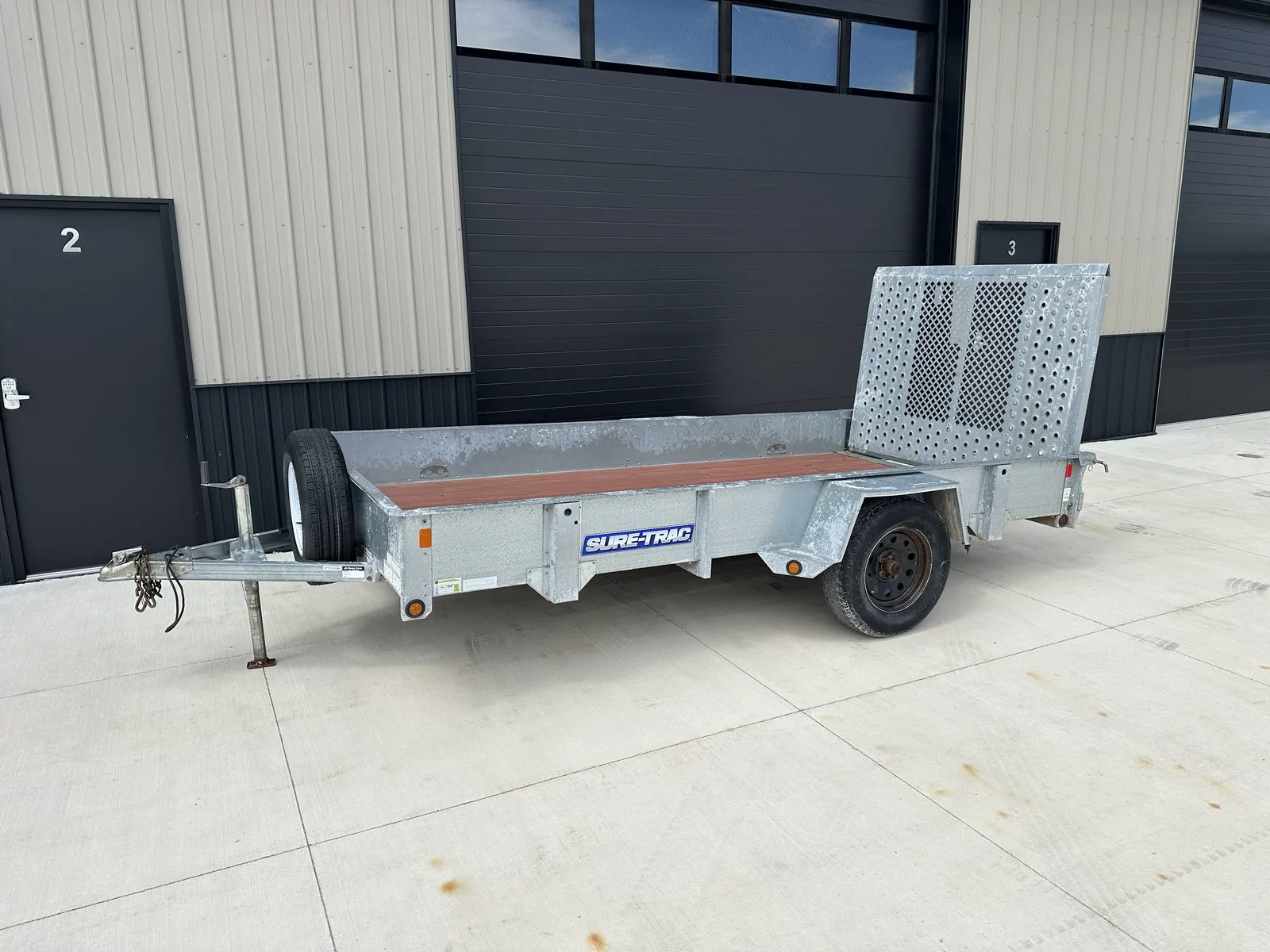
| 6' x 12' utility trailer | $40 | $50 | $140 | $315 |
| 6' x 12' enclosed trailer | $55 | $65 | $185 | $410 |
| 18ft utility trailer | $75 | $85 | $255 | $500 |
| car hauler | $80 | $110 | $300 | $600 |
| 7.5' x 16' enclosed trailer | $95 | $105 | $300 | $585 |
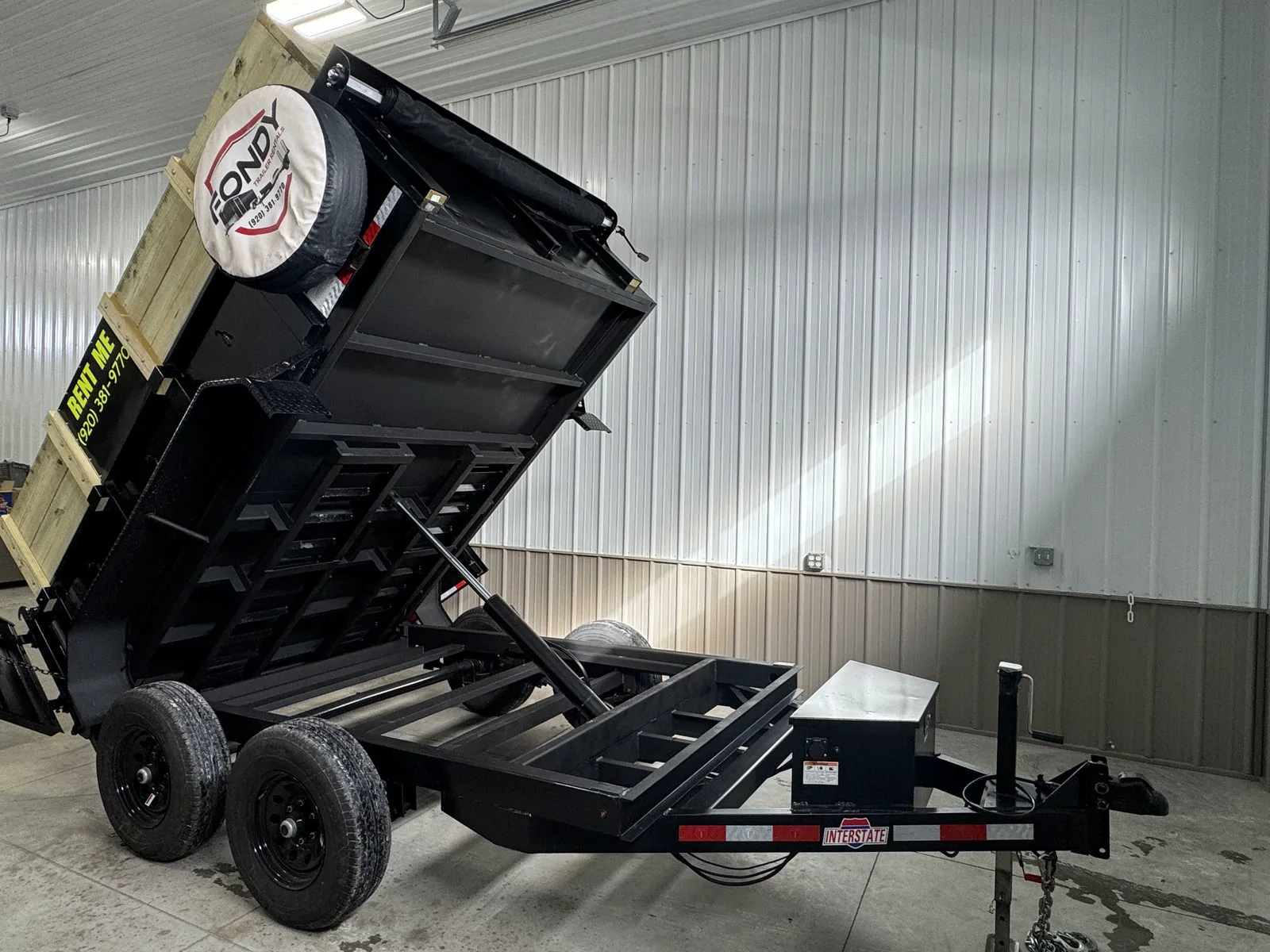
| dump trailer | $100 | $120 | $325 | $670 |
| tilt deckover | $120 | $140 | $355 | $735 |
| 8.5' x 24' enclosed car hauler | $120 | $140 | $355 | $735 |
| gooseneck deckover | $140 | $160 | $435 | $795 |
| Air Tow utility trailer | $250 | $300 | $720 | — |
Two things stand out when the whole table is visible at once. The jump from four hours to twenty-four hours is small, usually ten to twenty dollars, so if there is any chance the job runs long, the day rate is the cheaper mistake. And the week rate is roughly five to seven times the day rate rather than seven, which is why multi-day projects should be booked as a block rather than extended one day at a time.
What is included that usually is not
A rate only means something alongside what comes with it. Every rental here includes the equipment that national chains sell separately or simply do not carry:
- Ratchet straps and chains sized for the trailer, not a generic set
- A spare tire mounted and inflated, which matters more than people think on a Sunday
- No mileage limits, anywhere in the United States
- Ramps or a tilt deck where the trailer has them
- A walk-through before you leave, including how the lights and coupler work
The mileage question
There is no per-mile charge and no geographic limit. People regularly take these trailers to Illinois, Michigan and the Dakotas. A one-way national-chain quote that looks competitive often is not once distance is priced in.
The costs that catch people out elsewhere
When a rental turns out to cost more than expected, it is almost never the headline rate. It is one of these.
Mileage charges
Per-mile fees are where one-way rentals make their margin. A rate that looks like twenty dollars a day can triple on a two-hundred-mile round trip. Always ask whether mileage is included before comparing two quotes, because otherwise you are not comparing the same thing.
Equipment sold separately
Straps, chains, locks and furniture pads are frequently add-ons. Four ratchet straps bought at the counter can add thirty to sixty dollars to a rental that looked cheap.
Being charged a full day for an afternoon
Many yards have no sub-day tier at all. If your job is a single dump run or moving one piece of furniture across town, you are paying for twenty hours you will not use.
The wrong trailer
The most expensive mistake is renting something that does not fit the load, discovering it at the pickup, and making two trips. Our guide to enclosed trailer sizes and the piece on what fits in a 6x12 exist to prevent exactly that.
What people actually rent, and what they pay
Looking at how rentals cluster is more useful than a price list in isolation.
A yard cleanup: $100 to $120
The dump trailer at the four-hour rate covers most spring and fall cleanups. Brush, leaves, old decking and demolition debris all load faster when you can tip the bed instead of lifting everything back out. If the job spans a weekend, the 24-hour rate at $120 is only twenty dollars more. See the fall cleanup guide for load planning.
A local move: $65 to $185
A one-bedroom apartment generally fits the 6' x 12' enclosed trailer at $65 for the day. A two or three-bedroom house usually needs the 7.5' x 16' enclosed trailer at $105, or two trips with the smaller one. Three days at $185 covers a move that spreads across a weekend, which most do.
Moving a vehicle: $80 to $140
An open car hauler at $80 for four hours handles a local pickup. If the car is a project that will not roll, or you are crossing the state in weather, the 8.5' x 24' enclosed car hauler at $120 protects it. The guide to moving a car and a household together covers doing both at once.
Equipment and machinery: $120 to $160
A skid steer, compact tractor or mini excavator goes on the tilt deckover at $120. The tilt deck matters because a low-clearance machine cannot climb steep ramps. Anything heavier moves to the gooseneck deckover at $140, which requires a gooseneck hitch in the bed of your truck.
How the rates compare to the alternatives
The honest comparison is not against another trailer yard. It is against the three things people consider instead.
| Option | Typical cost | Where it wins | Where it does not |
|---|---|---|---|
| Trailer rental | $40–$160/day | You already have a tow vehicle | You need a brake controller for heavier trailers |
| Moving truck | $20–$40/day plus mileage | No tow vehicle needed | Mileage charges, fuel, and driving a box truck |
| Hiring a hauler | $75–$150/hour | No work on your part | Costs several times the rental on any multi-hour job |
| Buying a trailer | $2,000–$12,000 | You haul monthly | Storage, registration, maintenance, depreciation |
The piece comparing a moving truck against a trailer works through the mileage maths, and the comparison with U-Haul and Home Depot puts the rates side by side with the national options.
What you need to bring
The rate assumes you arrive able to tow. That means:
- A vehicle rated for the loaded weight. Our guide to towing capacity explains how to find yours
- The right ball size, which is not universal. See the hitch ball size guide
- A working 4-pin or 7-pin connector
- A brake controller for the dump, car hauler, tilt deckover and gooseneck. The brake controller guide covers what qualifies
- A valid driver’s licence and proof of insurance
Before you book
If you are unsure whether your vehicle and hitch are up to the trailer you want, text a photo of your hitch and the year and model of your vehicle to (920) 381-9770. It takes a minute and saves a wasted trip.
Deposits, cancellations and running late
A card is held at pickup and released on return. Cancelling more than forty-eight hours out is a full refund. Running late happens, and a text beats silence every time, because the trailer may be booked behind you and a heads-up usually solves it without a penalty.
The short version
Why four-hour rentals exist, and when to ignore them
Most rental yards start at a full day because a full day is simpler to administer. The problem is that a large share of real jobs are not day-long. Taking a load of brush to the transfer station, collecting a mower, moving a sofa across town, picking up a pallet of pavers: these are ninety-minute errands, and paying a day rate for them is paying for eighty percent idle time.
The four-hour tier is there for exactly those jobs, and for a straightforward errand it is the right choice. There are two situations where you should skip it and take the day rate anyway. The first is when anyone else is involved, because jobs involving other people’s schedules expand. The second is loading equipment you have not loaded before, where the first attempt often takes longer than the drive. Twenty dollars buys a great deal of calm in both cases.
Seasonal demand, and what it means for booking
Trailer demand in Wisconsin is strongly seasonal and the pattern is predictable. April and May are the busiest weeks of the year as yards get cleared and projects start. October and early November run a close second as everything gets put away before the ground freezes. Summer weekends are steady, driven by moving and recreation. January and February are quiet apart from ice fishing and the occasional move.
Rates do not change with the season, but availability does. The dump trailer is the first trailer to go on a spring Saturday, often a week out. If your project has a fixed date in April, May or October, book it as soon as the date is fixed. If your project is flexible, a weekday in those months is wide open and gets you the same rate with no competition.
Paying for the right size rather than the cheapest
The gap between the 6' x 12' enclosed trailer at $65 a day and the 7.5' x 16' enclosed trailer at $105 is forty dollars. The gap between making one trip and making two is an hour of driving, an hour of loading, and the fuel for both. People choose the smaller trailer to save forty dollars and routinely spend considerably more than that in time and fuel discovering it did not fit.
The honest guidance is to size up when you are genuinely uncertain. It is the single most common regret we hear, and it is always expressed the same way: “I should have taken the bigger one.” Nobody has ever said the reverse. If you want to be precise about it rather than guessing, what fits in a 7.5x16 lists real contents rather than cubic feet.
Fuel, the cost nobody includes in the comparison
Towing costs fuel, and on a long haul it is a real number that belongs in the comparison. A loaded enclosed trailer behind a half-ton truck typically costs three to six miles per gallon against the same truck unladen, depending on the trailer’s height and the speed you run.
On a forty-mile round trip that is a few dollars and irrelevant. On a four-hundred-mile move it can be sixty to a hundred dollars, which is enough to change which option is actually cheaper. It is also the reason a moving truck with per-mile charges and worse fuel economy than your own vehicle often loses a comparison it appeared to win on the headline rate.
Trailer rental in this part of Wisconsin starts at $40 for four hours and tops out at $160 a day for the largest trailer in the fleet. Straps, chains, a spare and unlimited miles are included rather than extra. The most common rentals are the dump trailer at $100 and the small enclosed at $65, and the most common mistake is renting a trailer slightly too small to avoid a twenty-dollar difference.
Rates, availability and the full specification for each trailer are on the individual pages. To check a date, text (920) 381-9770.
Keep Reading
- Wisconsin Trailer Towing Laws — what the law requires before you tow
- What a Local Move Costs — what a whole move costs