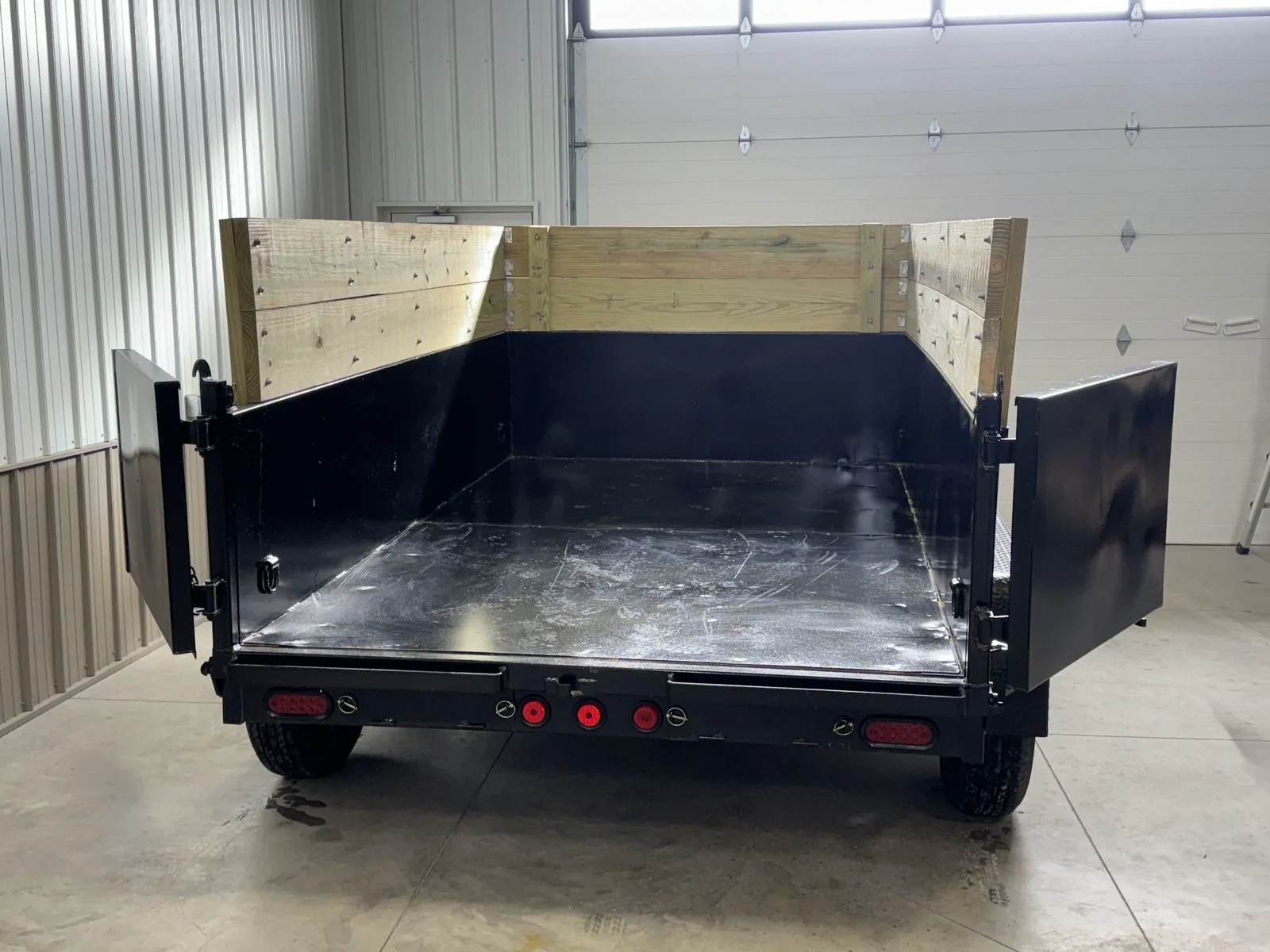
Clearing out a garage, stripping a roof or tearing out a deck leads to the same question: do you rent a dump trailer and haul it yourself, or have a roll-off dumpster dropped in the driveway? The two cost similar money on paper and behave completely differently in practice. The right answer depends far less on price than on how long the job runs and what your driveway is made of.
Short version: a dump trailer wins on anything you can finish in a day or two, and a dumpster wins when the job drags across a week or when you genuinely cannot tow.
The cost comparison, honestly
Headline prices are close enough that they rarely decide it. What differs is what each price actually buys.
| Dump trailer | Roll-off dumpster | |
|---|---|---|
| Typical cost | $100 for 4 hours, $120 per day | $300–$550 for a week |
| What that buys | The trailer, you haul and tip | The container, delivery, collection and disposal |
| Disposal fees | You pay at the transfer station | Usually included to a weight cap |
| Time limit | Your rental window | Typically 7 to 10 days |
| Number of loads | As many as you want to make | One container, one collection |
| Driveway | Trailer tyres only | A steel box dragged on and off |
A dumpster price looks higher because it bundles the hauling and the tipping fee. A dump trailer price looks lower because it does not. Once you add a transfer station charge, which in this part of Wisconsin typically runs forty to eighty dollars for a household load, a single-day trailer rental lands somewhere around $150 to $200 all in. A week-long dumpster lands around $400.
The question that actually decides it
Not price. How long will the job take?
A dumpster is rented by time. You are paying for a container to sit in your driveway for a week whether you fill it on day one or day six. That is excellent if you are gutting a bathroom over several evenings after work, and wasteful if you clear the garage on Saturday morning.
A dump trailer is the reverse. It is cheap for a short burst and awkward for a long project, because you either keep paying for days you are barely using it, or you return it and rent again.
Jobs where the trailer wins
- A single-day garage or basement clear-out
- Yard waste, brush and leaves after a weekend of work
- A deck tear-off you can finish in a day
- Anything where you want more than one load, because you can make as many trips as the rental window allows
- Jobs where the material is heavy but low volume, such as concrete, soil or shingles, which hit a dumpster weight cap long before filling it
Jobs where the dumpster wins
- A kitchen or bathroom renovation spread over a week or two
- A whole-house clear-out where family are working through it in stages
- Any job where nobody on site has a vehicle able to tow
- Light, bulky material such as insulation or packaging, which fills volume without approaching a weight limit
The weight cap trap
Dumpster pricing almost always includes a tonnage allowance, commonly one to three tons, with overage billed by the ton. Shingles, concrete, soil and plaster are heavy enough to blow through that cap in a container that still looks half empty. For dense material, hauling two trailer loads is frequently cheaper than one overweight dumpster.
The driveway problem nobody mentions
A roll-off dumpster is delivered by dragging a loaded steel container off the back of a truck. Operators put boards down, and the good ones are careful, but asphalt in Wisconsin spends half the year soft and the other half brittle. Gouges and depressions do happen, and a fresh sealcoat is especially vulnerable.
A dump trailer rolls in on tyres and leaves the same way. If your driveway is new asphalt, decorative concrete or pavers, that difference is worth more than the price gap.
Permits and where it can legally sit
If a dumpster sits entirely on your own property, most Wisconsin municipalities require nothing. If it needs to sit on the street, you are usually into a right-of-way permit, which takes time and costs money, and in winter it can run into snow-removal ordinances that prohibit street placement outright.
A trailer parked in your own driveway for an afternoon raises none of this. It is worth checking your own municipality, because the rules differ between Fond du Lac, Oshkosh and the smaller surrounding towns, but the trailer is almost always the simpler option administratively.
What you need to tow a dump trailer
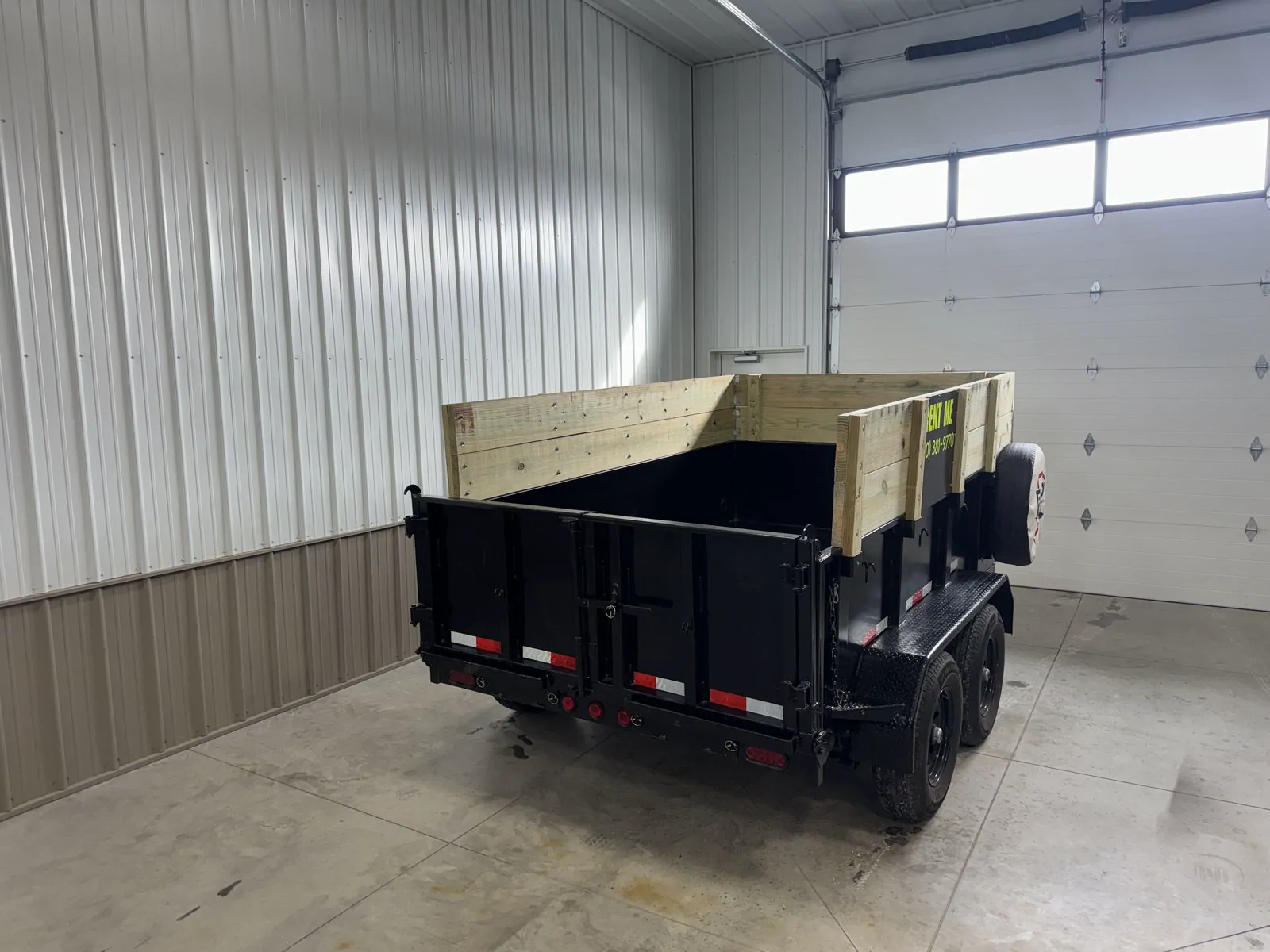
This is the real constraint, and it is where some people stop. A loaded dump trailer is heavy, and ours requires a brake controller in the tow vehicle. That is not an upsell, it is a legal and practical requirement at that weight.
- A half-ton truck or larger, properly rated. See the towing capacity guide
- A 2-5/16 inch ball, not the common 2 inch. The hitch ball size guide explains why this catches people out
- A 7-pin connector and a working brake controller, covered in the brake controller guide
If your vehicle cannot handle that, the comparison changes entirely and a dumpster becomes the sensible answer regardless of cost.
A worked example
Clearing a two-car garage and tearing out an old deck over one Saturday, in Fond du Lac.
| Dump trailer | Dumpster | |
|---|---|---|
| Rental | $120 for 24 hours | $395 for one week |
| Disposal | About $60 at the transfer station | Included to 2 tons |
| Trips | Two, because you can | One container |
| Total | About $180 | About $395 |
| Finished by | Saturday evening | Collected the following week |
Now change one variable. Spread the same work across three weekends because that is when help is available, and the trailer needs renting three times at $120 while the dumpster sits there for one fee. The dumpster wins comfortably.
What about a utility trailer instead?
For light material it is a legitimate cheaper option. A 6' x 12' utility trailer at $40 for four hours moves brush and furniture perfectly well. The difference is unloading. Everything that went on by hand comes off by hand, and after a day of demolition that matters more than the forty-dollar saving. The full comparison is in dump trailer versus utility trailer.
The decision in one line
What you can and cannot put in either one
The restrictions are broadly similar and come from the transfer station rather than from us or the dumpster company. In this part of Wisconsin, the items that cause problems are consistent.
- Tyres are refused or surcharged almost everywhere and need separate disposal
- Appliances containing refrigerant, meaning fridges, freezers and air conditioners, require certified recovery first
- Paint, solvents, fuel and chemicals are household hazardous waste and belong at a collection event
- Electronics are banned from Wisconsin landfills and need an e-waste stream
- Batteries, both automotive and household, are handled separately
The practical difference is what happens when a banned item is in the load. With a trailer you find out at the transfer station, pull it off and deal with it. With a dumpster you often find out afterwards as a contamination charge on the invoice, which is both more expensive and harder to argue with.
Volume, and why container sizes mislead
Dumpsters are sold by cubic yards, typically 10, 15, 20 or 30. Those numbers describe the box, not what you will get into it. Bulky, awkward material such as deck boards, brush and furniture leaves enormous voids, and a 20-yard container holding a tangle of branches may contain five yards of actual material.
A dump trailer holds considerably less by volume, roughly three to four cubic yards. The difference is that you can make repeated trips within the same rental at no extra cost. Two trailer loads of well-packed debris frequently equals one poorly packed 20-yard container, at a fraction of the price.
Loading height, which matters more than people expect
A roll-off dumpster has walls around four to five feet high. Everything goes up and over, repeatedly, for hours. A dump trailer has lower sides, and on ours the barn door at the rear opens so material can be walked in rather than lifted.
Over a full day of demolition debris this is the difference between a job that leaves you sore and one that does not. It also matters a great deal if anyone helping is older or has a bad back, which in practice describes most volunteer cleanup crews.
What happens to the material afterwards
With a dumpster, the container leaves and that is the end of your involvement. With a trailer you drive to the transfer station, weigh in, tip and weigh out, and the fee is based on weight. For most household loads that is forty to eighty dollars and takes about twenty minutes.
Worth knowing: clean, separated material is often cheaper or free to drop. Clean brush, clean wood and scrap metal frequently have their own streams at lower rates than mixed waste. If you can keep the metal separate, scrap value sometimes offsets the tipping fee entirely, which is a saving no dumpster arrangement offers you.
If you can finish in a day or two and you can tow, rent the dump trailer. If the job will crawl across a week, or nobody can tow, book a dumpster. If the material is dense, lean towards the trailer regardless, because weight caps are where dumpster quotes stop being quotes.
To check dump trailer availability for a weekend, text (920) 381-9770.
Keep Reading
- Where to Dump Junk in Fond du Lac — where to take the load
- How to Clear Out a House — clearing a whole house