Clearing out a whole house is a bigger job than almost anyone estimates, and the reason is rarely the furniture. Furniture is bulky and obvious and goes quickly. What takes the time is the accumulated small material in the basement, the garage and the attic, most of which has to be handled individually and sorted before it can go anywhere.
The short answer: budget three to five trailer loads for an average three-bedroom house and two to four days of real work with help. Sort into four streams before anything is loaded, and settle the paperwork and the valuables before the first bag goes out.
How much is actually in there
| Property | Typical loads | Realistic time |
|---|---|---|
| One-bedroom apartment | 1 – 2 | 1 day |
| Two-bedroom house | 2 – 3 | 1 – 2 days |
| Three-bedroom house | 3 – 5 | 2 – 4 days |
| Three-bedroom with full basement and garage | 5 – 8 | 4 – 7 days |
| Long-occupied family home, 40+ years | 8 – 15 | 1 – 3 weeks |
That last row is not an exaggeration. A house occupied by the same family for forty years, with a dry basement and an attached garage, routinely produces more material than anyone expects, and it is the category most estate cleanouts fall into.
Before anything is thrown away
This is the part that cannot be undone, and in an estate situation it matters enormously.
- Find the paperwork first. Deeds, titles, insurance policies, bonds and tax records are often in filing cabinets, shoeboxes and the backs of drawers
- Check every book and envelope in an older person’s house. Cash and documents genuinely are stored this way
- Photograph rooms before you start, which settles later family questions about what was there
- Agree who decides before the work starts, not during it
- Set aside anything uncertain rather than making the call while tired at the end of a long day
The rule that saves arguments
Nothing leaves the property on day one. Sort into rooms or piles first, let the family walk through, then start loading on day two. A cleanout that discards on day one is how heirlooms end up at the landfill.
Sort into four streams, not two
The instinct is keep and throw. Four streams is faster and significantly cheaper.
| Stream | What goes in it | Where it goes |
|---|---|---|
| Keep | Family items, documents, valuables | Enclosed trailer, handled carefully |
| Sell or donate | Working furniture, appliances, tools | Charity pickup, resale, estate sale |
| Scrap metal | Appliances, metal furniture, wire, pipe | Scrap yard, often paid for |
| Disposal | Everything else | Dump trailer to the disposal site |
Pulling scrap metal out is worth doing. Appliances, metal bed frames, filing cabinets and old tools have a value at a scrap yard rather than a disposal fee at the municipal site, so the same item moves from costing money to earning a little.
What the city will not take
A full cleanout almost always contains material the municipal site refuses, and finding this out at the gate wastes a trip.
- Electronics of any kind, including televisions
- Paint, chemicals and hazardous material
- Construction and remodelling debris
- Fluorescent bulbs and ballasts
- Concrete, stone and gravel
Fridges, freezers and air conditioners are accepted but carry a freon fee per item. The full fee table and the two Fond du Lac sites are in where to dump junk and yard waste in Fond du Lac.
The order to work in
Working the wrong way round means moving the same things twice, which is the main reason cleanouts overrun.
- Start at the top and work down. Attic, then bedrooms, then ground floor, then basement, then garage
- Clear a staging area first, usually the garage or the biggest room, and sort into it
- Do one room completely before opening the next, because half-finished rooms become storage
- Load the trailer as streams fill, rather than sorting the whole house before the first run
- Leave the basement for when you have help, since it is the heaviest and the most awkward
Which trailer, and why tipping matters
For the disposal stream specifically, a dump trailer changes the job more than any other decision.
| Stream | Trailer | Why |
|---|---|---|
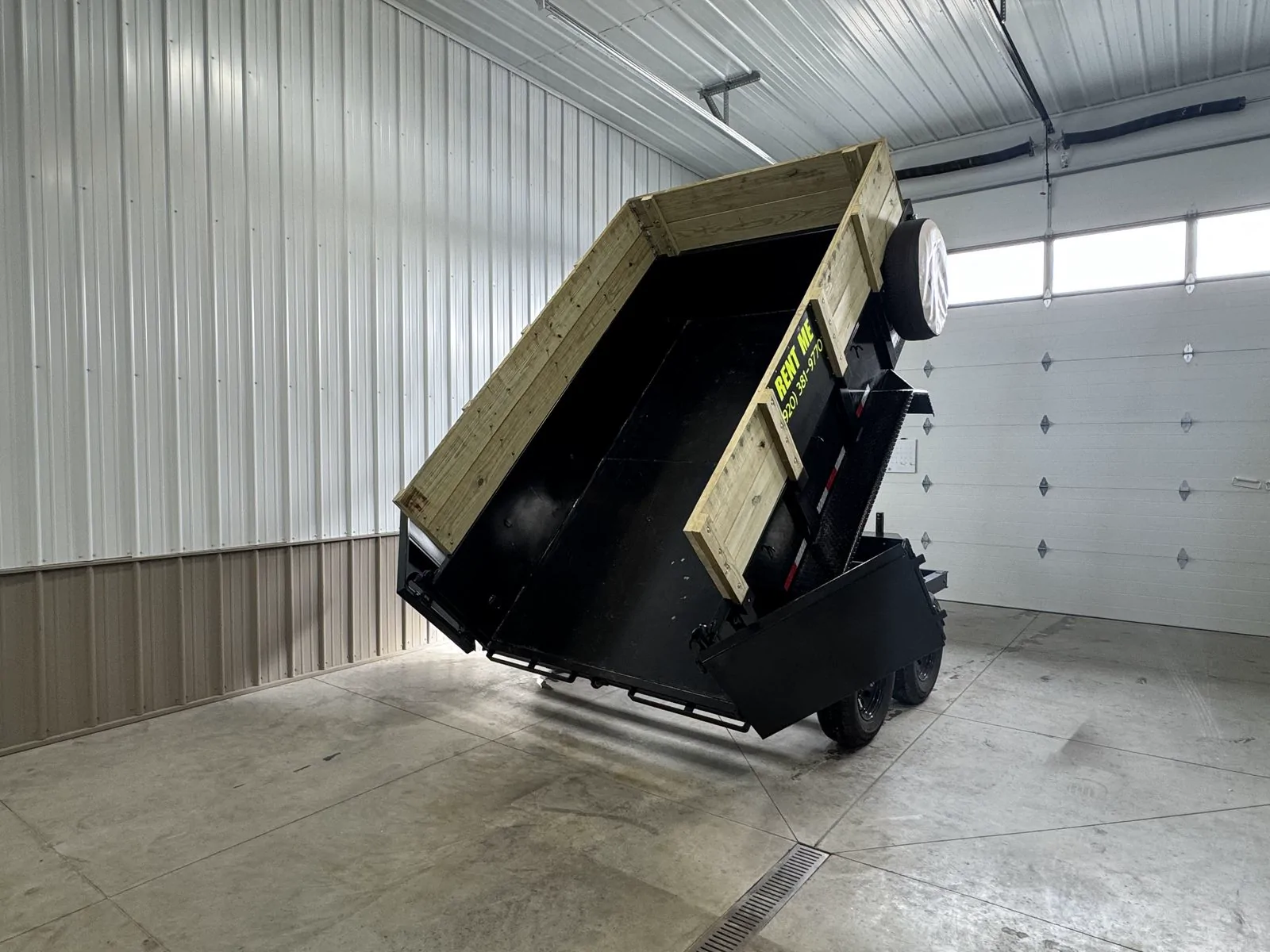
| Disposal | dump trailer | Tips in seconds instead of unloading by hand |
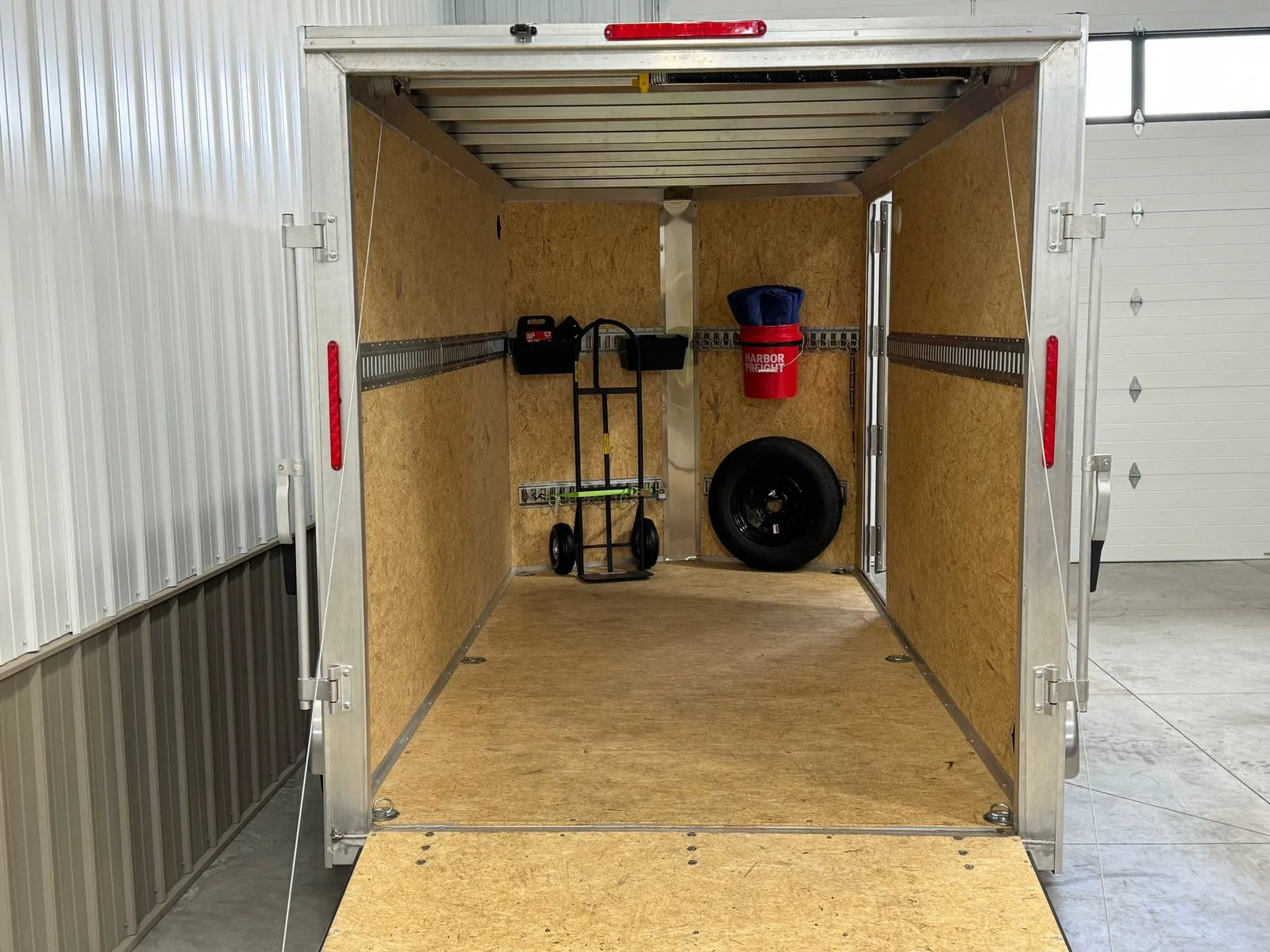
| Keep | 6' x 12' enclosed trailer | Dry and lockable for furniture and documents |
| Sell or donate | 18ft utility trailer | Open deck, easy to load and strap |
| Scrap metal | dump trailer | Tips at the scrap yard too |
Hand-unloading a full trailer of mixed household waste takes 45 minutes to an hour and is the most tiring part of the day. Across five loads that is most of a working day spent unloading. The dump trailer at $120 for 24 hours removes it, and over a multi-day cleanout the arithmetic is not close.
Getting help, and when to buy it
Two people work at more than twice the speed of one on a cleanout, because most of the difficulty is carrying awkward things down stairs. Four people is the practical sweet spot for a house: two sorting, two carrying and loading.
Professional cleanout services charge by volume and will do a three-bedroom house for a four-figure sum. That is the right answer when there is no family nearby, when the timescale is tight, or when the property is in a condition that makes sorting unsafe. For most families with a weekend and a trailer, it is not necessary, and the hybrid works well: do the sorting and the keep stream yourselves, pay someone for the heavy disposal runs.
Selling and donating, realistically
The sell-or-donate stream is where optimism costs time. Most household goods have very little resale value, and the effort of listing, photographing and meeting buyers for a $20 item is rarely worth it in the middle of a cleanout.
- Worth selling: tools, working appliances under about ten years old, solid wood furniture, anything collectable
- Worth donating: clean usable furniture, clothing, kitchenware, books
- Not worth either: mattresses, upholstered furniture with wear, particleboard furniture, old televisions
- Worth an estate sale: a whole house of period furniture and contents, where a professional takes a percentage
Charity collection is the underused option. Several organisations will collect larger items free, which removes them from your trailer loads entirely. Book that early, because collection slots run a week or two out, and a donation pickup that arrives after you have already tipped everything is no help.
Paperwork and what has to be kept
In an estate cleanout, some documents must survive the process, and they are rarely all in one place.
Deeds, vehicle titles, insurance policies, pension and investment records, tax returns, birth and marriage certificates, and military discharge papers all matter. Anything with an account number on it should be kept rather than binned, at least until an executor has reviewed it. Documents that genuinely are rubbish should still be shredded rather than tipped loose, because a trailer of personal paperwork going to a disposal site is an identity theft problem waiting to happen.
Box the paperwork, label the boxes and keep them separate from everything else. It is the one category that cannot be recovered once it is gone.
Scheduling the trailer
On a multi-day cleanout, how you book the trailer changes the cost significantly.
- A three-day block is cheaper than three separate day rentals
- Load as you sort rather than sorting the entire house first, so the trailer is never idle
- Plan disposal runs around site hours, since the bulky waste site closes mid-afternoon most days
- Keep the trailer overnight so the morning starts with loading rather than collection
The three-day rate on a dump trailer is $325 against $120 for a single day, so a weekend cleanout that would otherwise need three separate rentals is substantially cheaper booked as a block.
The emotional pace, which is a real constraint
Estate cleanouts are not ordinary work and treating them as a pure logistics exercise tends to go badly. Families working through a parent’s house move slowly through some rooms and quickly through others, and the slow rooms are not inefficiency.
Plan for it rather than fighting it. Do the neutral spaces first, the garage, the basement and the shed, which builds momentum and clears room to stage. Leave bedrooms and personal spaces for when the structure of the job is already established. And stop earlier in the day than you think you need to, because decisions made by exhausted people at six in the evening are the ones that get regretted.
Hoarded and distressed properties
These are a genuinely different job and should be treated as one. Deep accumulation brings real hazards: structural loading on floors, pests, mould and air quality, and sometimes needles or biological material under the surface layers.
Do not start a property like this with a trailer and good intentions. Specialist cleanout firms have the protective equipment, the disposal arrangements and the experience to work through it safely, and the cost is justified by the risk. The trailer comes in afterwards, for the ordinary material once the property is safe.
Text Nick at (920) 381-9770 and describe the property, and you will get an honest view of how many loads it is likely to be. Related: moving large furniture and dump trailer rental.