Trailers fail in a small number of predictable ways, and almost all of them give warning to anyone looking. The difficulty is that a trailer spends most of its life parked, so nobody looks, and the first inspection in eight months happens on the day it is loaded and needed.
The short answer: four checks before every tow, a fuller look each season, and bearings repacked annually. Bearings and tyres cause most roadside failures, and both are cheap to prevent and expensive to ignore.
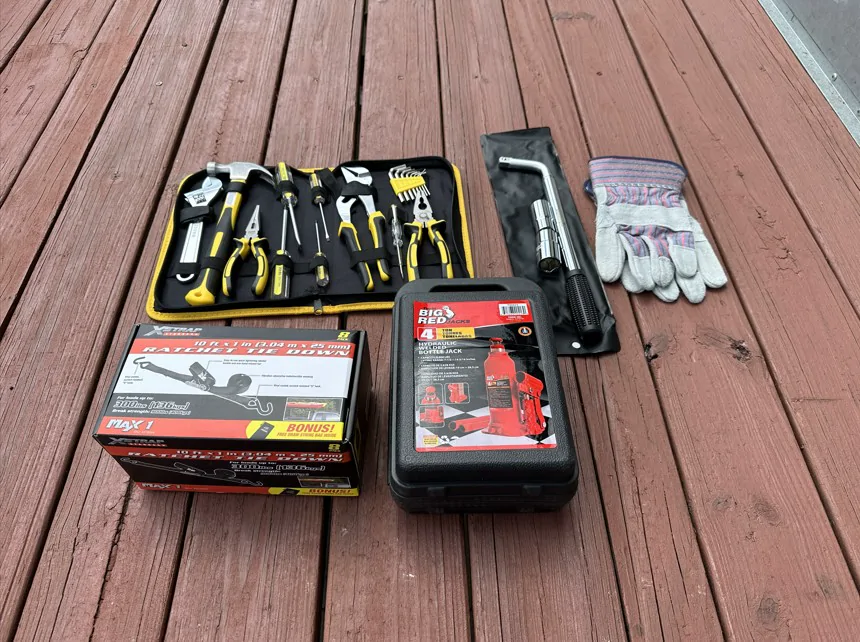
Before every tow: four minutes
This is the short list, and it catches the great majority of problems.
- Tyre pressure, cold, on all tyres including the spare, to the figure on the sidewall
- Lights, both sides, with a second person: tail, brake, left, right
- Coupler latched and pinned, confirmed by lifting the tongue with the jack
- Chains crossed under the tongue with slack to turn but not to drag
Then at five miles, pull over and feel the hubs, re-tension the straps and check the coupler. Warm hubs are normal, hot hubs are a bearing or a dragging brake and mean stopping now rather than later.
Every season: thirty minutes
| Item | What to look for |
|---|---|
| Tyre sidewalls | Cracking, bulges, cuts, and the DOT date code |
| Wheel bearings | Play when rocking the wheel, grease on the inside of the rim |
| Brakes | Even braking, no pulling, no dragging when rolling |
| Lights and wiring | Corroded pins, chafed wire, a working plate lamp |
| Coupler and ball | Flat spots, a loose latch, excessive rattle |
| Safety chains | Worn links, particularly nearest the hooks |
| Deck | Soft or rotten boards, loose fasteners, lifted screw heads |
| Frame and welds | Flaking rust at welds and mounting points, cracks |
| Jack | Winds smoothly, foot or wheel intact |
| Ramps and latches | Open and latch properly, hinge pins secure |
The deck is the item people leave longest. A soft board on a wooden deck does not look urgent and then puts a foot or a wheel through it on the day a heavy load is going on. Press on suspect boards with a thumb at the ends, where water sits and rot starts.
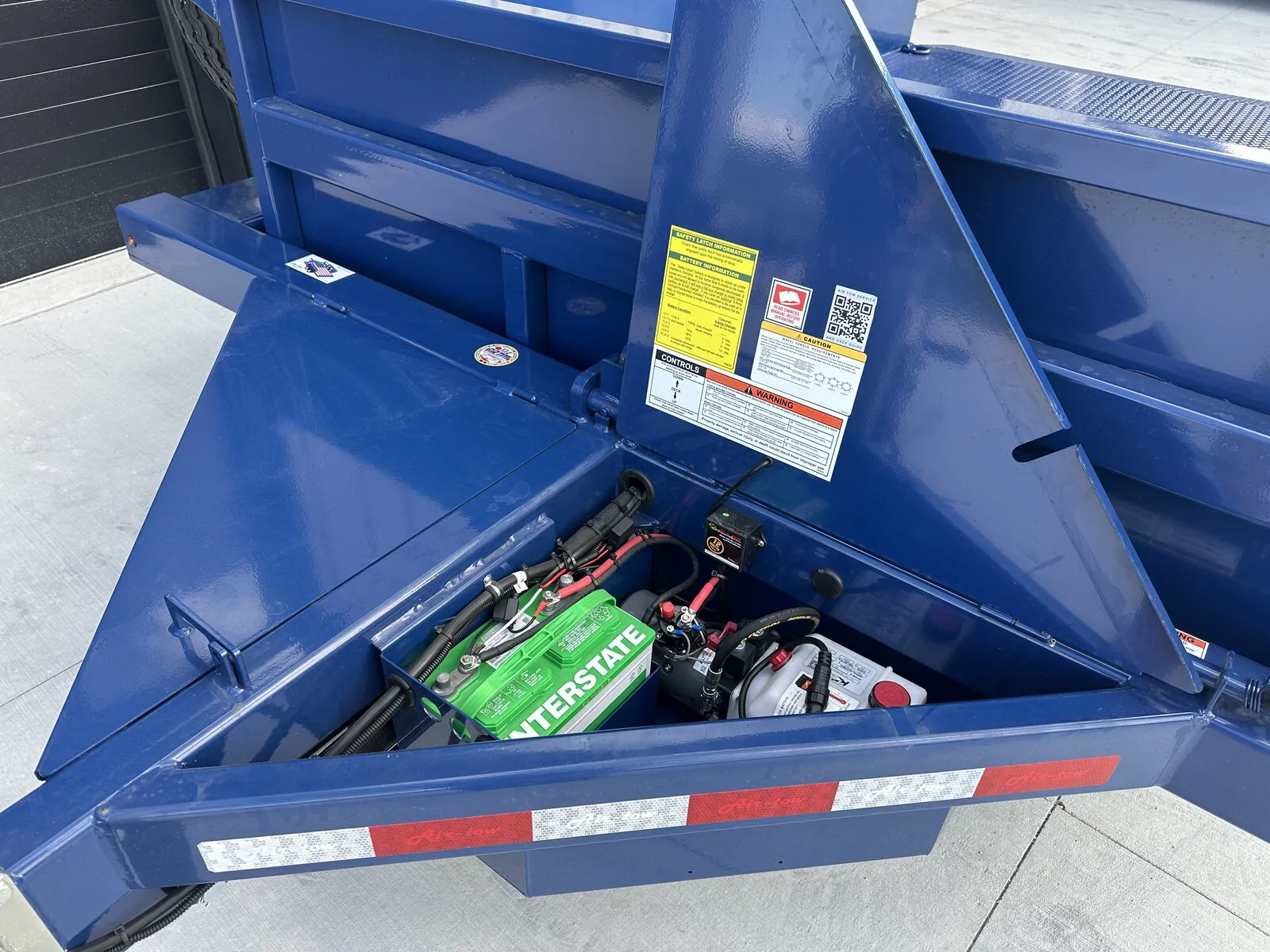
Every year: the jobs that need doing
- Repack or replace wheel bearings. Annually for a trailer in regular use, and this is the single highest-value maintenance item
- Inspect brake shoes and magnets on braked axles, and check the wiring to each brake
- Check and adjust the brake controller gain against a loaded trailer, not an empty one
- Grease the coupler, jack and hinges
- Check tyre age and replace at five to six years regardless of tread
- Touch up frame rust before it establishes, especially after a salted winter
Bearings are the one
A failed wheel bearing seizes the hub, destroys the spindle, can take the wheel off entirely and often damages the tyre and fender on the way. It is also the cheapest job on this list. If you only do one annual task on a trailer, repack the bearings.
Why standing still is harder on a trailer than towing
A trailer used weekly is usually in better condition than one used twice a year, which surprises people until the mechanisms are clear.
- Tyres degrade from ultraviolet light and ozone continuously, whether moving or not, and flat-spot sitting in deep cold
- Brakes seize when not exercised, particularly drums after a wet winter
- Bearing grease migrates away from the contact surfaces and leaves them dry
- Connectors corrode under salt spray and snowmelt, which is why lights fail in spring
- Wooden decks absorb water, freeze, and rot at the fasteners
The mitigation is cheap: cover it or block it up off the tyres, keep the tyres inflated in storage, and move it occasionally so the brakes and bearings get exercised and the contact patch changes. These are the hidden costs of ownership discussed in renting versus buying a trailer.
Wisconsin-specific: salt
Road salt is the main enemy of a trailer in this state, and it attacks the things that matter most: electrical connections, brake components, fasteners and frame welds.
Wash the underside after winter use, not just the deck. Pay attention to the wiring harness runs along the frame, the connector plug itself and the area around the axle and brake backing plates. Dielectric grease in the connector before winter prevents most of the lighting faults that appear in March.
Signs something is wrong while towing
| Symptom | Likely cause | Urgency |
|---|---|---|
| Hub too hot to touch | Bearing or dragging brake | Stop immediately |
| Rumble or growl that changes with speed | Bearing | Stop and inspect |
| Pulling to one side under braking | Uneven brakes | Stop, check before continuing |
| Vibration at speed | Tyre, wheel or bearing | Stop and inspect |
| Wandering or sway | Load, tongue weight, or soft tyres | Reduce speed, then fix the load |
| Lights failing intermittently | Corroded connector or chafed wire | Fix before dark |
The heat check is the most useful diagnostic available and it requires no tools. If you develop the habit of touching each hub at every stop, you will catch a failing bearing long before it strands you. Sway is a different matter and is covered in how to stop trailer sway.
Lights and wiring, the most common fault
Trailer lighting fails more often than anything else, and nearly always at the connections rather than in the lamps.
- Clean the connector pins and pack them with dielectric grease, especially before winter
- Check the ground wire first when anything behaves strangely, because most odd faults are grounding faults
- Look for chafing where the harness runs along the frame and crosses the tongue
- Replace corroded bulb sockets rather than cleaning them repeatedly
- Seal any splices properly, since a twisted joint wrapped in tape will fail within a season
A fault that affects several lamps at once, or makes one circuit light another, is a ground problem rather than a bulb problem. The full diagnostic order is in trailer lights not working.
Brakes: electric, surge and what each needs
Two braking systems appear on trailers in this weight range and they need different attention.
| System | How it works | What it needs |
|---|---|---|
| Electric drum | Controller in the tow vehicle energises magnets | Annual shoe and magnet inspection, controller set to the load |
| Surge or hydraulic | Coupler compresses under deceleration and applies brakes | Fluid level, free coupler movement, no corrosion |
| Electric over hydraulic | Controller signals a hydraulic pump | Both of the above, plus pump and battery |
With electric brakes the controller gain should be set against a loaded trailer, because a setting that is right empty is far too weak loaded. Set it on a quiet road: increase gain until the trailer brakes just lock briefly at low speed, then back it off slightly.
Decks, frames and structural wear
Structural problems develop slowly and are easy to miss because nothing about them changes between one trip and the next.
- Wooden decks rot from underneath and at fastener holes, so press suspect boards at the ends
- Check the crossmembers under the deck, where rust collects out of sight
- Look at welds at the tongue, the axle hangers and the ramp hinges, which carry the most load
- Tighten U-bolts at the axle, which do work loose
- Check ramp hinges and springs, a common failure on trailers used daily
The tongue welds and axle hangers are the two places where a crack genuinely matters. Surface rust on a frame tube is cosmetic; a hairline crack at a weld where the tongue meets the frame is not, and it needs a welder rather than a wire brush.
Keeping records
A single sheet in the glovebox of dates and mileages is worth more than it sounds, because trailer servicing is measured in intervals nobody remembers.
Record bearing repacks, tyre fitting dates with their DOT codes, brake inspections and any welding or structural repair. On an owned trailer this tells you what is due; on a trailer being sold it is genuine evidence of care and makes the difference between a buyer trusting the condition and assuming the worst. It also settles the question that is otherwise unanswerable: when were these tyres actually fitted?
What a rental takes off your hands
All of this is somebody else’s schedule when you rent. Trailers here are inspected between renters, tyres are replaced on age rather than tread, bearings are on an annual schedule, and every trailer goes out with a mounted spare, a bottle jack and a lug wrench.
That is genuinely part of the value rather than a detail. An owned trailer used six times a year still needs the annual bearing service and the five-year tyre replacement, and those costs arrive whether the trailer was used or not.
Text Nick at (920) 381-9770 if you want a second opinion on something you have spotted on your own trailer. Related: trailer tyres, pressure and blowouts and the pre-tow safety checklist.