Wisconsin has one of the largest snowmobile trail systems in the country and a season that can start in December and run into March. Most of the hauling problems people hit are not about the sleds at all. They are about what salt, ice and cold do to a trailer, and about a tie-down approach that works in a dry garage and fails on a slushy highway.
The short answer: two sleds fit comfortably in a 7.5' x 16' enclosed trailer, and three or four in an 8.5' x 24'. Enclosed is worth the difference in January. Strap over the skis and the rear of the tunnel, not through the suspension.
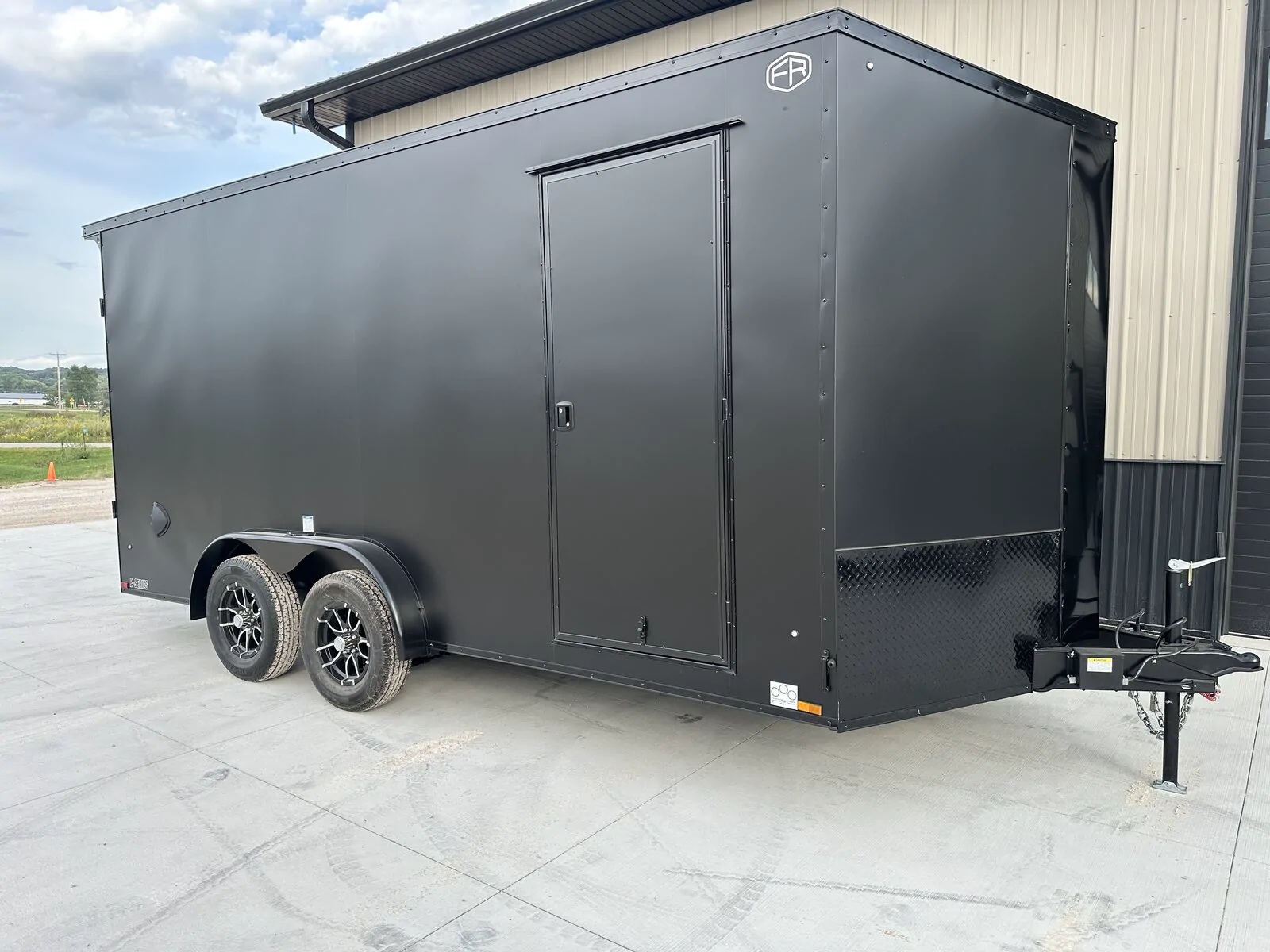
How many sleds fit
Snowmobiles are long rather than wide, so length is the constraint. A modern trail sled is roughly 10 to 11 feet long and 4 feet wide at the skis.
| Trailer | Sleds | Notes |
|---|---|---|
| 6' x 12' enclosed trailer | 1 | One sled plus gear, tight for two |
| 7.5' x 16' enclosed trailer | 2 | Comfortable, room to work between them |
| 8.5' x 24' enclosed car hauler | 3 – 4 | Full weekend group, gear and fuel |
| 18ft utility trailer | 2 | Open deck, cheapest option |
| tilt deckover | 2 – 3 | Open, loads at ground level |
The practical difference between the 6' x 12' enclosed trailer and the 7.5' x 16' enclosed trailer is not whether two sleds physically fit. It is whether you can walk between them to strap the far side, which turns a frustrating job into an easy one.
Open or enclosed, in a Wisconsin winter
This is the decision that matters most and it is not really about the snow.
| Factor | Open deck | Enclosed |
|---|---|---|
| Road salt on the sled | Heavy exposure | None |
| Loading | Easier, especially tilt decks | Up a ramp into a box |
| Gear and fuel | Exposed, must be strapped | Secure and dry |
| Changing and warming up | Not possible | Shelter at the trailhead |
| Crosswind on the interstate | Minimal | Noticeable, load forward |
| Cost, 24 hours | $85 – $140 | $105 – $140 |
Salt is the argument. A sled hauled 150 miles on an open deck behind a vehicle throwing winter road spray arrives coated in brine, and that brine sits in the tunnel and on the suspension until it is washed off. Over a season it is a genuine cost. The enclosed trailer removes the problem rather than managing it.
Loading sleds safely
- Ramp on solid, level ground, not on ice or packed snow where it can slide
- Walk the sled up under power at low speed, or winch it, with nobody behind it
- Carbides and studs tear wood decks. Ski guides or a deck protector are worth having
- Heaviest sled first, against the front wall, which is what keeps the tongue loaded
- Leave room to open the hood on the front sled if you can, because that is where the work happens
A sled on an icy ramp is one of the easier ways to get hurt in this whole hobby. If the ramp will not stay put, move the trailer rather than trying to be careful.
Tying down, which is where people go wrong
Snowmobiles do not strap like motorcycles. There is no front wheel to compress into a chock, and the suspension is not something to pull against.
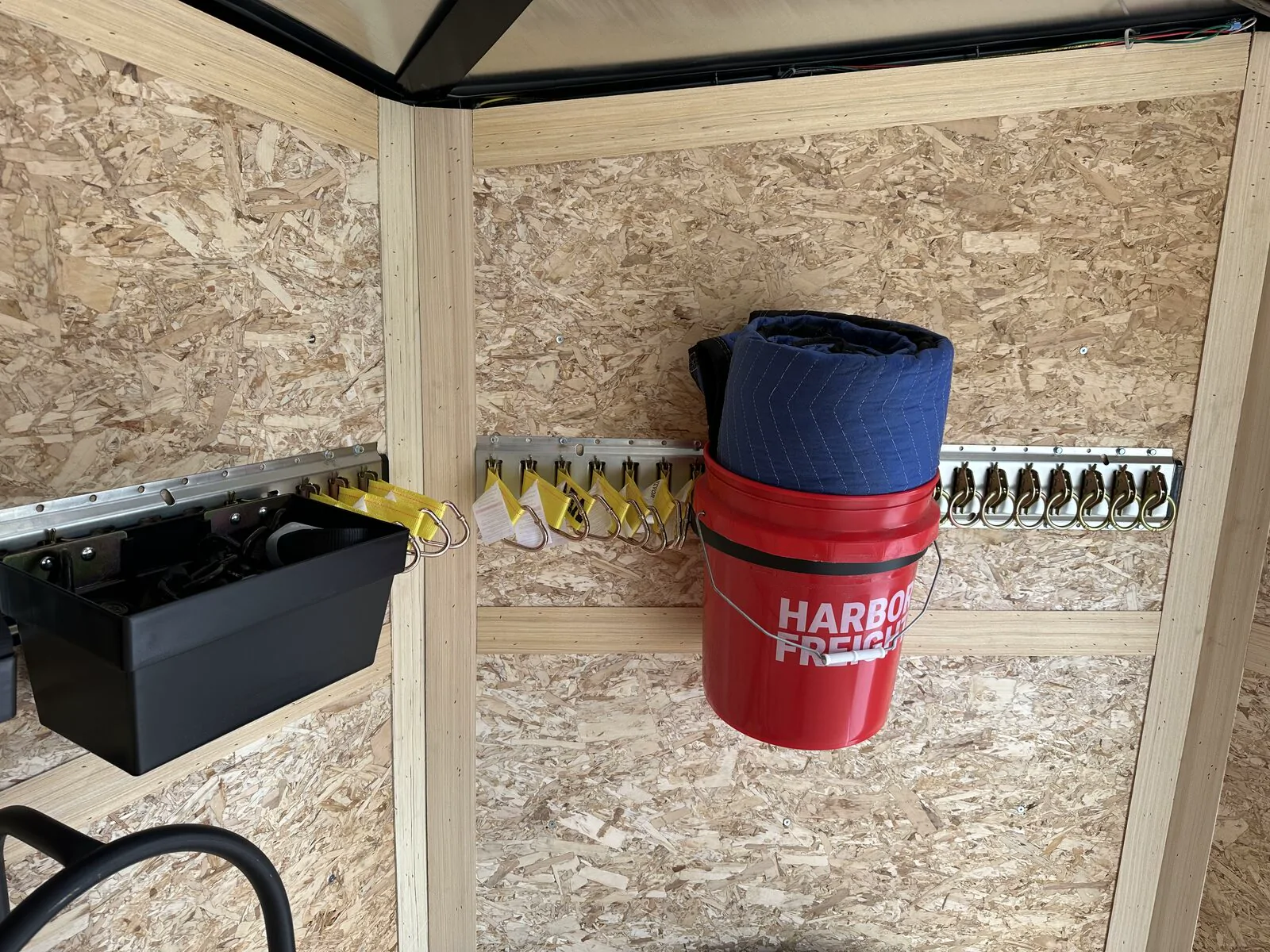
- Over the skis at the front, using ski tie-down loops or straps over the ski itself
- Over the rear of the tunnel at the back, or through the bumper where the sled has a solid one
- Never through the rear suspension or the shock, which will bend
- Four points, pulling forward at the front and rearward at the back, so the sled is in tension both ways
- Re-check at the first stop, because snow and ice melt out from under the track and the straps go slack
The melting problem
A sled loaded with packed snow in the track and on the skis is sitting slightly higher than it will be in twenty miles. As that snow melts and falls away, every strap loosens at once. Check straps at the first stop, every single trip.
Cold weather trailer problems
The trailer itself is the thing most likely to let you down in January, and the failures are predictable.
- Frozen brakes on a trailer parked wet overnight in the cold. Move it gently before loading
- Corroded connectors, which is why trailer lights fail in winter far more than summer. Dielectric grease on the plug helps
- Tyre pressure drops about one psi per 10°F, so a trailer set in October is low by January
- Frozen ramps and latches, which a little spray lubricant prevents
- Doors frozen shut on an enclosed trailer after a thaw and refreeze
If the lights do fail at the roadside, work through it in order rather than guessing, which is covered in trailer lights not working.
Driving in winter conditions
Towing on snow and ice compounds everything that is already true about towing. Stopping distance was already roughly double; on a slippery surface it is far more than that, and a trailer that starts to push the tow vehicle on a downhill is very difficult to recover.
- Slow well below your summer towing speed, and far earlier for junctions
- Brake in a straight line, finishing before you turn
- Expect the trailer to push downhill and leave room for it
- Use trailer brakes alone via the manual override if the rig starts to feel loose
That last point is the one worth knowing in advance, and it is the same technique that recovers trailer sway at any time of year.
What to bring besides the sleds
The gear list is where an enclosed trailer quietly pays for itself, because all of it has to go somewhere and most of it should not be out in road spray.
- Fuel cans, upright and secured, never loose in the trailer
- Spare belt and plugs for each sled, which is the breakdown people actually have
- Basic tools, a tow strap and zip ties
- Helmets, bibs and boots, which stay dry in an enclosed trailer and do not in an open one
- A shovel, for the trailer as much as for the trail
Fuel deserves a specific note. Carry it upright in proper cans, secured so it cannot tip, and ventilate the trailer when you open it after a long drive. A sealed box with fuel vapour in it is worth treating seriously.
Trail passes and registration
Wisconsin requires snowmobiles to be registered, and riding the state trail system requires a trail pass, which is separate from registration. Both are the rider’s responsibility rather than the trailer’s, but both are worth confirming before loading two sleds and driving three hours.
Requirements and fees change between seasons, and non-resident rules differ from resident ones. Check the current position with the Wisconsin DNR rather than relying on what was true last winter.
Loading when there is already snow
The ordinary advice assumes a clear, dry ramp. In February that is often not what you have.
- Clear the ramp and the approach before positioning the trailer, not after
- Check the ramp will not slide on packed snow, and move the trailer if it will
- Watch the trailer tyres, since a trailer on ice can slide sideways as a sled is driven up
- Chock the trailer wheels, which matters far more on a slippery surface
- Go up straight and steady, because correcting on a snowy ramp rarely works
If conditions make the loading area genuinely unsafe, move to a different surface rather than being careful. A sled coming off a ramp sideways with a rider on it is the serious injury in this sport that nobody expects.
After the trip
What you do when you get home decides what condition the sleds are in next season.
Brine from the road sits in the tunnel, on the rails and around the suspension, and it keeps working long after the trailer is unhooked. Rinse the sleds, let them dry, and do the same for the trailer underside if you have been on salted roads. On an enclosed trailer, open it up and let it dry out rather than closing wet gear inside it, which is how an enclosed trailer develops a smell and eventually mould on the walls.
Where people ride from Fond du Lac
Fond du Lac sits within an easy tow of a great deal of trail. The Northwoods is the destination for most serious weekends, with Eagle River, Minocqua and the Nicolet area three to four hours north, which is a comfortable morning with a trailer at sensible speeds.
Closer in, the county trail systems around Fond du Lac, Calumet and Sheboygan counties open whenever conditions allow, and in a good year the Kettle Moraine area rides well without a long drive. Those shorter trips are where an open deck makes more sense, since an hour of salted highway does far less damage than four.
Trail conditions vary enormously across the state within the same week, so check county reports before committing to the drive. A trailer booked for a weekend that turns to rain is the one genuinely avoidable disappointment in this sport, and most people booking here will say what the forecast is doing if asked.
Booking for the season
Snowmobile weekends cluster, which means the enclosed trailers go first on a Friday in January after a good snowfall. Booking a week ahead costs nothing and is the difference between the trailer you want and the one that is left.
Text Nick at (920) 381-9770 with the number of sleds and the dates. Related: winter storage and transport and hauling ATVs and UTVs.