A car that will not start is a different problem from a car that will not move, and working out which one you have decides everything that follows. A dead battery leaves you with a vehicle that rolls freely and steers. A seized engine, a locked transmission or a stuck parking brake leaves you with something closer to a very heavy sledge.
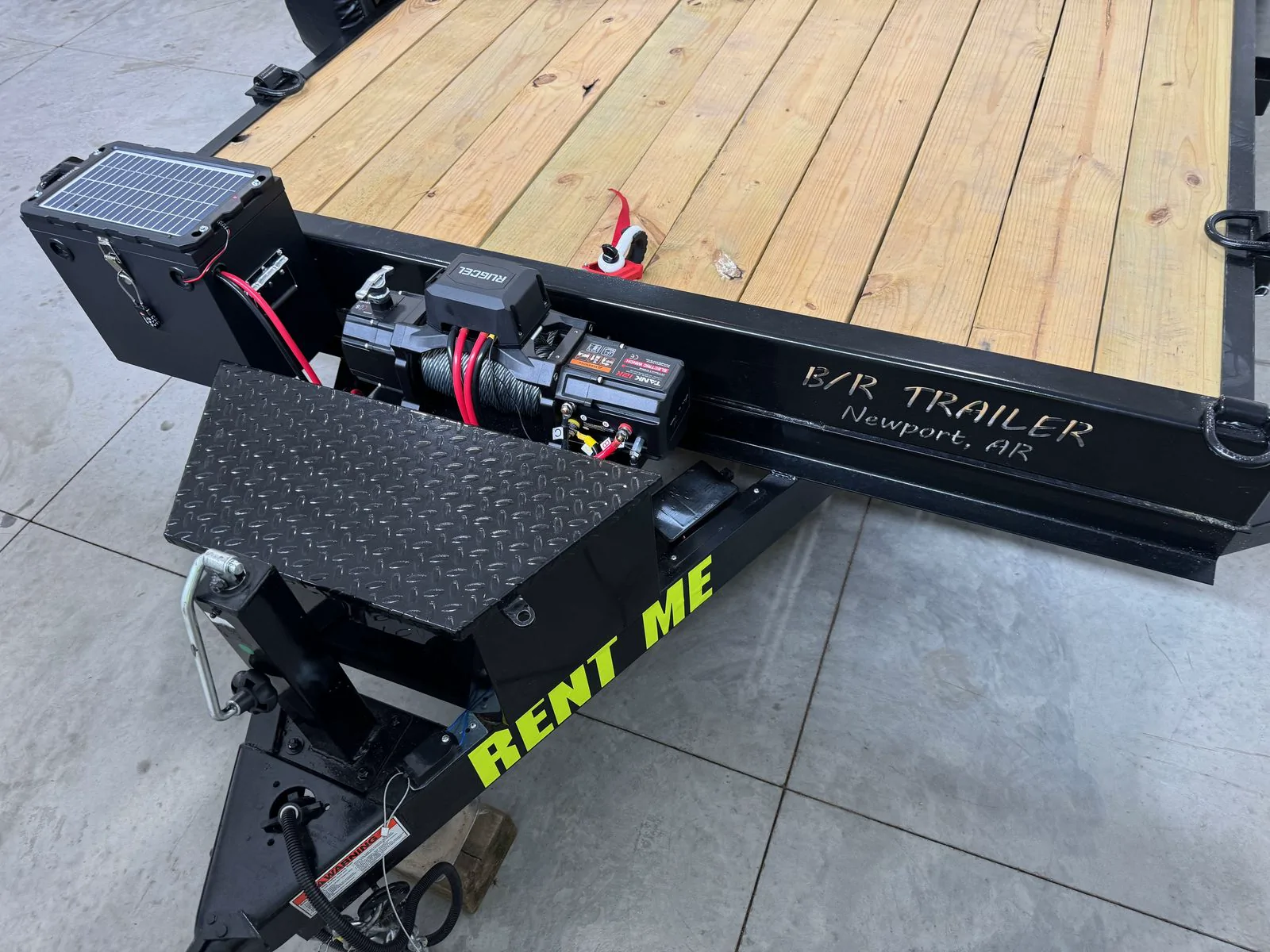
The short answer: get it onto a trailer rather than towing it on its own wheels. Use the shift lock release to get out of park, winch it on with the steering unlocked, and load it nose-first so the weight sits ahead of the axle.
First: will it roll?
Release the parking brake, put it in neutral and try to push it a foot or two on level ground. That single test tells you which job you have.
| Symptom | Likely cause | Does it change the plan? |
|---|---|---|
| Rolls freely, will not crank | Battery or starter | No, straightforward winch load |
| Will not come out of park | No power to shift interlock | Use the shift lock release |
| Rolls, but one wheel drags | Seized brake or caliper | Winch slowly, expect resistance |
| Will not roll at all | Seized engine, locked box or brakes | Needs skates or a flatbed service |
| Steering wheel locked | Ignition lock engaged | Key to accessory position |
Most of the time it rolls. A flat battery is by far the most common reason a car will not start, and a car with a flat battery is mechanically healthy in every way that matters for moving it.
Getting out of park without power
An automatic transmission locks in park and the release is electrical, so with a dead battery the lever will not move. Every car built in the last thirty years has a manual override for exactly this.
- Find the shift lock release, usually a small slot beside the gear lever covered by a plastic cap
- Prise the cap off and press down inside with a key or screwdriver
- Hold the brake pedal and move the lever to neutral at the same time
- Check the handbook if there is no visible slot, as some cars put the release under the console trim
The steering lock is a separate problem with a separate fix. Turn the key to the accessory position to release it. Without that, the front wheels will not steer and the car cannot be lined up on the ramps.
Jump it first
Before any of this, try jumping the battery. If it starts, you have turned a two-hour job into a ten-minute drive. Even if it starts badly, a car that runs long enough to drive onto a trailer under its own power is far easier than one that does not.
Why not just tow it on its own wheels?
Flat towing a car behind another vehicle with a rope or a bar looks like the cheap option and it is a genuinely poor idea for most modern cars.
- No power steering or brakes in the towed car, so it takes real force to steer and it will not stop
- Automatic transmissions are damaged by being towed with driven wheels on the ground, because the pump is not circulating fluid
- Someone has to sit in the towed car and steer and brake it, which is an unpleasant and exposed job
- A rope or chain gives no control on a downhill or in traffic
On a trailer, the car is restrained, nobody is sitting in it, and the transmission is irrelevant. That is why a car hauler at $80 for four hours is the right tool rather than a tow strap.
Loading a dead car, step by step
With a winch, this is controlled and unhurried. Without one, it is a bad idea.
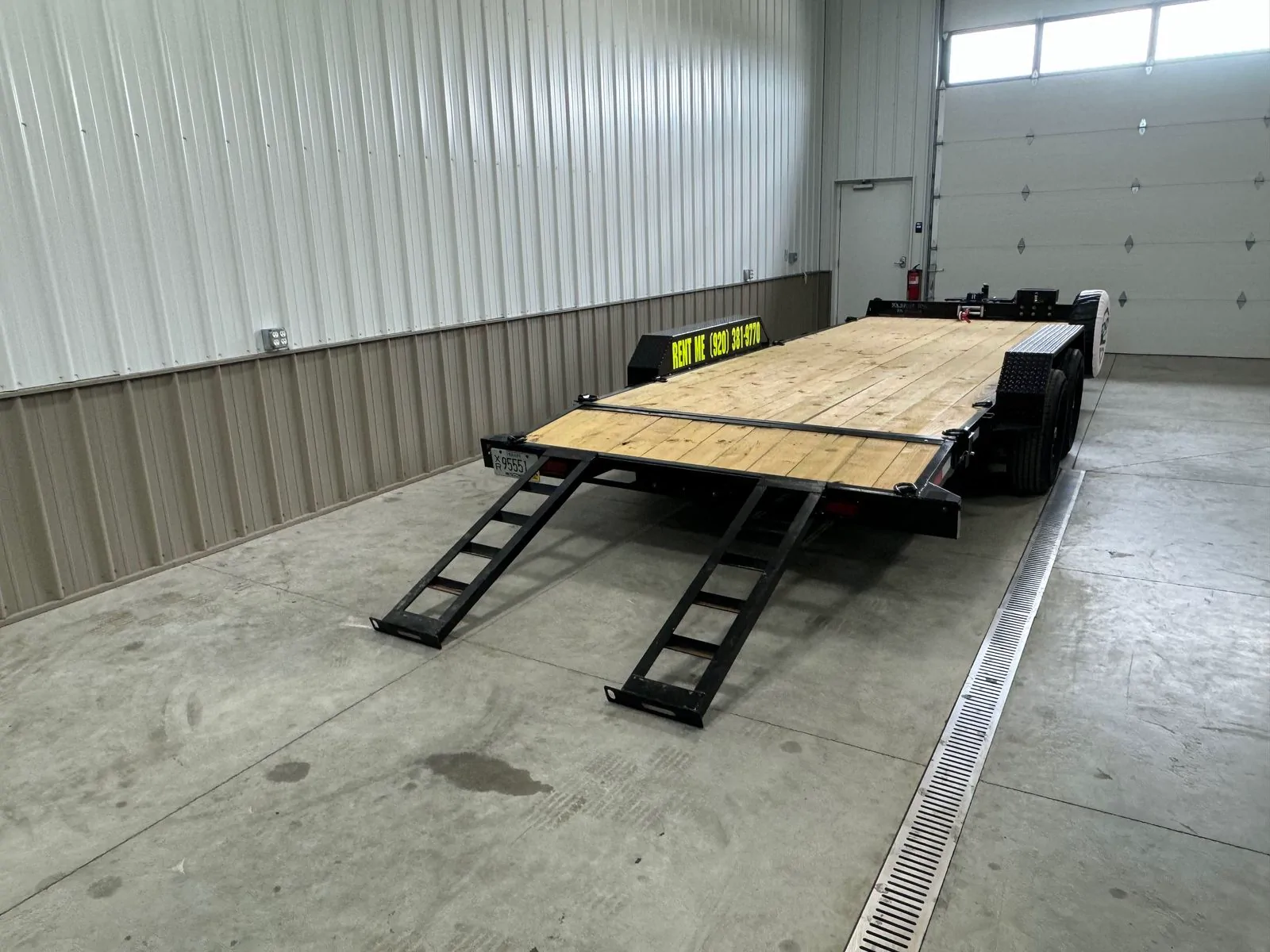
- Trailer on level ground, tow vehicle attached and in park, trailer wheels chocked
- Ramps set and secure, checked that they are seated before any load goes on
- Key to accessory so the steering unlocks, and the car in neutral
- Winch strap to the tow hook or a frame point, never to a suspension arm or an axle
- Nose first, up the centre, with one person winching and one well to the side watching the wheels against the ramp edges
- Stop when the weight sits ahead of the trailer axle, not when the car reaches the front
Nobody stands behind or in front of the car on the ramps. If a strap or hook lets go, the car comes back down with no brakes, and the spot directly behind it is the one place you cannot be.
Strapping it down
Four points, over the wheels, is the standard and it is standard because it works. Wheel straps pass over the tyre and pull the car down onto its own suspension, so the restraint does not change as the suspension moves.
- Four straps, one per wheel, pulling outward and downward toward each corner
- Over the tyre, not around the axle or the suspension components
- Parking brake on if it works, and in park or in gear
- Re-check at five miles, because the suspension settles and straps loosen
Which trailer, and the weight question
| Vehicle | Rough weight | Trailer |
|---|---|---|
| Compact car | 2,600 – 3,000 lbs | car hauler |
| Midsize sedan | 3,200 – 3,700 lbs | car hauler |
| SUV or crossover | 3,800 – 4,800 lbs | car hauler or tilt deckover |
| Full-size pickup | 5,000 – 6,500 lbs | tilt deckover or gooseneck deckover |
| Classic or project car, weather matters | varies | 8.5' x 24' enclosed car hauler |
Add the trailer’s own weight to the car’s and check the total against your tow vehicle’s rating before booking anything. A midsize sedan on a car hauler is comfortably over 5,000 lbs combined, which is more than some crossovers should be pulling. The figures that matter are in what your truck can actually tow.
Two-wheel dollies and why they are limited
A tow dolly lifts the front two wheels and leaves the rear two on the road. It is cheaper and lighter than a full car hauler and it suits a narrow set of circumstances.
- Front-wheel drive only, with the driven wheels lifted clear
- Rear-wheel drive needs the driveshaft removed, which is not a roadside job
- All-wheel drive should not go on a dolly at all without the manufacturer’s blessing
- The rear wheels still have to roll, so a seized rear brake rules it out
Because a trailer sidesteps every one of those conditions, a car hauler is the simpler answer for an unknown or non-running vehicle. There is nothing to check about the drivetrain when all four wheels are off the ground.
Paperwork and ownership
Moving a vehicle that is not yours, or that you have just bought, carries a small amount of administration that is easier to sort before the trailer is loaded than after.
Carry proof of ownership or written permission from the owner. A non-running car on a trailer is an ordinary sight, but a vehicle being transported without documentation is exactly the situation that invites questions, particularly if it has no plates. If you have just bought it, the bill of sale and the title in your name are what you want in the glovebox of the tow vehicle, not in the car on the trailer.
If the car is unregistered, note that the trailer and tow vehicle still need to be legal and plated, which is covered in Wisconsin trailer towing laws.
Fluids, fuel and the things that leak
A car that has been standing, or that failed suddenly, may be leaking something. Check under it before it goes on the trailer rather than discovering a trail behind you.
- Look for fresh drips where it has been parked and identify the colour
- A leaking fuel tank is a stop sign. Do not transport it until that is dealt with
- Disconnect the battery if there is any chance of an electrical fault, particularly after a fire or water damage
- Close the windows and take anything loose out of the interior
Unloading a dead car
Coming off is where more cars get damaged than going on, because gravity is now helping rather than resisting.
Keep the winch attached and pay it out under control rather than unhooking and letting it roll. Release the wheel straps from the rear first so the car is still restrained forward while you work, and have one person at the steering wheel to guide it, with the key at accessory so the steering is unlocked. Unload onto level ground wherever possible, because a car with no brakes that starts rolling on a slope will not stop until something stops it.
When it genuinely will not roll
If the wheels are locked solid, a winch will drag the car up the ramps on stationary tyres, which is hard on the tyres and hard on the winch but is sometimes the only option over a short distance. The better answer is a set of wheel skates, which are low trolleys that the locked wheels sit on, turning a sledge back into something that rolls.
If the car is both immobile and inaccessible, a flatbed recovery service with a tilting deck and a heavy winch is the sensible call. There is no prize for making a difficult recovery into a dangerous one.
Text Nick at (920) 381-9770 and describe the vehicle and whether it rolls, and you will get the right trailer rather than the biggest one. Related: the car hauler rental guide and moving a car and a household in one trip.