Moving a shed sits in an awkward place. It is too big to treat as cargo and too small to obviously need a specialist, so most people start by wondering whether they can just get it onto a trailer. Sometimes they can. Often the honest answer is that a different method is cheaper, safer and less likely to end with a shed in two pieces.
This covers the three realistic approaches, what each costs, and the specific conditions that decide between them.
First, what does it weigh and how is it built?
Everything follows from these two answers.
| Shed | Rough weight |
|---|---|
| 8' x 8' resin or plastic | 200–400 lbs |
| 8' x 10' wood, no floor | 600–900 lbs |
| 10' x 12' wood on skids | 1,200–1,800 lbs |
| 12' x 16' wood | 2,500–3,500 lbs |
| Any size with a shingled roof | Add several hundred lbs |
Construction matters as much as weight. A shed built on skids, meaning two runners under the floor, is designed to be dragged and will survive being moved as a unit. A shed built in place on a concrete pad or blocks, with the floor fastened to a frame that is fastened to the ground, often has no structural capacity to be lifted at all and will rack apart.
The test that decides it
Look underneath. If you can see two runners the shed sits on, it was designed to move and you have options. If the floor sits directly on blocks or a slab with no skids, assume it is not designed to be lifted and plan accordingly. Racking is what destroys sheds in transit: the structure twists out of square and the siding, roof and door no longer fit.
Option 1: onto a trailer
The cleanest method when it works. The shed goes on a deck, gets strapped, and travels as cargo.
When it works
- The shed is on skids, or small and light enough to lift
- It is no wider than about 8.5 feet, matching the widest deck
- There is room to bring the trailer alongside and a way to get it up
- The route has no low bridges, because a shed on a deck is tall
How it gets on
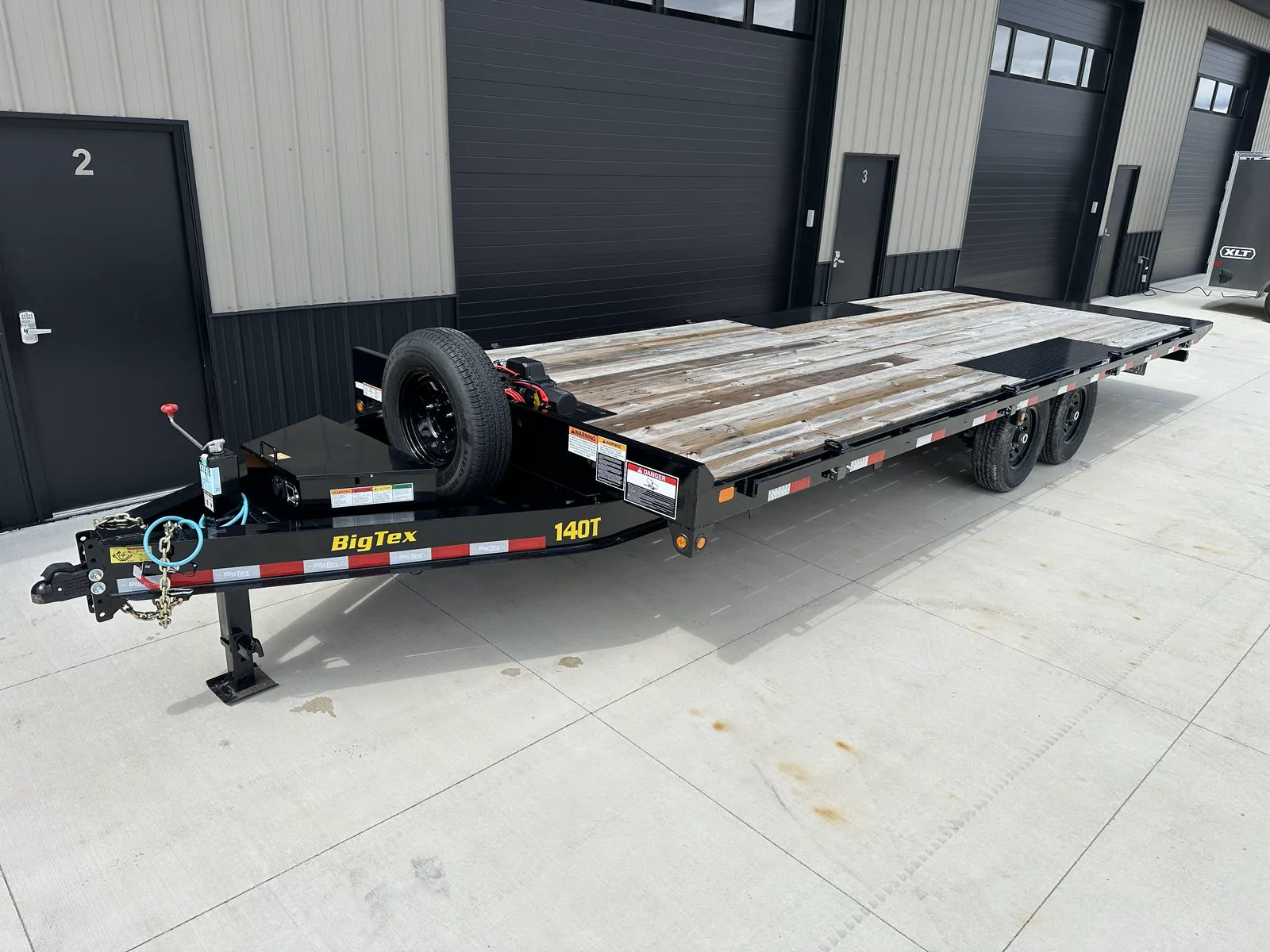
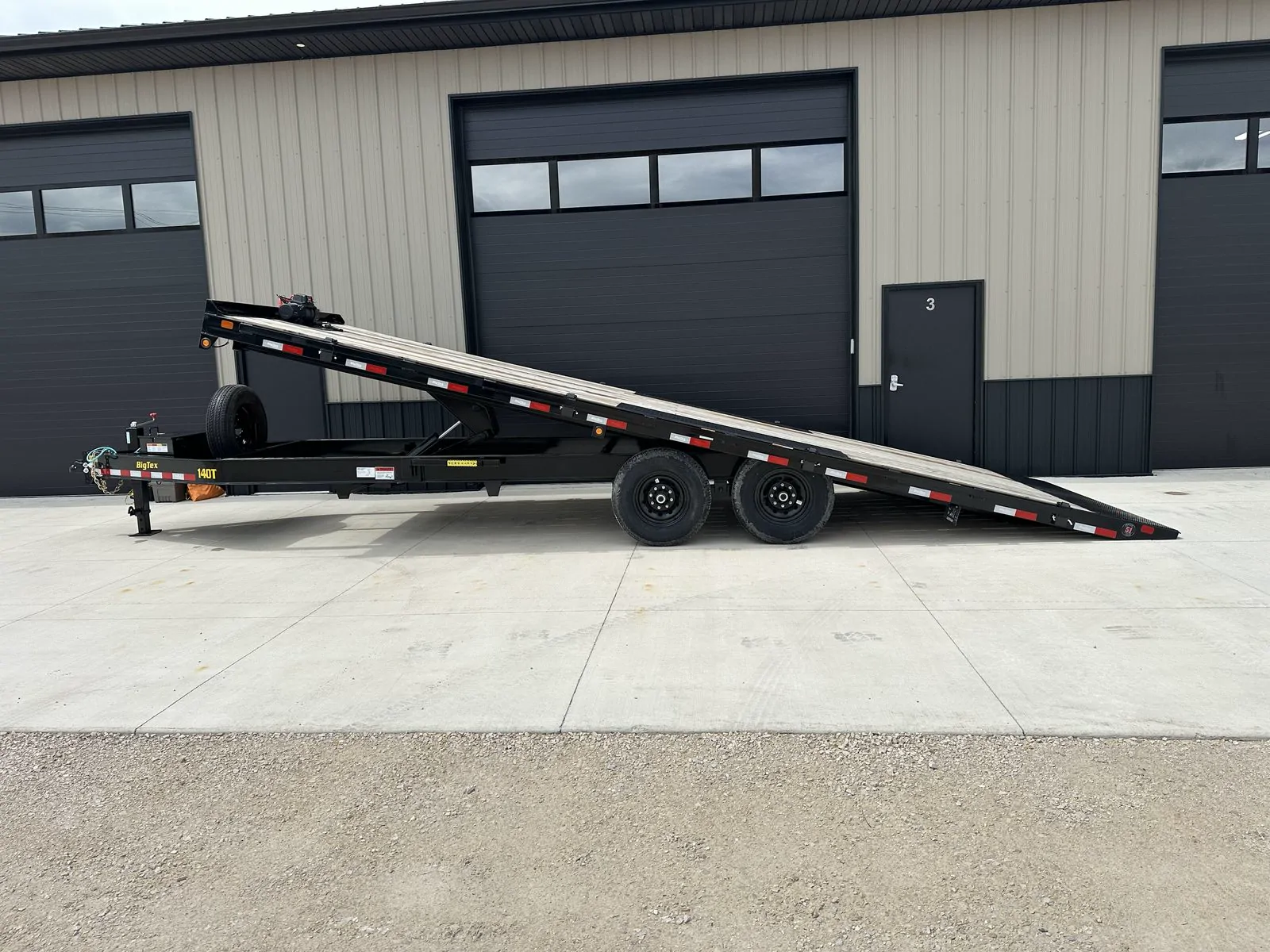
A tilt deckover is the trailer that makes this realistic. The deck tilts to a shallow angle and the shed can be winched up its skids rather than lifted. Without a tilt deck you are into a forklift, a skid steer with forks, or a crane, all of which cost more than the trailer.
- Winch from the skids, not from the walls or the door frame
- Pull slowly and evenly. A shed that starts to twist will keep twisting
- Support the full floor once on the deck, so the structure is not bridging a gap
- Strap over the roof structure with padding, not across the siding
What it costs
The tilt deckover at $120 for four hours or $140 for the day. Add a winch if the trailer does not have one, and four people. For a shed on skids within a reasonable distance, this is comfortably the cheapest route.
Option 2: roll it on pipes
For moving a shed within the same property, this is often better than a trailer and costs almost nothing. It is the method that has moved outbuildings for centuries and it still works.
- Jack one end and slide steel pipe or heavy PVC underneath, across the direction of travel
- Three pipes minimum under the shed at any time
- Pull slowly with a truck, tractor or come-along, from the skids
- Move the rearmost pipe to the front as it emerges, continuously
It is slow, it needs reasonably firm and level ground, and it does not cross soft lawn or go up slopes well. Within a flat yard it is excellent. The limitation is that it cannot leave the property, so if the shed is going to a different address, you are back to a trailer or a specialist.
Option 3: hire a shed mover
Specialists use a purpose-built shed mule, which is a self-propelled machine that slides under the shed, lifts it hydraulically and carries it. It is extraordinary to watch and it solves access problems nothing else can.
It is the right answer when:
- The shed is over about 12x16 or heavier than two tons
- It was built in place and has no skids
- Access is tight, across soft ground, or involves a slope
- The shed is worth more than the moving cost, which for a well-built outbuilding it usually is
Costs vary considerably with distance and access. It is almost always more than a trailer rental and almost always less than rebuilding the shed.
Preparing the shed, whichever method
Half the damage that happens to sheds in transit is preventable in the hour before they move.
- Empty it completely. Contents shift, add weight and break things
- Remove or secure the doors. A door that swings open mid-move tears its hinges out
- Brace the opening. A doorway is the weakest point in the structure. Screw a temporary diagonal or a horizontal brace across it
- Screw a diagonal across each wall inside on anything over 10x12. This is what prevents racking and takes twenty minutes
- Check for rot at the base. A rotten sill will fail under the load of being moved, and better to find out before the shed is airborne
Permits and the other end
Most Wisconsin municipalities require a permit for an accessory structure, and moving one to a new address usually means the new location needs to comply with setback rules even if the shed itself is not new. Checking with the municipality before the move is five minutes and avoids being told to move it again.
Prepare the new base before the shed arrives. Gravel, blocks or a pad, level and compacted. A shed set down on unprepared ground will settle unevenly within a season, and the door will stop closing, which is the usual sign that the base was rushed.
When moving is not worth it
There is a point where a shed is not worth moving, and it is worth being honest about where it sits.
A basic 8x10 wooden shed in middling condition is worth perhaps a few hundred dollars. If the move needs a specialist, a permit and a new base, the cost can approach the price of a new one delivered and assembled. A larger, well-built or custom outbuilding is a different calculation entirely and is usually well worth moving.
If the shed is coming down rather than moving, the dump trailer at $100 takes the debris in one or two loads, and the demolition itself is a day with a reciprocating saw and a pry bar.
The short version
Getting a trailer close enough
The limiting factor on most shed moves is not the shed, it is whether a trailer can get within winching distance of it. A tilt deckover is 24 feet of trailer behind a truck, and reversing that between a garage and a fence is not a beginner manoeuvre.
- Walk the approach first and look for the pinch points: gate posts, overhead branches, soft ground, septic covers
- Check the turning space at the shed end. You need room to straighten up, not just to arrive
- Soft ground is the common failure. A loaded trailer sinks where an empty one did not, and spring thaw in Wisconsin makes most lawns impassable
- Have a plan B position further away, and the winch line to reach it
If the trailer cannot get within about thirty feet of the shed on firm ground, rolling it to the trailer on pipes first is often easier than trying to bring the trailer closer.
Winching safely
A winch under load stores a great deal of energy, and a shed is a large, awkward thing to have attached to one. Three rules matter more than the rest.
- Nobody stands in line with the cable, ever. If it fails it travels the length of the line and beyond
- Lay a blanket or jacket over the midpoint of the cable, which drops it rather than letting it whip if it parts
- Pull from the skids, low and central. A high pull point lifts the front of the shed and racks it
Go slowly and stop often to look at how the shed is sitting. A shed that is starting to twist gives warning, and the warning is visible if someone is watching for it rather than watching the winch.
Reassembling at the other end
Set the shed down, then spend an hour on the things that determine whether it is still a usable building in two years.
- Level it properly, across both diagonals, before removing the bracing
- Remove the temporary bracing only once it is level and sitting on its full base
- Rehang the doors last and check they close. A door that will not close means the structure is not square and the base needs adjusting
- Check the roof for lifted shingles or separated panels, which is where transit damage shows first
The door test is the honest one. A shed that is square will close its door cleanly. If it will not, shimming the low corner of the base now is a twenty-minute job, and leaving it means the frame slowly takes a permanent set.
Look underneath first. Skids mean you have options; no skids means it probably was not built to be lifted. Within the property, roll it on pipes. To a new address on a tilt deck trailer if it is on skids and under about 8.5 feet wide. Call a specialist for anything large, built in place, or with difficult access. Brace the doorway and the walls before it moves, whichever method you choose.
To check tilt deckover availability, text (920) 381-9770.