A riding mower that runs is easy to move: drive it up the ramps. A riding mower that will not start is a 500 lb object with locked rear wheels, no steering assistance and nothing to grab. Most people try to push it, discover it will not roll at all, and conclude they need a tow truck.
They almost never do. Nearly every riding mower and zero-turn has a transmission bypass, a lever or rod that disengages the drive so the machine rolls freely. Finding it turns an impossible job into a straightforward one.
Step 1: find the bypass
This is the step that changes everything, and the lever is usually hiding in plain sight.
| Machine type | Where to look |
|---|---|
| Lawn tractor, hydrostatic | A rod or lever at the rear, often behind the seat or below the hitch plate |
| Lawn tractor, gear drive | Shift into neutral; many have no separate bypass |
| Zero-turn | Two levers, one at each rear wheel hub, pulled out or pushed in |
| Commercial zero-turn | Two bypass valves on the hydraulic pumps under the seat |
On a hydrostatic lawn tractor the rod is usually marked with a symbol or the words push and pull, and it either pulls out or pushes in to disengage. On a zero-turn there are two levers, one per wheel, and both must be moved or the machine will pull hard to one side and refuse to track straight.
If you cannot find it
Search the model number plus the words transmission bypass. Every manufacturer documents it, and the position varies enough that guessing wastes more time than looking it up. The plate with the model number is usually under the seat or on the frame below it.
Step 2: check the wheels will actually turn
With the bypass released, try rolling the machine by hand on level ground. It should move with moderate effort. If it still will not budge, the cause is one of three things:
- The parking brake is still on. Obvious, and genuinely the most common cause
- The bypass is only half engaged. On a zero-turn, check both sides
- A seized wheel bearing or a flat tyre. A flat will roll but steers badly; a seized bearing will not roll at all
A flat tyre is worth fixing before loading even temporarily, because a mower with a flat tracks sideways on a ramp and that is how machines come off the side.
Step 3: pick the trailer
| Machine | Trailer | From |
|---|---|---|
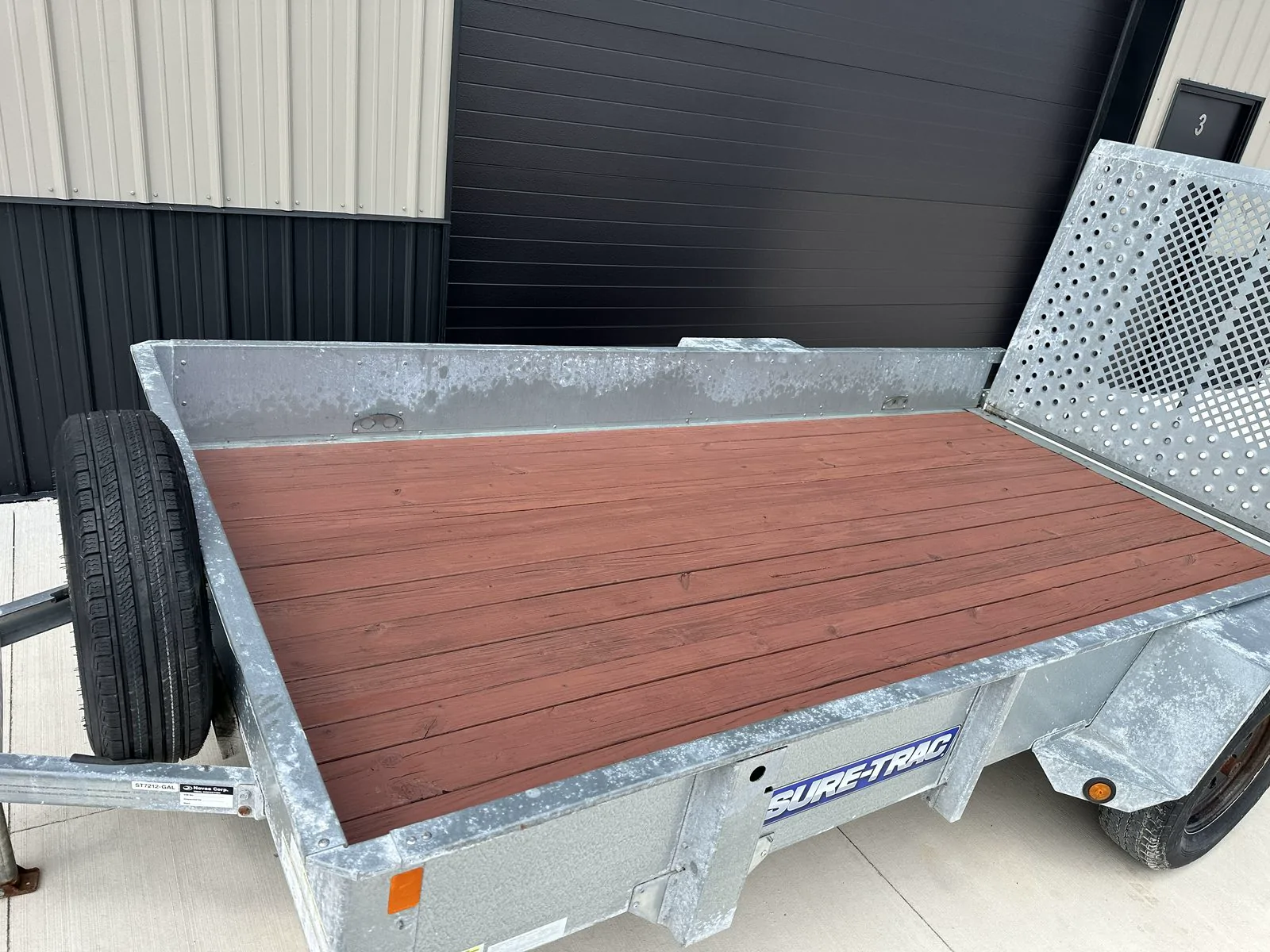
| Residential lawn tractor, 42–46" deck | 6' x 12' utility trailer | $40 |
| Zero-turn, 48–54" deck | 6' x 12' utility trailer if it fits, otherwise 18ft utility trailer | $40–$75 |
| Commercial zero-turn, 60"+ deck | 18ft utility trailer | $75 |
| Two machines, or mower plus attachments | 18ft utility trailer | $75 |
Measure the deck at its widest, not the wheelbase. A 54-inch deck on a 6-foot-wide trailer leaves only a few inches each side, and you have no steering control on a machine being winched. Our guide to zero-turn mower trailer rental covers the sizing in more detail.
Step 4: get it on the trailer
Do not try to push it up a ramp. A 500 lb machine on an incline will beat anyone pushing it, and if it starts to roll back there is nothing to stop it.
With a winch
The right way. Run the cable to the frame, not the axle, not the deck and not the bumper. Pull slowly and keep everyone out of line with the cable.
Without a winch
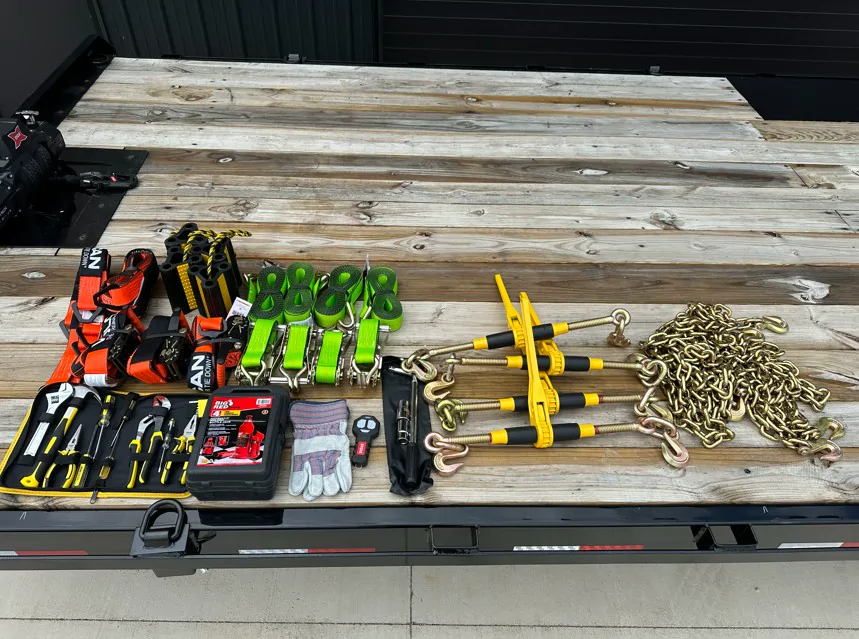
A come-along ratchet works and costs very little. Anchor it to the front of the trailer, pull in stages, and chock the wheels between pulls so nothing can run back.
Ramp angle is the whole problem
Standard ramps on a utility trailer give a fairly steep angle, and a mower with a low-hanging deck will catch at the transition where the ramp meets the deck. Two fixes:
- Raise the deck to its highest cutting position before loading
- Back it on rather than driving forward, because the deck usually hangs lowest at the front
- Use longer ramps if you have them, as length reduces angle directly
Step 5: strap it down
A mower has fewer good tie-down points than people assume, and several bad ones that look tempting.
- Strap the frame at four points, forming an X pattern pulling forward and back
- Never strap the deck. It hangs on linkages and will bend
- Never strap the steering wheel, seat or roll bar unless the roll bar is a rated tie point
- Re-engage the transmission once loaded, so the drive helps hold it rather than letting it roll
- Parking brake on, and chock at least one wheel
That last pair matters. A machine left in bypass on a trailer is free-rolling, and the only thing holding it is the straps. Re-engaging the drive gives you a second line of defence.
Fuel, batteries and the things that leak
A mower that will not start often will not start because of fuel, and that same fuel is about to ride in a trailer.
- Close the fuel shut-off if it has one
- Do not transport it with a full tank if you can avoid it, and never with a loose or missing cap
- Disconnect the battery for anything beyond a short trip, particularly if the machine has an electrical fault
- Watch for oil if the machine has been tipped or has a known leak. An enclosed trailer floor is harder to clean than an open deck
Where you are probably taking it
To a repair shop
Ring first and ask where they want it unloaded, because many shops have a specific bay and limited space. Bring the model and serial number, which saves a phone call later.
To be scrapped
A dead mower has real scrap value in its engine and frame. Pull the battery out first, as it is handled separately and usually has a core value of its own.
To a buyer
Non-running mowers sell perfectly well to people who repair them, often for more than scrap. Being able to say the transmission bypass works and the machine rolls freely is worth money, because it tells the buyer it is a fuel or electrical problem rather than a seized engine.
Re-engaging the bypass at the other end
Easy to forget, and consequential. A machine left in bypass has no engine braking and will roll freely on any slope, including off the back of the trailer while you are unstrapping it.
Unload first, then re-engage the drive, then release the parking brake. In that order. Reversing it is how a mower ends up rolling across a car park.
If it genuinely will not roll
Occasionally the transmission is seized and no bypass will free it. At that point the options are a set of wheel dollies under the rear axle, a skid steer with forks, or accepting that it needs to be dragged onto a tilt deck.
The tilt deckover earns its rate here. A shallow tilt angle and a winch will drag a machine that will not roll at all, where a standard ramp simply cannot.
The short version
Why it will not start, and whether it matters
You do not need to diagnose the machine to move it, but knowing roughly why it is dead changes how you handle it on the trailer.
- Old fuel is the most common cause after a winter. The machine is otherwise healthy and the fuel system is simply gummed. Nothing special needed for transport
- A flat battery is equally common and equally harmless. Disconnect it before transport if the machine is going any distance
- A seized engine is a different situation. The crank will not turn, and the machine should not be rolled far on its own wheels if the seizure is in the drivetrain rather than the engine
- A broken drive belt means the wheels may already turn freely, which makes loading easier but means the parking brake may not hold either
That last case is worth checking. If a drive belt has failed, the parking brake on some machines acts through the same system and may do nothing. Chock the wheels rather than relying on it.
Two people, and what each one does
Loading a dead machine alone is possible with a winch and is considerably safer with two.
One person operates the winch and watches the cable and the anchor point. The other stands clear to the side, never behind or in front, and watches the wheels against the ramp edges. The second person's only job is to call stop, and they should call it early rather than late. A mower that is drifting towards a ramp edge is recoverable at two inches and not at six.
Neither person should ever be behind the machine on the ramp. If a strap, cable or hook lets go, the machine comes back down the ramp with no brakes and nothing to stop it.
Unloading, which is where most damage happens
Gravity is now working with the machine rather than against it, and that is more dangerous, not less.
- Keep the winch attached and pay it out under control rather than unhooking and pushing
- Release straps from the back first, so the machine is still restrained forward while you work
- Chock a wheel before the last strap comes off
- Unload onto level ground where possible, because a machine that starts rolling on a slope will not stop
Most mower damage in transit does not happen on the road. It happens in the first and last five minutes, when the machine is on a ramp and partially restrained.
Find the transmission bypass before anything else, and on a zero-turn remember there are two. Check the parking brake. Use a winch or come-along rather than pushing. Raise the deck and consider backing it on to manage the ramp angle. Strap the frame at four points, never the deck. Re-engage the drive once loaded, and unload before you re-engage at the other end.
To check which trailer suits your machine, text the model to (920) 381-9770.