Moving a mechanic tool chest is one of those jobs people underestimate until they are halfway through it. The box is heavier than it looks. Drawers want to slide. The center of gravity is weird. The ramp angle matters. The trailer width matters. The tie-down points matter. And if the weather is bad, you suddenly care a lot about keeping expensive tools dry. That is why enclosed trailer choice matters more than people think for shop moves and equipment hauling.
The trailer for this job: Enclosed Trailer — 7.5' x 16' · our biggest cargo bay. Text Nick at (920) 381-9770 to check a date.
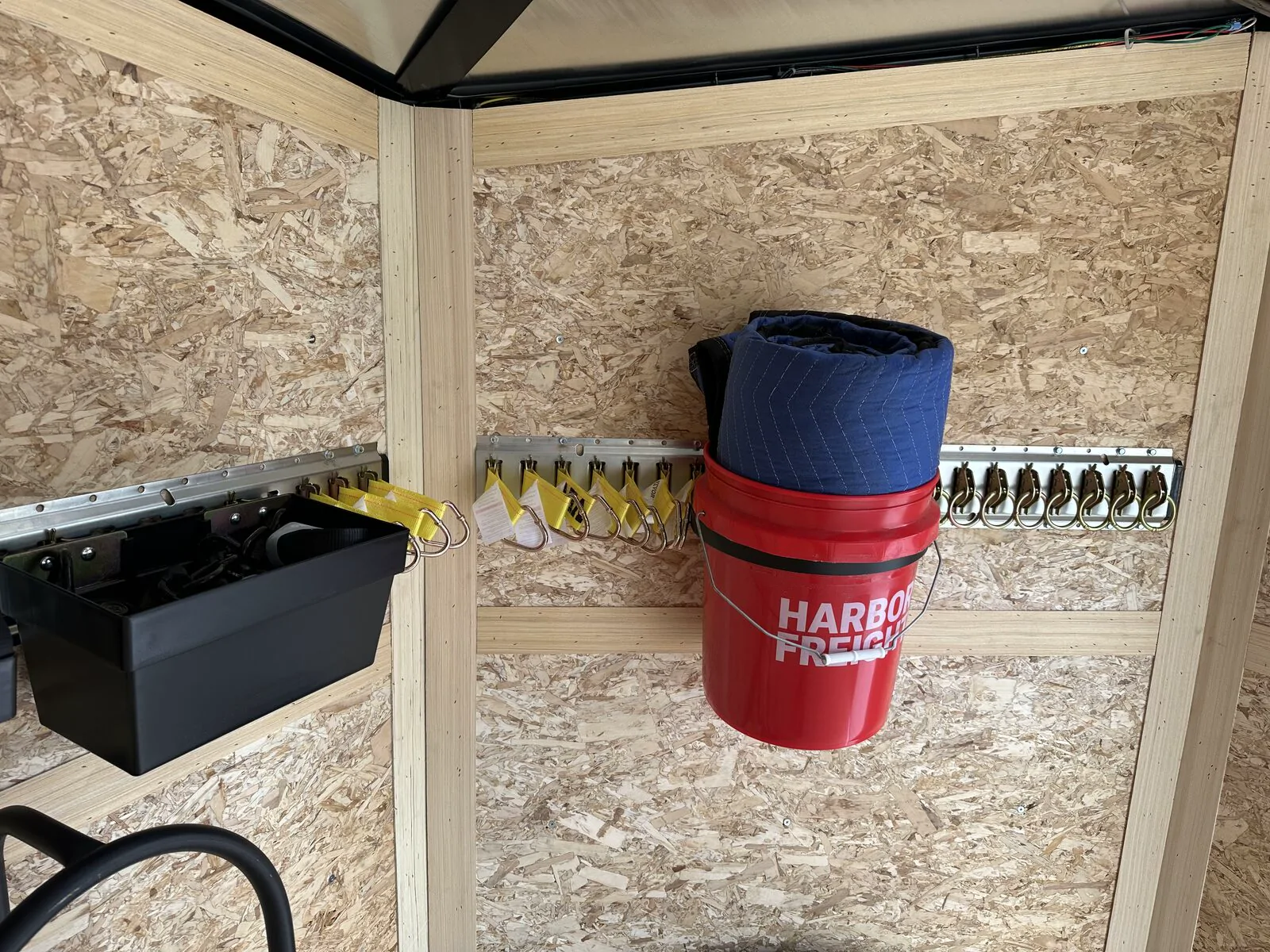
For a lot of real-world mechanic and trade jobs, Fondy's 7.5x16 enclosed trailer is the best all-around answer. It has the width to control awkward rolling loads, enough length for mixed equipment, and the E-track setup that makes secure strapping realistic instead of improvised.
Why the 7.5x16 Makes Sense for Shop Gear
The main reason is usable space. A narrow trailer can technically fit a chest, but the loading experience may be ugly. You need room for the chest, the helpers, the straps, and the moment where somebody has to stop, breathe, and reset. The extra width of the 7.5x16 gives you margin for all of that.
The other reason is versatility. Mechanics and contractors rarely move just one thing. It is usually a rolling chest plus a service cart, plus packout boxes, plus a welder, plus bins, plus loose shop supplies. Sixteen feet of trailer length gives you enough room to organize that load instead of stacking chaos.
Good Fits for This Trailer
- Single large rolling tool chest
- Tool chest plus service cart
- Welders and welding carts
- Packout stacks and modular toolbox systems
- Compressors, hose reels, and shelves
- Detailing gear, pressure washers, and shop bins
- Mobile contractor equipment that needs to stay dry
When It Beats the 6x12
Whenever width and control matter. A 6x12 can work for compact cargo, but heavy rolling objects are much easier when you have breathing room. If the load has any chance of feeling tippy, crowded, or awkward, the extra trailer width is worth it.
When the Air Tow Might Be Better
If the object is extremely heavy, very low-clearance, or especially sketchy on a ramp, Fondy's Air Tow deserves serious consideration. That trailer lowers flat to the ground, which is ideal for safes, giant toolboxes, vending machines, or machines that hate ramps.
But when the goal is enclosed, dry, secure transport for shop equipment and the weight is reasonable, the 7.5x16 often wins because it protects the load and still gives you very usable loading space.
Easy call: choose the 7.5x16 when you want enclosed, lockable hauling for tools and equipment. Choose the Air Tow when the object itself is the loading problem.
How to Move a Tool Chest Safely
- Empty drawers if you can. Even removing half the tools helps.
- Lock and tape drawers shut before loading.
- Use enough people. Two is the bare minimum for many big boxes; three is better.
- Move slowly on the ramp and keep the load controlled, not rushed.
- Once inside, strap the box at multiple points so it cannot roll or tip.
- Use blankets or padding where straps contact finished surfaces.
What people usually regret is rushing. A big rolling box does not forgive mistakes well. The safer move is always to go slower, clear the path, and think through where the weight is shifting before you commit.
It also helps to remove top chests, side lockers, or loose side cabinets if the setup allows it. Breaking one giant awkward load into two manageable loads is often the difference between an easy move and an ugly one.
If you are moving something truly massive, text Nick first. Sometimes the right answer is still the 7.5x16. Sometimes it is clearly the Air Tow. Better to know that before pickup day.
Other Trades That Benefit
This is not just for auto shops. Electricians, plumbers, HVAC techs, flooring crews, landscapers, mobile detailers, and event vendors all benefit from an enclosed trailer that can hold real gear without being unnecessarily giant. The same trailer that moves a tool chest can move a whole stack of seasonal equipment when you clean out the shop or prep for a show.
It is also useful when you are not sure the weather will cooperate. A day that starts clear can turn wet by afternoon. An enclosed trailer removes that stress from the equation and keeps your tools and electronics from getting soaked on the way home.
How to Load Shop Equipment Efficiently
Heavy stuff should ride low and forward. Lighter bins can go above or beside it. Strap the biggest rolling item first, then build the rest of the load around it. If you are using shelving, keep the shelves tight to the wall so the center space stays clear. That gives you room to check straps and adjust the load without unloading half the trailer.
If the route includes multiple stops, think about what you will need to access first and leave it near the door. That is simple, but it saves a lot of frustration later.
Why Rent Instead of Borrowing a Random Trailer?
Because the details matter. Borrowed trailers are often open, lightly equipped, too narrow, or missing useful tie-down options. When the load is expensive and awkward, the right trailer makes the whole move calmer. The 7.5x16 is set up for real cargo, not just whatever happened to fit on a friend's utility trailer last weekend.
The other advantage is that you do not need to own and maintain the trailer yourself. If this is a move you do once or twice a year, renting the right rig is usually the smarter move than buying something that sits around most of the time.
That is especially true for contractors and side businesses that only need enclosed transport occasionally. You get the right tool when you need it, then give it back and keep your yard or shop space open.
Real-World Example Loads
A mobile mechanic doing a shop swap might have a chest, a small compressor, a cart, a parts cabinet, and a bin of diagnostic gear. A contractor might need the same trailer for a generator, ladders, tool cases, and a few stacks of material. The 7.5x16 handles both of those better than a tiny cargo trailer because the extra width keeps the load from becoming a wrestling match.
That matters even more if you are trying to unload quickly on a jobsite. The wider interior gives you space to move, reach straps, and pull gear without climbing over everything. That saves time and keeps the workflow cleaner.
Specs That Matter
- Interior: 7.5 x 16
- Interior height: 6 feet 6 inches
- Payload: 5,390 lbs
- 20 E-track tie-down points
- Rear drive-up ramp
- Electric brakes
Pricing
- 4 hours: $95
- 24 hours: $105
- 3 days: $300
- 1 week: $585
Frequently Asked Questions
Can a full-size Snap-on or Matco chest fit?
Often yes, but exact dimensions and weight matter. Text the model or measurements if you want a quick fit check.
Should I pick the Air Tow instead?
If the load is extremely heavy or ramp angle is your biggest concern, maybe. If weather protection and lockable space matter most, the 7.5x16 is often the better trailer.
Does the trailer include straps?
Yes. It includes 8 ratchet straps and a full E-track tie-down setup.
Can I move mixed loads, not just one box?
Absolutely. That is one of the main advantages of this trailer.