When your load is too heavy, too long, or too wide for anything in a standard fleet, you need a gooseneck. Our gooseneck trailer is rated to 15,900 lb GVWR — the highest-capacity trailer in our lineup, and the one you call when everything else isn't enough. This guide covers what gooseneck trailers are, who needs them, and everything you need to know before you rent and tow one for the first time.
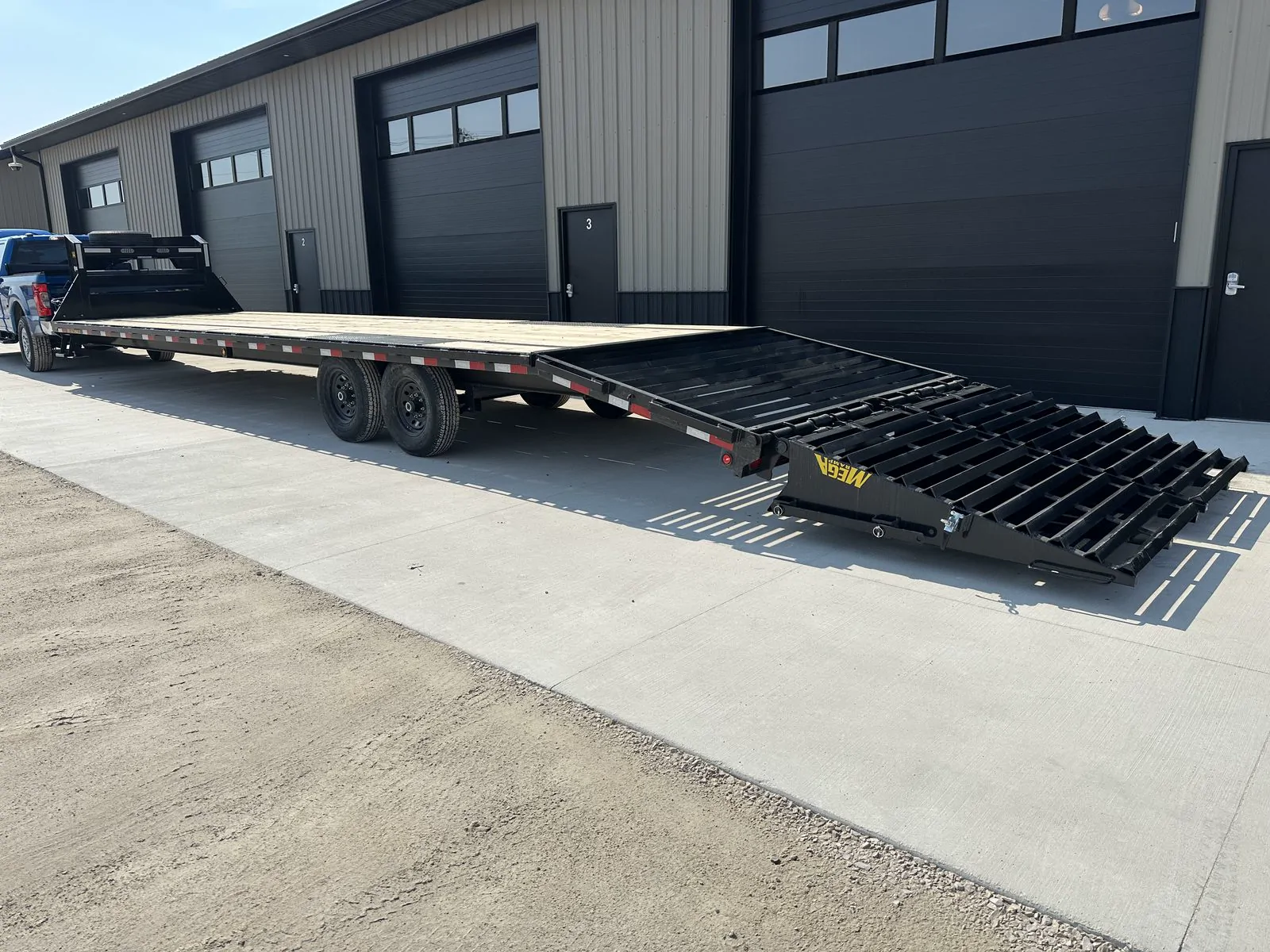
The trailer for this job: Gooseneck Deckover — 30ft · heaviest loads. Text Nick at (920) 381-9770 to check a date.
What Is a Gooseneck Trailer?
A gooseneck trailer connects to the tow vehicle through a ball hitch mounted in the bed of a pickup truck — not at the rear bumper receiver. The "gooseneck" refers to the curved neck that extends over the truck bed and hooks to the ball. This design places the trailer's connection point directly over the truck's rear axle, which dramatically improves weight distribution, stability, and towing capacity compared to a conventional hitch-receiver setup.
Key advantages of gooseneck over conventional ball hitch:
- Higher payload capacity — The over-axle connection handles much heavier tongue weights than a bumper hitch
- Improved stability at highway speeds — Less sway, more control with heavy loads
- Longer deck length — Gooseneck trailers can be significantly longer than conventional trailers while remaining maneuverable
- Better weight distribution — More of the tongue weight sits over the drive axle where the truck is strongest
Gooseneck vs. 5th Wheel vs. Conventional Hitch
These three hitch types are frequently confused, so let's be precise:
Conventional (Ball) Hitch
The standard ball and coupler setup at the rear bumper or receiver. This is what most trailers use. Maximum practical towing capacity tops out around 10,000-15,000 lbs for the best-equipped trucks. Suitable for our enclosed trailer, utility trailer, car hauler, and dump trailer.
Gooseneck Hitch
A ball mounted in the truck bed, with a drop-down or flush-mount mechanism. The trailer's gooseneck coupler wraps around the ball in the bed. Gooseneck hitches allow towing capacities of 25,000-35,000 lbs in capable trucks. Our gooseneck trailer is designed for this setup.
5th Wheel Hitch
A kingpin-and-plate connection also mounted in the truck bed, used primarily for RV and commercial semi-trailer applications. 5th wheels have the largest tow ratings but require a different truck bed setup than gooseneck. Our trailer uses a gooseneck ball, not a 5th wheel plate.
Important: You need a gooseneck ball in your truck bed to rent our gooseneck trailer. This is not a standard hitch — it requires a gooseneck hitch kit installed in the truck bed. If you don't have one, confirm before you book. Nick can advise on what's required.
Understanding 15,900 lb GVWR
GVWR stands for Gross Vehicle Weight Rating — the maximum combined weight of the trailer plus everything on it. Our gooseneck's 15,900 lb GVWR means the trailer and its full load must not exceed 15,900 lbs total.
To calculate your payload capacity:
- Start with the GVWR: 15,900 lbs
- Subtract the trailer's empty weight (ask Nick for the specific weight)
- The remainder is your maximum payload
Why does this matter? Dense materials — steel, concrete, aggregate, machinery — reach the weight limit long before they fill the physical space of the trailer. A skid steer compact track loader weighs 8,000-10,000 lbs by itself; that's most of the payload in one piece of equipment. Know your loads before you book.
Tow Vehicle Requirements for the Gooseneck
This is not a trailer for half-ton trucks. To safely tow our gooseneck at or near its capacity, you need:
- A 3/4-ton or 1-ton pickup truck — Ford F-250/F-350, RAM 2500/3500, Chevrolet/GMC 2500HD/3500HD or equivalent
- A gooseneck hitch kit installed in the truck bed — This is a factory option or aftermarket installation; it is not standard equipment on most trucks
- Sufficient GCWR (Gross Combined Weight Rating) — Your truck's GCWR minus the truck's curb weight equals your maximum trailer weight. This must exceed the loaded gooseneck weight.
- An integrated or add-on brake controller — Electric trailer brakes are required in Wisconsin on trailers over 3,000 lbs loaded; our gooseneck will be well over this threshold
- Appropriate tires rated for the tongue weight load — Underinflated or undersized truck tires with heavy tongue weight is a blowout risk
Diesel trucks in the 3/4-ton and 1-ton class are common for this type of towing. Gas engines work but watch engine temps and transmission temps on hills and in stop-and-go traffic with heavy loads.
Who Rents the Gooseneck
Farmers and Agricultural Operations
Moving large equipment between fields — combines, balers, grain carts, planters — requires serious capacity. Fond du Lac County has significant dairy and row crop farming, and equipment moves are routine. The gooseneck is the standard tool for ag equipment transport in this region.
Landscaping Contractors
Full-size skid steers, compact track loaders, large excavators, and landscape trailers can hit 8,000-12,000 lbs easily. The gooseneck is the correct choice for commercial landscapers moving serious iron between job sites.
Construction Companies
Scissor lifts, boom lifts, concrete saws, generators, compaction equipment — construction gear is heavy and large. Equipment rental companies, general contractors, and specialty trade companies regularly need the gooseneck for job site equipment delivery.
Heavy Vehicle Transport
Moving multiple vehicles at once, heavy trucks, or oversized farm machinery. The gooseneck's long deck and high capacity make it the right tool when a standard car hauler or utility trailer simply isn't enough.
How to Back and Maneuver a Gooseneck
Gooseneck trailers maneuver differently than conventional trailers. The pivot point is in the truck bed rather than at the rear bumper, which means the trailer tracks closer to your intended line when backing. Many people find gooseneck trailers easier to back than conventional trailers because of this more predictable behavior. That said:
- The trailer's length is significantly longer than conventional trailers — plan your turning radius accordingly
- Use a spotter when backing into tight spaces, especially with equipment on deck
- The gooseneck neck limits front bed access while hitched — plan for this when using truck bed as work surface
- Watch overhead clearance — a loaded gooseneck with tall equipment adds significant height
Booking the Gooseneck
Text Nick at (920) 381-9770. When you contact him, tell him what you're hauling (weight and dimensions if you know them) and what truck you're using. He'll confirm your truck is appropriately equipped and that the gooseneck is the right trailer for your job. The gooseneck is the most in-demand trailer in the fleet for big jobs — book it early, especially for spring and fall agriculture season.
Frequently Asked Questions
What do I need to tow a gooseneck?
A pickup with a gooseneck hitch already installed in the bed. A bumper hitch will not work. If you are unsure what your truck has, describe it to Nick before you book.
How much can the gooseneck carry?
The 30'+5' gooseneck deckover is rated to 15,900 lb GVWR, which makes it the largest trailer in the fleet.
What does the gooseneck cost to rent?
It starts at $140 for 4 hours, with 24-hour, 3-day and weekly rates available.
Do I need a brake controller?
The car hauler, utility trailer, dump trailer and gooseneck all require a brake controller. If your vehicle does not have one, we rent a Bluetooth controller.